
Last updated November 4, 2026
 Wrought iron
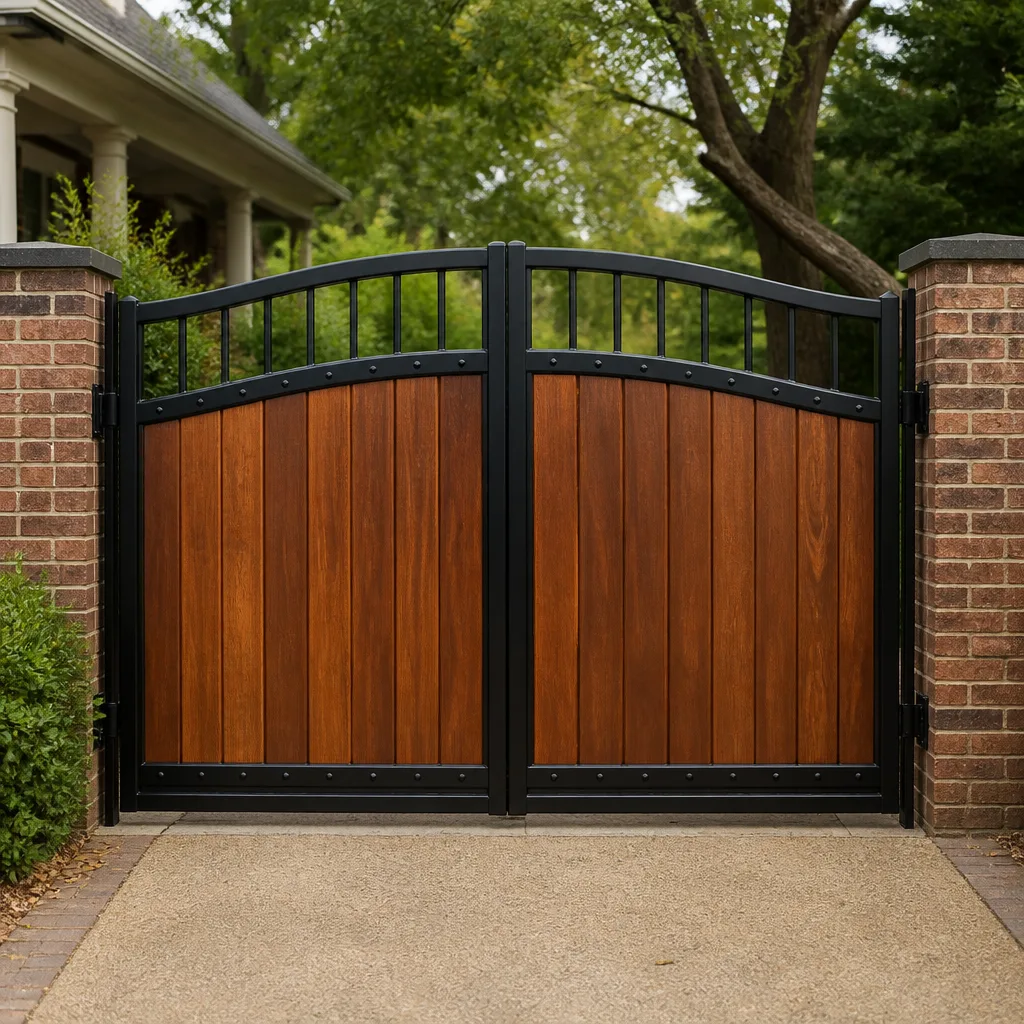 Wood & steel frame
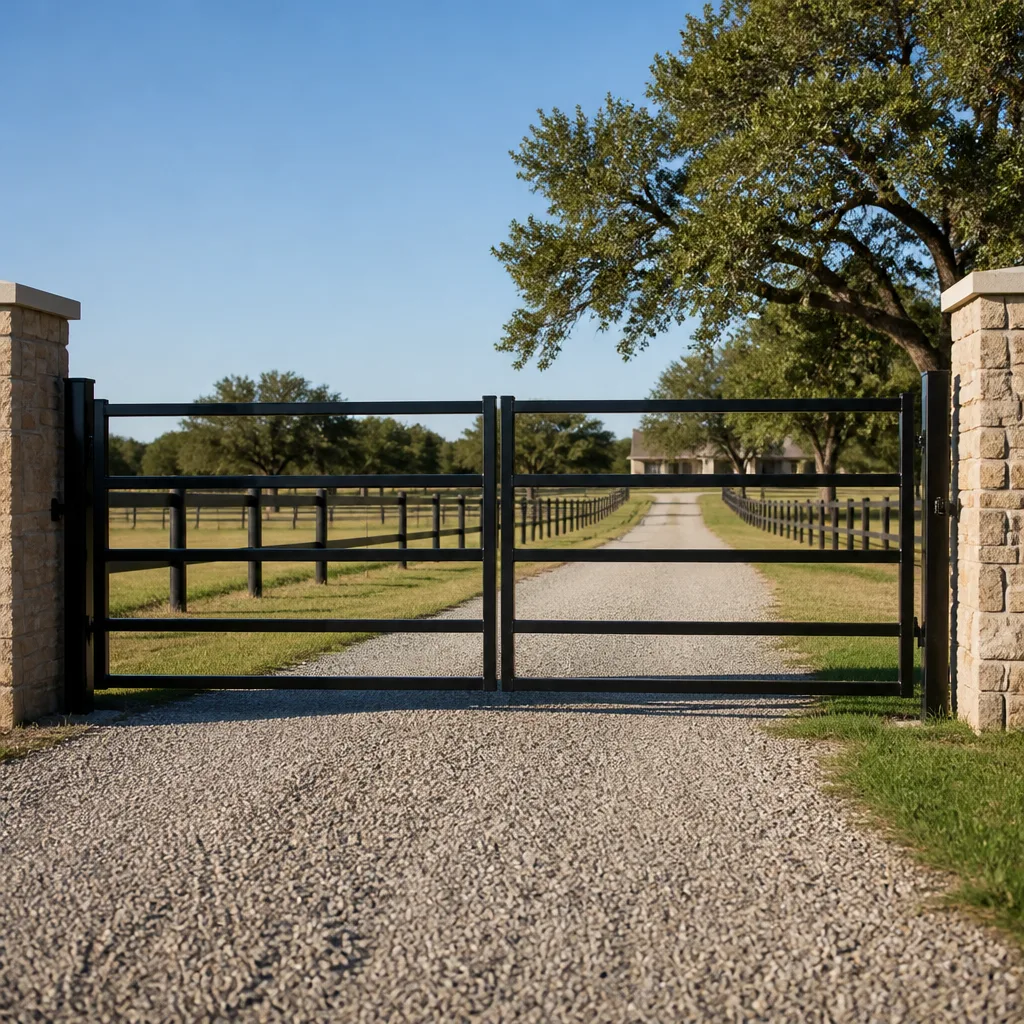 Farm & ranch
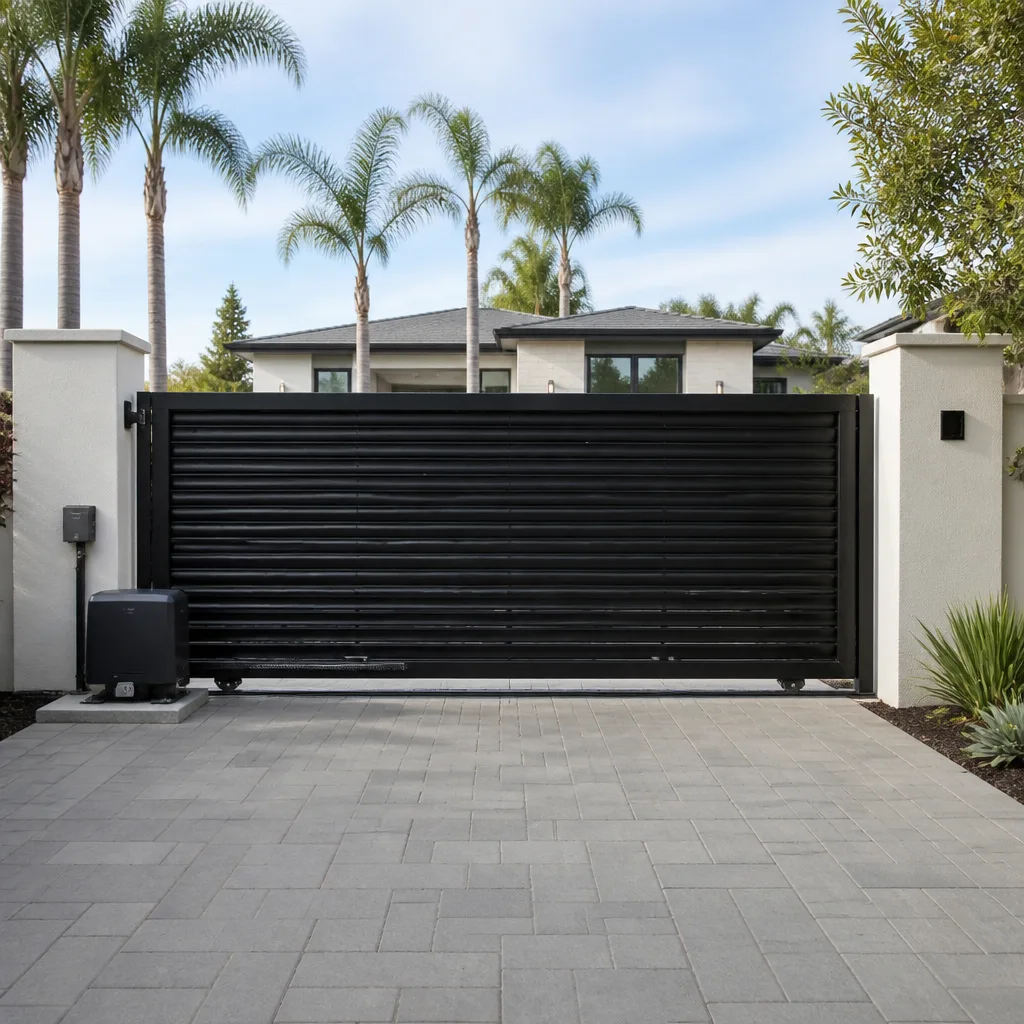 Sliding driveway gates
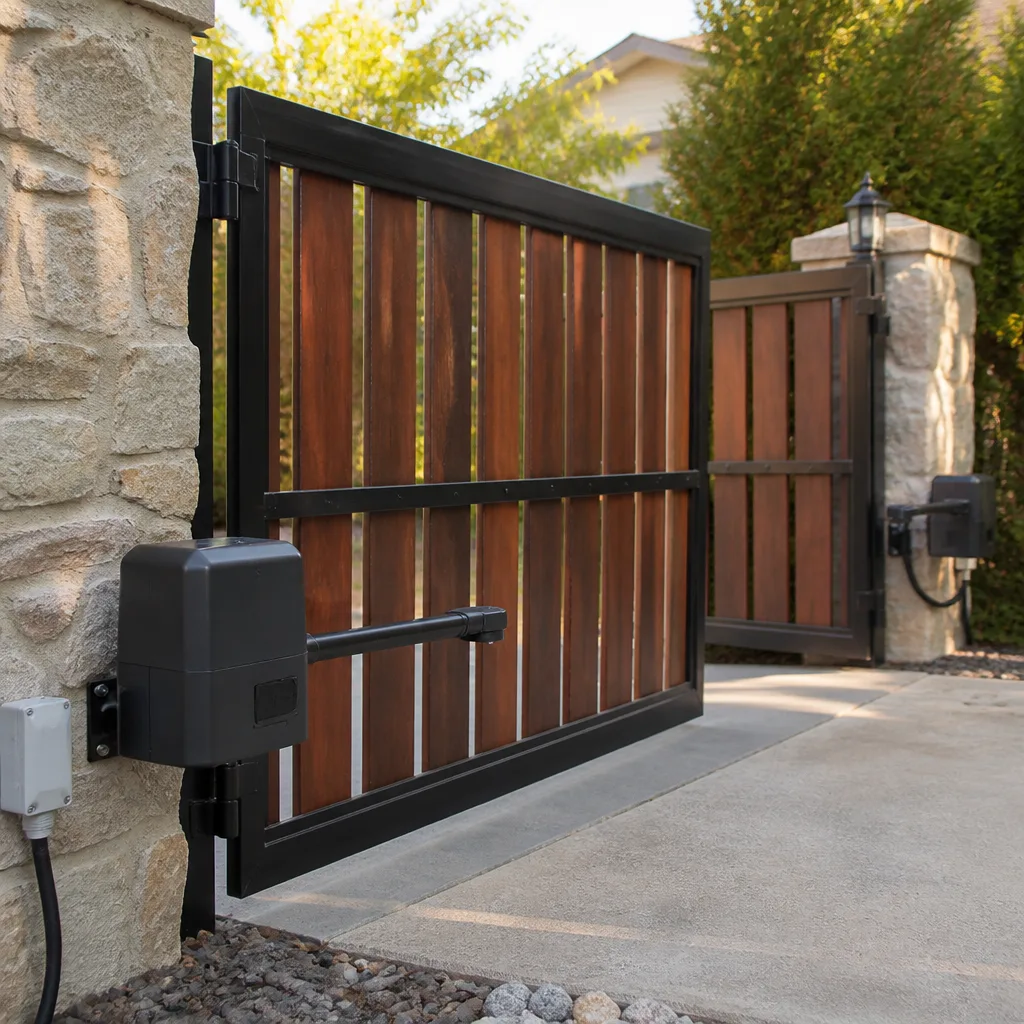 LiftMaster operators
Free on-site gate assessment - hinges, posts, and your LiftMaster or Nice gate operator checked before anything is quoted
The assessment is free and the quote is the invoice.
Get your free estimateGate Repair Troubleshooting in Lake Forest: Common Problems and How to Fix Them
Most homeowners in Lake Forest attack a malfunctioning gate backwards. They start with the visible symptom, a sagging leaf or a blinking error light, then Google that symptom in isolation. The problem is that two completely different failures produce identical symptoms. A gate that opens halfway and reverses could be a bad limit switch, a failing loop detector, or an obstruction sensor picking up a reflection off a car bumper. The structured approach a technician actually uses on-site is a fault tree: narrow the failure to one of six categories first, then test within that category. This guide walks you through that exact process, from the three fixes that are genuinely safe to do yourself to the moment you should stop and call a specialist who knows electric gate repair cold.
Styles & brands we work with
- Wrought iron
- Wood & steel frame
- Farm & ranch
- Sliding driveway gates
- LiftMaster operators
Quick Answer
Gate repair troubleshooting in Lake Forest starts with categorizing the fault: operator failure, loop detector failure, limit switch failure, obstruction sensor failure, wiring failure, or mechanical wear. Three fixes are safe for a homeowner: using the manual release to free a stuck gate, clearing debris from the track, and repositioning or tightening a remote antenna. Everything else, especially anything involving 24V DC control wiring or high-voltage motor power, should go to gate repair professionals who can diagnose the root cause on the first visit.
Table of Contents
- The Six-Category Fault Tree: How a Technician Thinks
- Operator Failure vs. Loop Detector Failure: The Test That Separates Them
- Limit Switch and Obstruction Sensor Failures: The Two Most Misdiagnosed Problems
- Lake Forest Environmental Factors: Humidity, Heat, and Your Gate’s Electronics
- Three DIY Fixes That Are Genuinely Safe
- Control Wiring: What to Check Without a Multimeter, and When to Stop
- Brand-Specific Quirks: What Makes Each Operator Behave Differently Mid-Fault
- Common Mistakes to Avoid
- When to Call a Professional
- Frequently Asked Questions
- The Bottom Line
The Six-Category Fault Tree: How a Technician Thinks
Every automated gate failure in Lake Forest, whether it’s a residential swing gate on a hillside lot or a commercial slide gate at a business park off Bake Parkway, lands in one of six buckets. Identifying the bucket is the whole job. The six categories are: operator failure, loop detector failure, limit switch failure, obstruction sensor failure, control wiring failure, and mechanical wear. Each category has a signature. Operator failures tend to be total, the gate simply doesn’t move, or it hums without engaging. Loop detector failures are intermittent and usually tied to a vehicle being present or absent. Limit switch failures show up as a gate that runs too far in one direction, then reverses. Obstruction sensor failures look like a gate that stops and reverses for no visible reason. Wiring failures are often weather-correlated, showing up after a rain or during a heat spike. Mechanical wear is the slow one: the gate gets noisier, slower, and more reluctant over months, not days.
The reason this matters is diagnostic speed. If you’ve already power-cycled the gate twice and Googled the error code, you’re past the basics. Randomly tightening bolts or swapping batteries won’t find a loop detector failure. Knowing the categories means you can run one test that eliminates half the possibilities before you touch anything. A gate that moves but won’t respond to the keypad or remote points to the sensor or detector side, not the motor. A gate that won’t move at all, with a dead display, points to the operator or its power supply. That single observation divides the fault tree in half, and it’s the same first step we take on every service call in Lake Forest.
Once the category is identified, the fix becomes a process of elimination within that category, not a shot in the dark. This is why most gate problems are diagnosed on the first visit. The technician isn’t guessing any more than you would be after reading this; they’re working through a tree that has predictable branches. Some branches dead-end: a loop detector that’s actually fine, a limit switch that’s merely out of adjustment. Others lead straight to the failed component. But you don’t know which branch you’re on until you’ve categorized the fault correctly. Mis-categorization is the single biggest source of repeat visits in this trade, and the one we avoid by refusing to skip steps.
Operator Failure vs. Loop Detector Failure: The Test That Separates Them
The most common point of confusion in Lake Forest gate troubleshooting is an operator failure versus a loop detector failure, because both can leave a gate sitting immobile in the open position. An operator failure means the motor, control board, or capacitor that drives the gate has failed. A loop detector failure means the inductive loop buried under the driveway, the thing that tells the board a vehicle is present, is either not detecting the car or, worse, falsely telling the system a car is always present. That false “always occupied” signal is why a failed loop often locks the gate open: the board thinks a vehicle is sitting on the loop and refuses to close on it, which is exactly what it should do for safety.
Here’s the test that separates the two, and it requires no tools. Put the gate in manual operation by pulling the manual release. If the gate swings or slides freely by hand, the mechanical side and track are fine. Now disengage the loop detector function temporarily. On most operator boards, including the models we service from Ghost Controls, DoorKing, and Elite, there’s a dip switch or a menu setting to disable the loop detector input. If you’re not comfortable opening the control board, this is the point where you call a professional, because you’re now interacting with live electrical components. But if you can safely change that setting, a board with the loop disabled is effectively deaf to the ground loop. If the gate closes and operates normally with the loop disabled, the loop or the loop detector is the failure. If it still misbehaves, you’ve isolated the issue to the operator itself.
This test matters because the fixes are completely different. A failed loop detector is often a simple component swap, sometimes a ten-minute job for a technician who carries the right detector on the truck. A failed operator can mean a capacitor, a control board, or a motor, and those range from a quick replacement to a full operator change-out. Knowing which one you’re dealing with before you call means the first visit is a repair, not a diagnostic appointment. In our experience on electric gate repair calls throughout Lake Forest, the loop versus operator confusion is the most common misdiagnosis homeowners make when they describe the problem over the phone. The description “the gate won’t close” matches both failures equally, but the test above separates them in about five minutes.
Limit Switch and Obstruction Sensor Failures: The Two Most Misdiagnosed Problems
If your gate opens all the way and then slams against the end stop, or if it stops three inches short and reverses, you’re looking at a limit switch problem. The limit switch is the component that tells the operator board when the gate has reached its fully open or fully closed position. When it drifts out of adjustment, which happens gradually over years of operation in Lake Forest’s temperature swings, or fails outright, the board loses its sense of position. The result is a gate that runs too far in one direction, then reverses because it thinks it hit an obstruction. The safety reversal, the thing that would normally protect a child or pet, gets triggered by the gate slamming into its own end stop.
Obstruction sensor failures look similar but stem from a different source. Modern automated gates in Lake Forest use photoelectric eyes, edge sensors, or both, to detect anything in the gate’s path. A misaligned photo eye, a dirty lens, or a failing edge sensor produces the classic symptom: the gate starts to close, gets a few feet, then stops and reverses with no visible obstruction. The gate’s brain is interpreting a dirty lens or a weak sensor signal as an object in the path, and it’s refusing to close on it. This is the gate doing exactly what it should do, based on false information. The fix is rarely a board replacement; it’s cleaning and realigning the eyes, or replacing a worn edge sensor.
The distinction between these two matters because homeowners often assume the worst. A gate that reverses mid-close gets reported as “the board is fried” or “the operator is shot” when the actual problem is a leaf stuck to a photo-eye lens. We’ve seen obstruction sensors caked in Lake Forest dust and pollen, from the hillside areas especially during spring, that just needed a wipe-down. The limit switch is a mechanical adjustment or a sensor replacement. Neither is a catastrophic failure. But you won’t know which one you have until you watch the gate carefully: where does it stop, when does it reverse, and does it always do it at the same spot? Photoelectric failures are often erratic, varying with sunlight angle and time of day. Limit switch failures are more predictable and repeatable.
Lake Forest Environmental Factors: Humidity, Heat, and Your Gate’s Electronics
Lake Forest sits in the Saddleback Valley, close enough to the coast that the marine layer pushes in most mornings, especially in late spring and early summer. That overnight humidity, followed by a sharp temperature rise when the marine layer burns off, creates a specific environment for gate electronics that other parts of Southern California don’t share, and inland desert cities never see. Condensation forms inside operator housings overnight when warm, relatively humid air meets a motor that cooled down after evening use. Then the housing heats up during the day, the moisture evaporates, and over time that daily cycle leaves mineral residue on control boards and inside wiring harnesses.
The practical consequence is a failure mode we see repeatedly on Gate Repair Lake Forest calls: intermittent board faults that don’t match any single component failure. A board that worked fine yesterday sends a fault code today, then clears itself by afternoon. A keypad that’s unresponsive at 7am works by noon. These are not ghost problems, they are corrosion and residue acting as a variable resistor. As moisture evaporates, the resistance changes, and the board’s interpretation of its own sensors changes with it. The fix isn’t resetting the breaker and hoping. It’s opening the housing, inspecting the board and connectors for residue, and cleaning or replacing what’s compromised.
The summer heat spikes matter too. An operator housing in full sun on a Lake Forest hillside can reach internal temperatures well above the ambient air, and that heat accelerates capacitor aging. Capacitors are the component most likely to fail in a heat-cycled operator, and the signature is a gate that hums but doesn’t move, or moves slowly at first, then picks up speed. A start capacitor losing its capacity produces exactly that: enough torque to start on a cool morning, not enough on a hot afternoon. This is not a problem you’ll solve by greasing the track, and it’s a component that should only be replaced by someone who knows how the operator’s power circuit works.
Three DIY Fixes That Are Genuinely Safe
There are exactly three fixes on an automated gate that a Lake Forest homeowner can safely perform without special tools or training. Everything else involves either high-tension mechanical components, live electrical wiring, or control board adjustments that can leave your gate stuck in an unsafe state. The three safe ones are the manual release, clearing the track, and repositioning the remote antenna.
- The manual release. Every automated gate operator has a manual release mechanism, usually a handle or a keyed lock on the operator arm or motor housing, that disengages the motor from the gate. Pulling it lets you push the gate open and closed by hand. This is the first thing to do when your gate is stuck, because it tells you instantly whether the problem is mechanical or motor-driven. If the gate moves freely by hand once released, the track, hinges, and wheels are fine. If it doesn’t, you’ve found a mechanical bind, and you should call a technician rather than forcing it. Forcing a bound gate by re-engaging the motor and running it against the bind is how gears get stripped.
- Clearing the track or path. Slide gates in Lake Forest accumulate debris in the track, from oak leaves to small rocks washed across driveways during winter rains. A gate that shudders or stalls near one end often has a chunk of something wedged in the track. With the gate in manual mode, inspect the full track length, remove debris, and see if the gate moves freely by hand. Do this before you call anyone. It’s the cheapest fix in the book, and it solves a surprising percentage of “the gate is broken” calls.
- Repositioning the remote antenna. If your remote works only when you’re standing next to the gate, or if it worked from the driveway and now only works from two feet away, the operator’s antenna has likely been knocked out of position or the remote battery is on its way out. Check the battery first, it’s a thirty-second swap. Then look at the antenna wire, usually a thin wire exiting the operator housing. It should hang freely, not coiled against the metal housing, not wrapped around a conduit, not pinched behind the unit. Repositioning it to hang straight and clear of metal can restore range dramatically. This is safe because it involves no wiring changes and no contact with power.
Those are the three. If the problem isn’t resolved by one of them, you’re past the DIY phase, and attempting more risks damage to the operator, voiding the warranty, or worse. Gate motors, control boards, and power supplies are not the place to learn as you go.
Control Wiring: What to Check Without a Multimeter, and When to Stop
Most residential automated gates in Lake Forest run on 24V DC control wiring. That’s the low-voltage side that carries signals from the keypad, loop detector, photo eyes, and edge sensors to the control board. It’s not the same as the 120V or 240V line voltage that powers the motor, and the two should never be confused. The control wiring is where a lot of intermittent problems live, and there are a few visual checks you can do without a multimeter, as long as the operator is powered off at the breaker.
Start with the obvious: open the operator housing and look at the terminal strip. If you see corrosion, which is common in Lake Forest’s marine-layer humidity that condenses inside housings overnight, that’s a problem. If you see wires that are loose, that’s a problem. If you see wires that have been pinched by the housing cover, or insulation that’s cracked and flaking, that’s a problem. Tighten what’s loose, but be very clear with yourself: you are not installing anything new, not jumping any terminals, and not modifying the circuit. You’re checking for visible faults. If any wire insulation is cracked to the point you can see copper, stop. That’s a repair for a technician, not a homeowner’s five-minute project.
The second check is the antenna coax and the low-voltage wire runs where they exit the housing and enter conduit. Look for damage from weed trimmers, rodents, or just years of sun exposure. UV degradation makes PVC wire jackets brittle, and a brittle jacket cracks when it flexes. In Lake Forest’s summer heat, that flex happens every day as the conduit expands and contracts. A cracked jacket on a 24V control wire won’t electrocute anyone, but it will let moisture in and cause exactly the intermittent faults we described in the environmental section. If you find damaged wire, document it, and call a professional for the actual replacement. The risk of touching the wrong wire, or confusing control wiring with line voltage, is not worth it.
Brand-Specific Quirks: What Makes Each Operator Behave Differently Mid-Fault
One of the reasons a generic YouTube video often doesn’t solve a Lake Forest gate problem is that operators from different brands fail differently. The error codes don’t mean the same thing, the reset procedures are different, and the same symptom can have opposite causes depending on whose board is inside the housing. We work on all the major brands, including Ghost Controls, DoorKing, Elite, and Mighty Mule, and each has its own personality when something goes wrong.
A Ghost Controls residential operator, the kind typically paired with a DIY-installed gate kit, tends to communicate through blinking LED patterns rather than a display screen. A customer sees “three blinks, pause, three blinks” and doesn’t know whether the board is complaining about the battery, the motor, or the limit settings. Another Ghost Controls quirk: these units are very sensitive to antenna grounding, and a remote that loses range after a heavy rain usually points to moisture in the antenna connection. A DoorKing commercial operator, by contrast, typically gives you a numeric error on a small display, and the failure modes are more likely to involve the loop detector inputs or the limit cams, because DoorKing operators are built for high-cycle commercial use where the loop is doing most of the work. An Elite SL-1000, a slide gate operator common on larger residential or light-commercial properties, is a workhorse but its reversing behavior is often tied to the sensitivity adjustment being set too high for the gate’s weight and track condition, not to a genuinely blocked path. A Mighty Mule, the entry-level DIY favorite, has a well-known quirk where a weak car battery, the 12V source that powers the unit, produces exactly the same “gate stopped mid-travel” symptom as a bad control board.
The point here is not that you need to memorize these specifics. The point is that the brand matters, and a technician who knows the brand’s failure patterns gets to the root cause faster than one seeing it for the first time. We specialize exclusively in gates, and that means our technicians see enough of each brand to know that a DoorKing error 31 and a Ghost Controls three-blink pattern are not equivalent problems, even if the customer describes both as “the gate just stopped.” Whether your system runs on DoorKing or Elite or Mighty Mule, we know it cold.
Common Mistakes to Avoid
- Replacing the battery before testing anything else. A dead remote battery is an easy diagnosis, but a gate that won’t respond at all is almost never the battery in the remote. If the keypad doesn’t work either, the problem is upstream of the remote. Swapping batteries and hoping is how you waste a week and still have a broken gate.
- Resetting the breaker repeatedly. Power-cycling a gate that has a real fault will sometimes clear the error temporarily, but the underlying problem remains. Repeated power cycling on a failing capacitor actually accelerates the failure. If the gate runs after a reset but fails again within a day, the reset didn’t fix anything.
- Forcing a bound gate with the motor. If the gate is binding mechanically and you keep running the motor against the bind, you will strip a gear or burn out a motor. The manual release exists exactly so you can test whether the gate moves freely before re-engaging power. Use it first, not after the motor starts smoking.
- Ignoring the safety sensors because the gate “looks clear.” Photoelectric eyes don’t care what you see. They care what they see, and a dirty lens or a spider web across the eye is enough to make a gate reverse. Clean the lenses before assuming the board is bad.
- Adjusting limit switches or sensitivity without marking the original position. If you turn a limit adjustment screw and lose track of where it started, you’ve turned a minor problem into a full recalibration job. Mark or photograph every adjustment before you touch it. Better yet, leave adjustments to someone who does them every week.
- Buying a replacement operator based on a friend’s recommendation without checking compatibility. A gate that worked with one operator won’t necessarily work with another. Swing versus slide, duty cycle, gate weight, and the existing wiring all matter. The wrong operator is an expensive mistake to return.
When to Call a Professional
Some problems deserve a technician the first time. If you’ve run through the three safe DIY fixes and the gate still misbehaves, call. If you see damaged, cracked, or corroded wiring inside the operator housing, call. If the gate moves erratically and you can’t identify whether the problem is the loop, the limit switch, or the board, call. If your gate is a slide gate and it’s come off the track or is making grinding noises, a trained technician is the only person who should put it back, those gates are heavy and can crush. The same goes for any problem that involves line-voltage power. Gate Repair Lake Forest offers free estimates in Lake Forest, call (866) 472-6659. We’ll categorize the fault, give you a written price before any work starts, and handle the repair from diagnosis to a gate that runs like it should.
Frequently Asked Questions
Gate repair in Lake Forest is priced per job by written estimate after we see the gate. Minor fixes like a photo-eye realignment or a remote antenna repositioning are quick and inexpensive, while a failed control board or motor replacement costs more. The estimate is free, and the price is set before any work starts.
Yes. We answer 24/7, and fast dispatch from 7am to 7pm, Sunday through Friday, means most Lake Forest gate failures are diagnosed and repaired on the first visit. Call (866) 472-6659 and describe the symptom; the more detail you give, the better prepared our technician arrives.
Random opening is almost always a false signal from the loop detector, a keypad with a sticking button, or a remote that’s being triggered accidentally. The fix starts with categorizing which input the board thinks it’s receiving. A technician can isolate that quickly, and the fix is usually a component replacement, not a new gate.
We do. We’re fluent in nine major gate and operator brands, including Mighty Mule and Ghost Controls, so the operator you already own is one we can service. We’re brand-agnostic: we repair what’s there rather than pushing a replacement you don’t need.
In Lake Forest, temperature-correlated failures usually point to a heat-cycled capacitor or a control board that’s been damaged by the marine-layer moisture cycle. The cooler morning lets a weak component start the motor; the hot afternoon pushes it past its limit. This pattern is a strong signal that a component is failing and will get worse.
The three safe DIY fixes are the manual release, track clearing, and antenna repositioning. Anything involving the control board, motor power, or the wiring connecting them is not a homeowner job. A gate that comes off its track or a slide gate with a damaged wheel should only be handled by a trained technician.
The Bottom Line
Lake Forest gate problems are solvable, and most are solved faster when you think in categories rather than symptoms. Is it the operator or the loop? The limit switch or the obstruction sensor? The wiring or the mechanical side? Answer those questions in order, do the three safe DIY checks, and you’ll either fix the gate yourself or give a technician the exact information they need to fix it on the first visit. From a jammed hinge to a full automated-entry installation, we handle the complete job, and we work on all the brands that show up in Lake Forest driveways. Call (866) 472-6659 for a free estimate. We answer 24/7, and fast dispatch from 7am to 7pm means a gate specialist is headed your way.
Written by the team at Gate Repair Lake Forest, serving Lake Forest since 2017.
See the difference
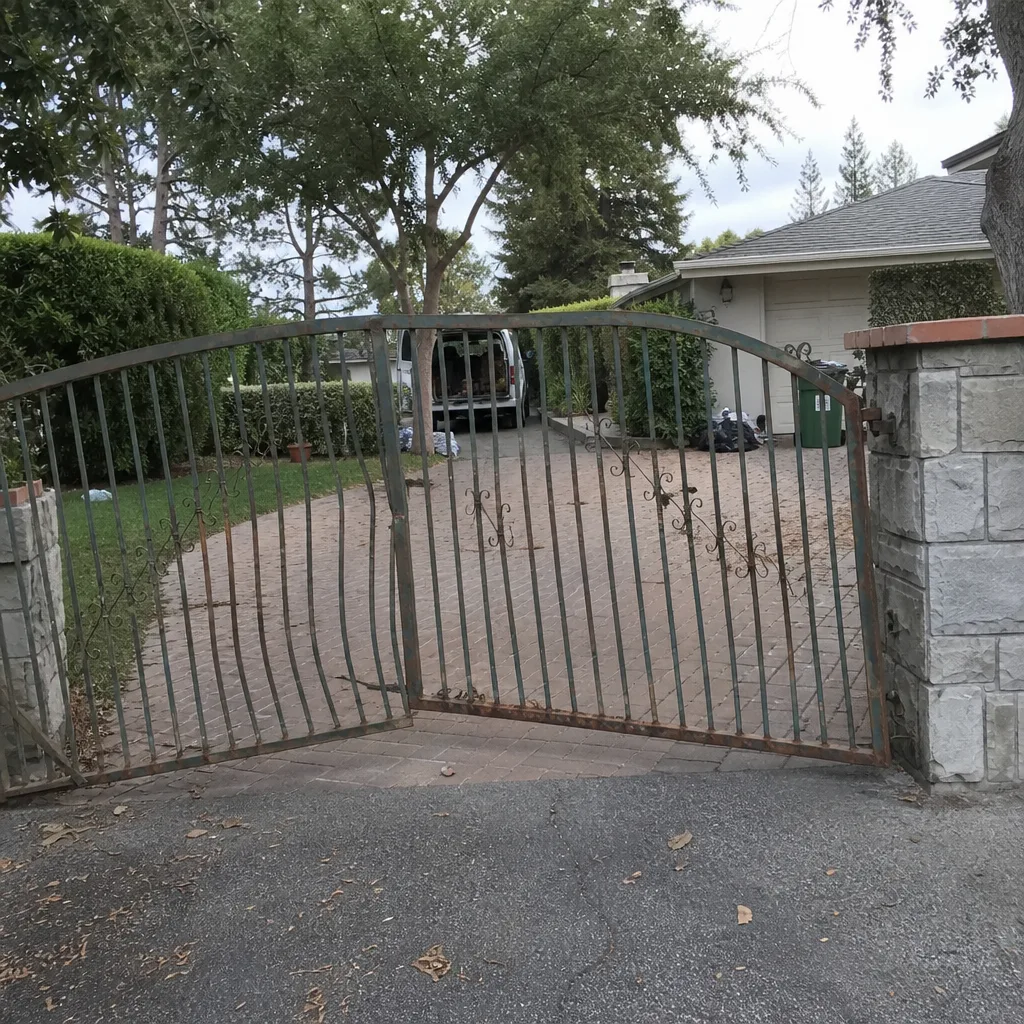 Before
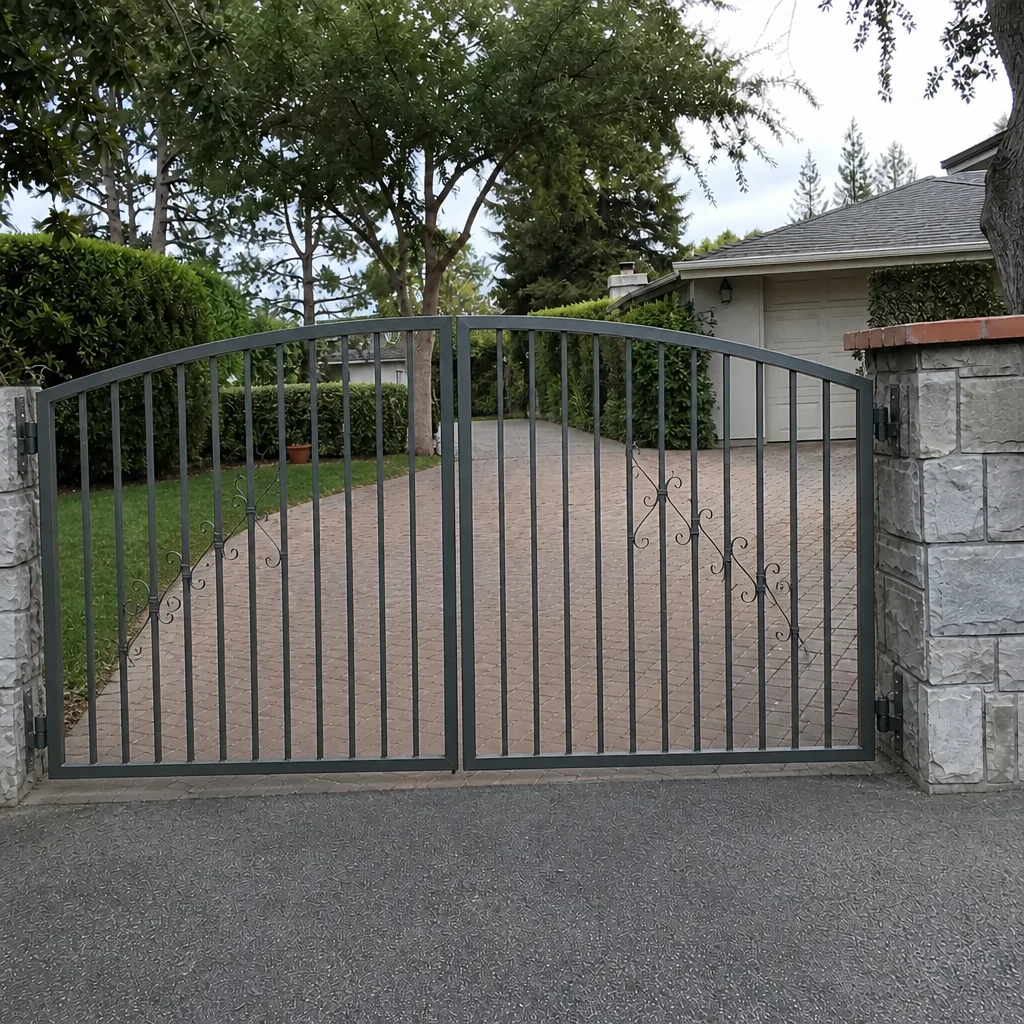 After
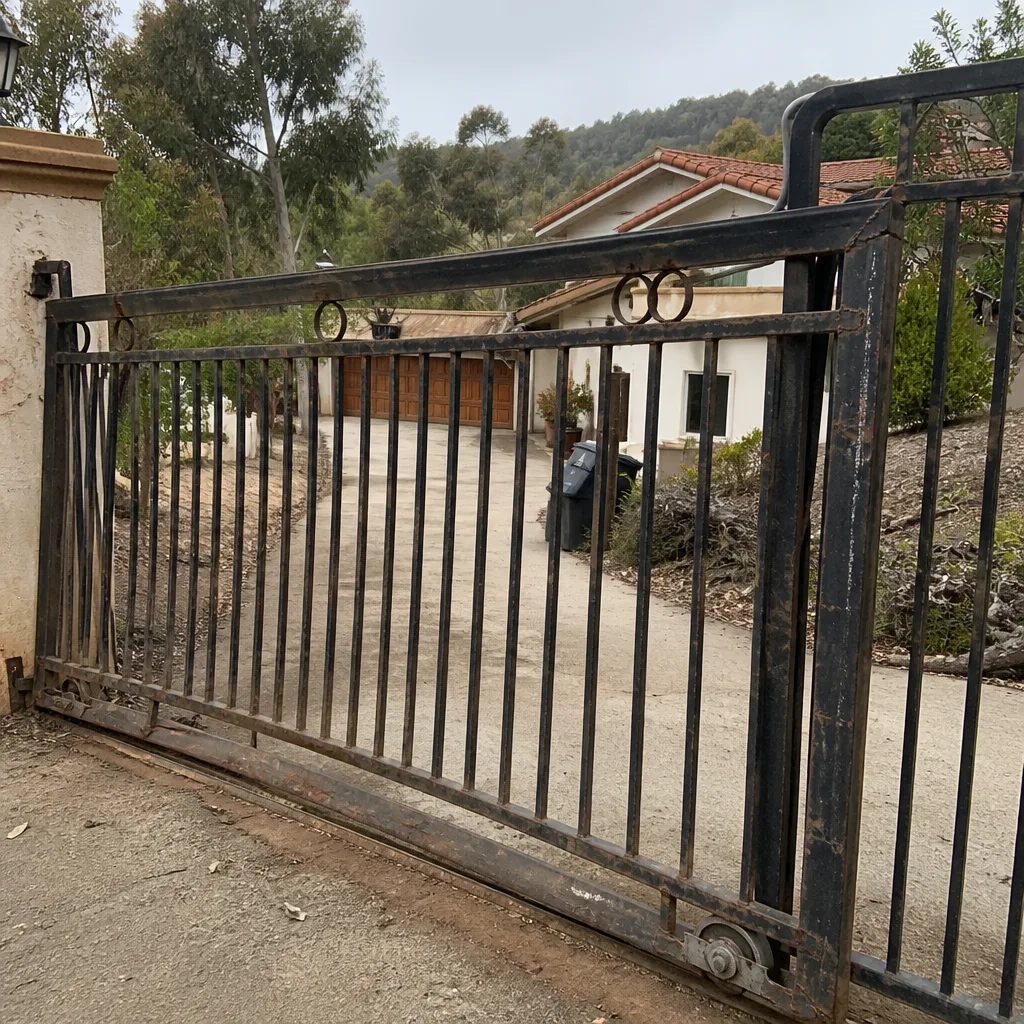 Before
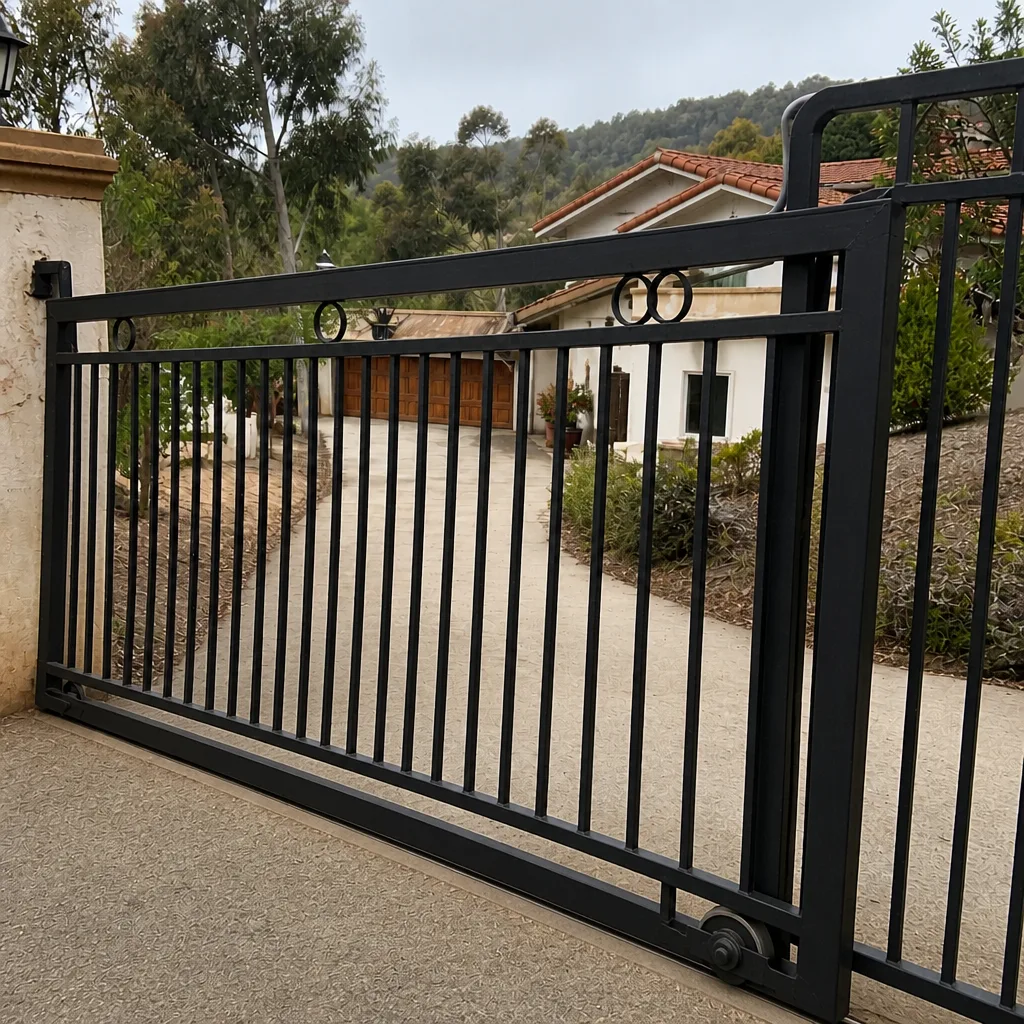 After
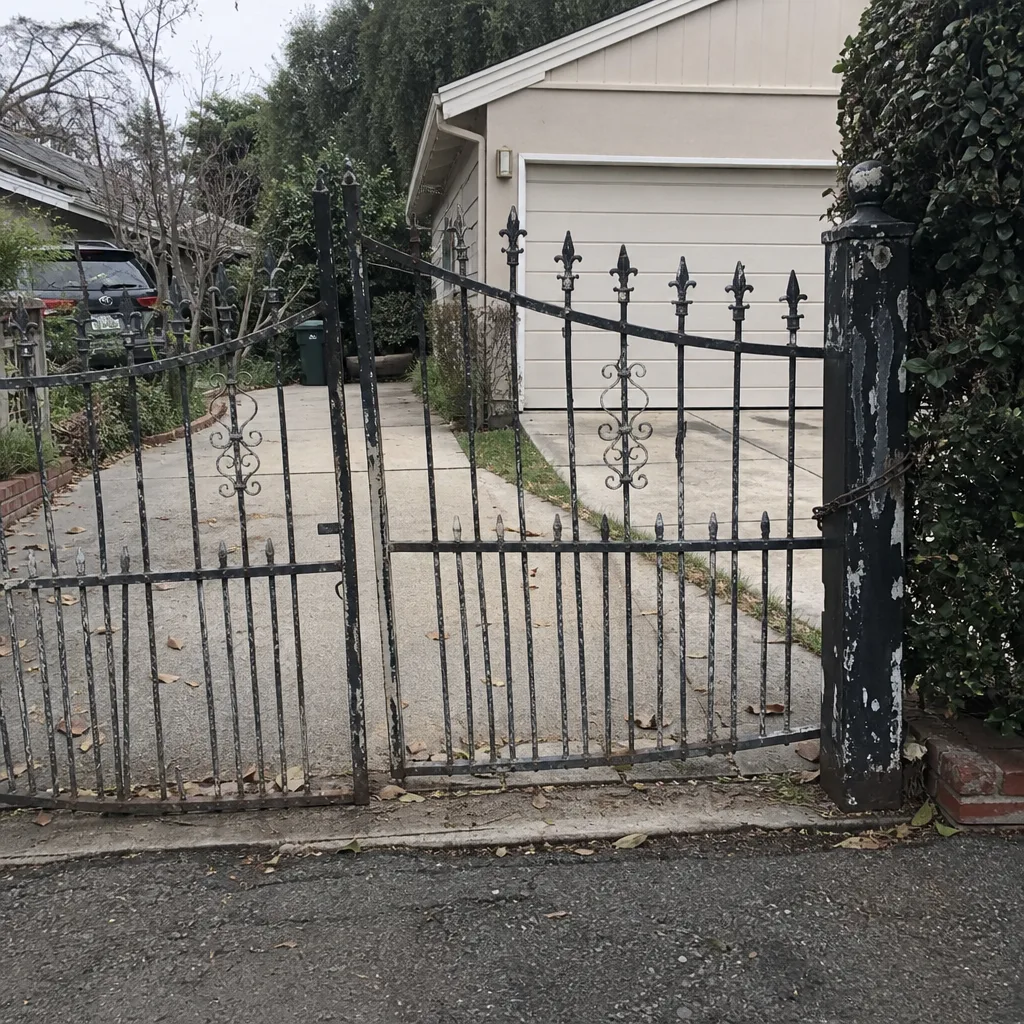 Before
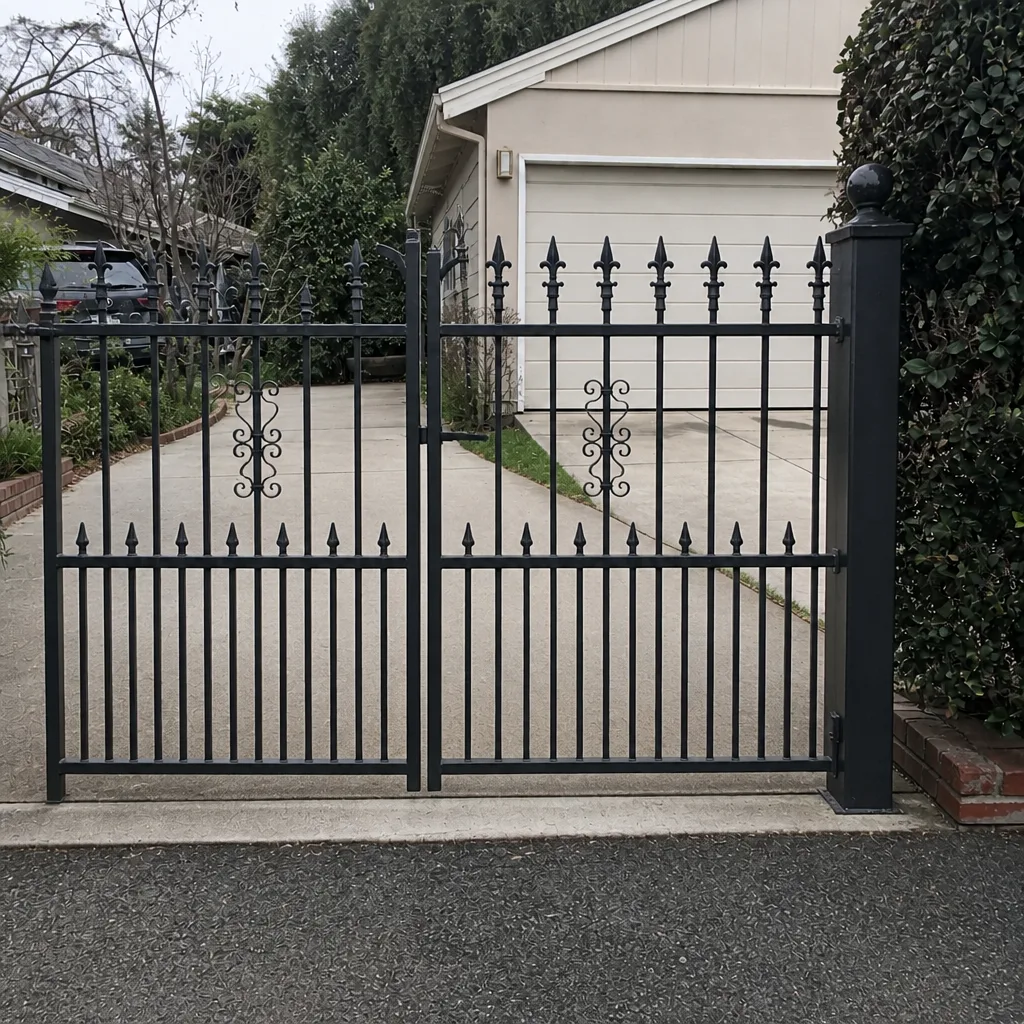 After