
Last updated November 4, 2026
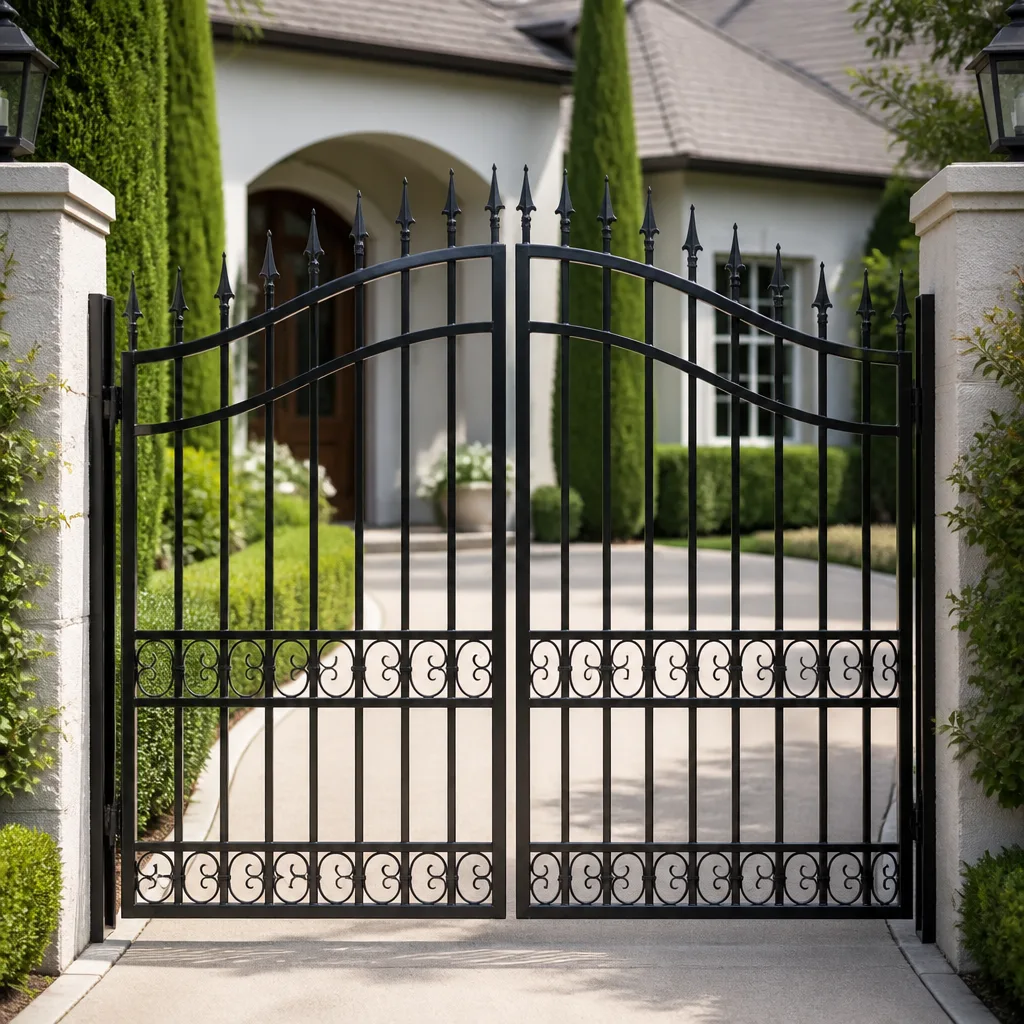 Wrought iron
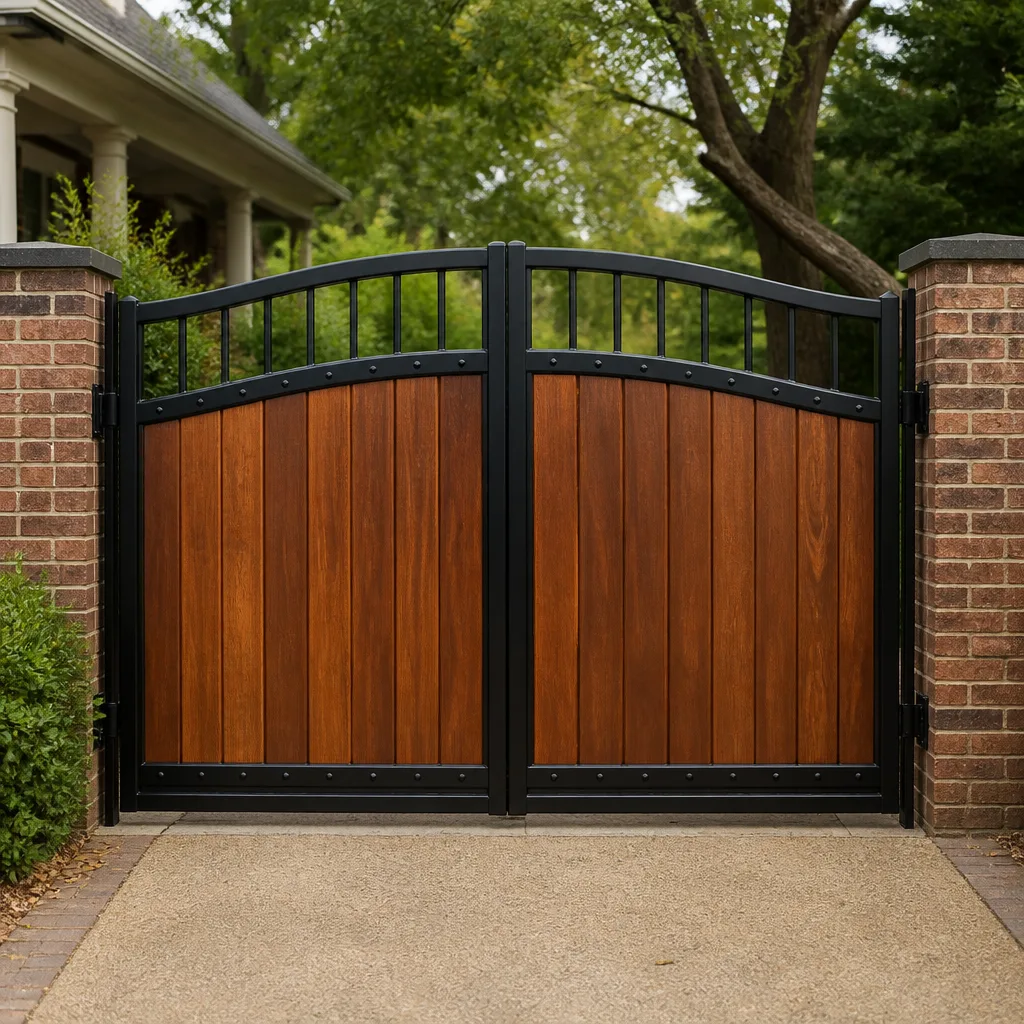 Wood & steel frame
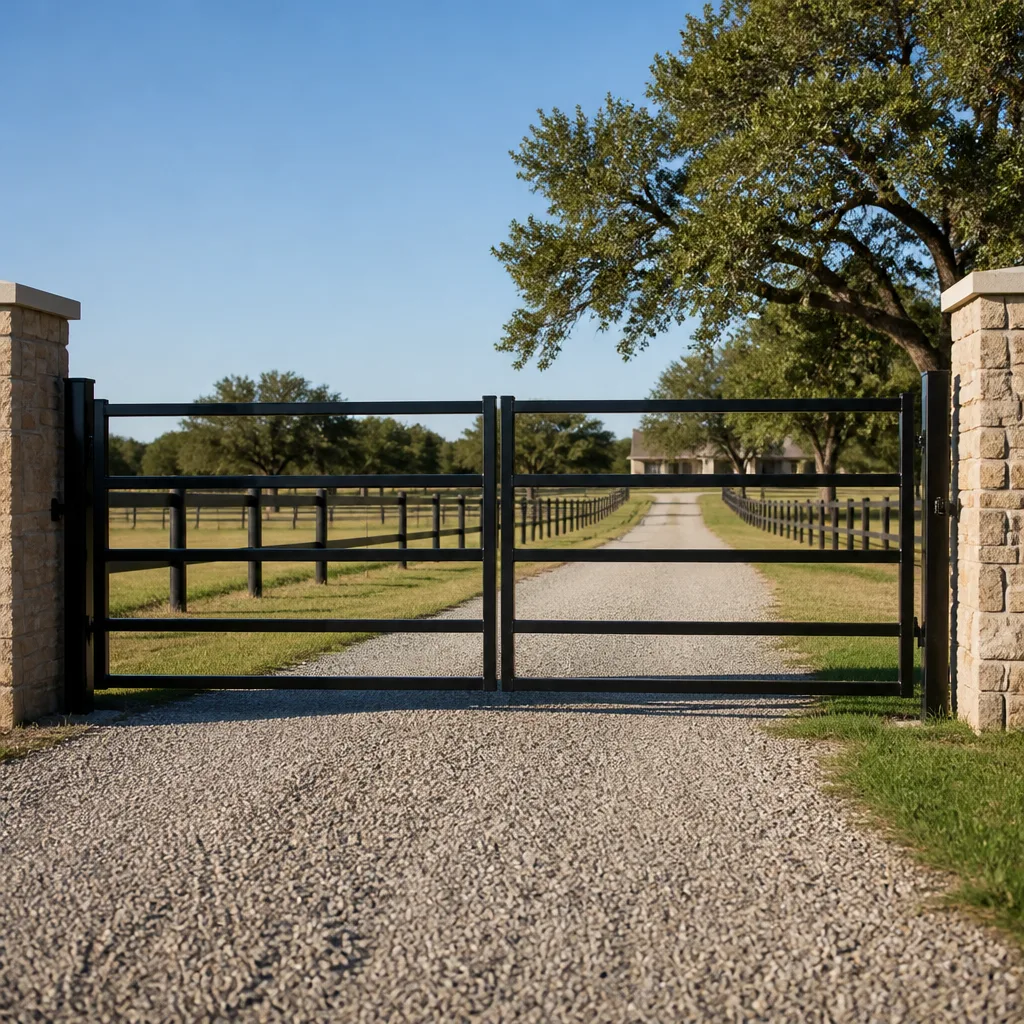 Farm & ranch
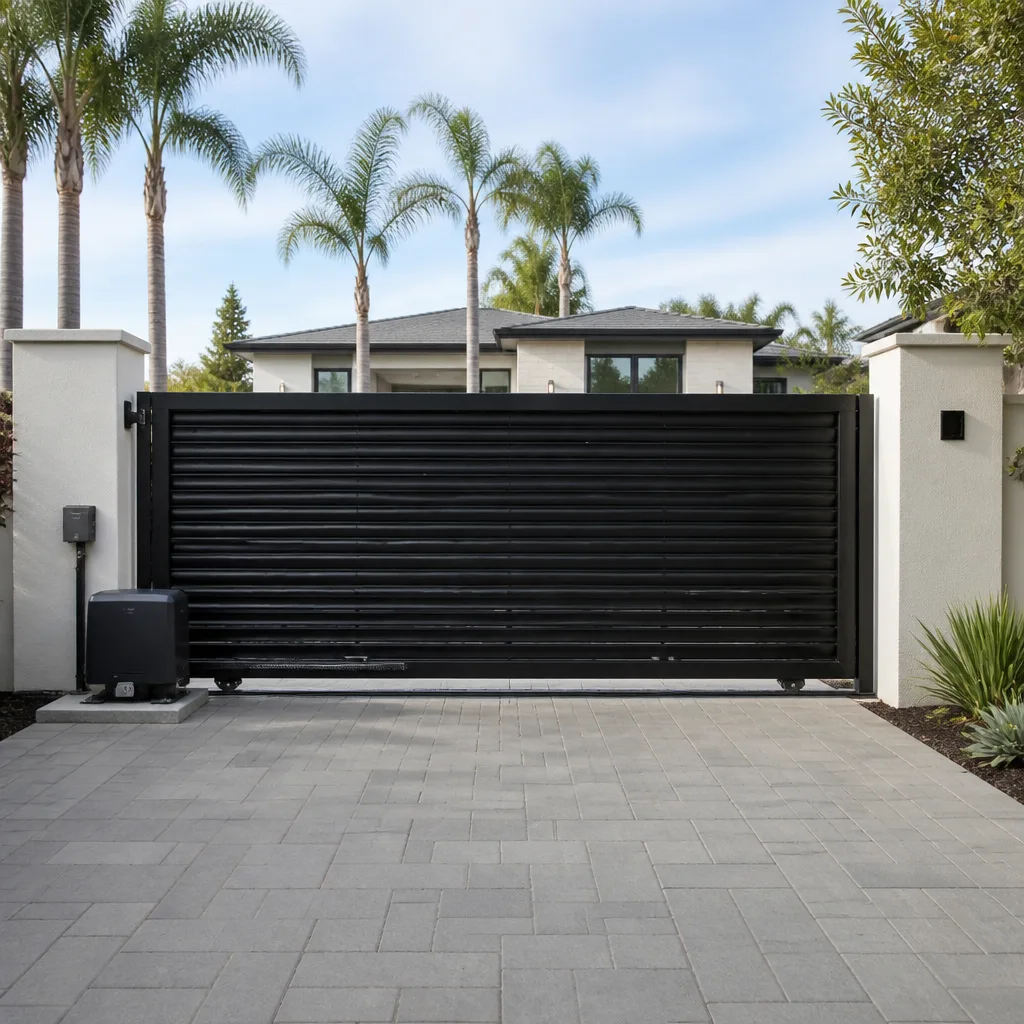 Sliding driveway gates
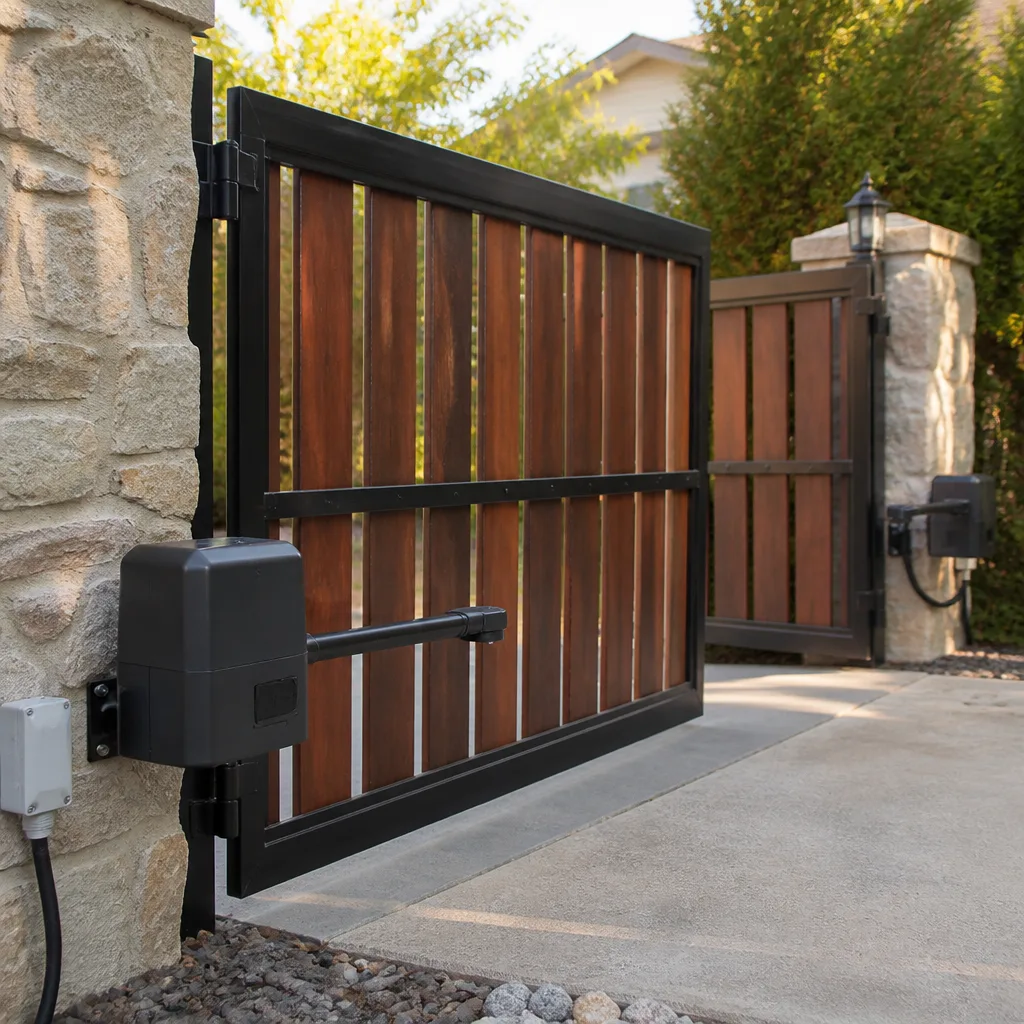 LiftMaster operators
Free on-site gate assessment - hinges, posts, and your LiftMaster or Nice gate operator checked before anything is quoted
The assessment is free and the quote is the invoice.
Get your free estimateHow to Hire a Gate Repair Contractor in Lake Forest: A Step-by-Step Guide
Ask any contractor “what gate brands do you service?” If they pause, glance at the ground, or say “most major brands,” that’s your answer. A real gate specialist names specific brands and can recite common failure modes for each without looking anything up. The biggest hiring mistake in Lake Forest isn’t skipping background checks. It’s hiring a fence company or garage door outfit that lists gate repair as a side service, then watching them misdiagnose a brand they’ve rarely worked on. This guide teaches you to filter for genuine gate specialists before the first call. You’ll learn the five interview questions that separate dedicated technicians from generalists, what California licensing actually applies to your specific repair, and how to spot a lowest-bid quote that hides a used operator.
Quick Answer
To hire a gate repair contractor in Lake Forest, verify they specialize exclusively in gates, can name your specific operator brand (LiftMaster, FAAC, BFT, Linear, Viking, Ghost Controls, DoorKing, Elite, or Mighty Mule) without hesitation, and hold the California license class that matches your repair scope. Ask the five interview questions below before scheduling, require a written estimate with brand-specific line items, and reject any quote that uses vague language like “gate opener” without naming the manufacturer or model. Most gate problems are diagnosed on the first visit, so a contractor who needs multiple trips to identify a basic issue is a red flag.
Styles & brands we work with
- Wrought iron
- Wood & steel frame
- Farm & ranch
- Sliding driveway gates
- LiftMaster operators
Table of Contents
- Understand Your Gate System Before You Call
- California Licensing: What Actually Applies to Gate Repair
- The Five Interview Questions That Separate Specialists from Generalists
- How to Verify Experience with Your Specific Gate Brand
- Red Flags in Gate Repair Quotes
- Why the Lowest Bid Almost Always Means a Used Operator
- Step-by-Step Hiring Process: From First Call to Finished Repair
Understand Your Gate System Before You Call
You don’t need to become a gate technician to hire one well, but knowing what you own changes the entire conversation. Lake Forest homes run the full spectrum: older sliding gates with chain-driven operators, newer swing gates with articulated arms, and a growing number of DIY-friendly systems like Ghost Controls and Mighty Mule that homeowners installed themselves. Each has different failure patterns, different repair costs, and different specialists who know them well.
Start by locating the operator. It’s the metal box mounted on the gate or on a post nearby. Open it and write down the brand name and model number. If there’s a control board inside, note any flashing lights or error codes. This information alone lets a contractor quote accurately over the phone and arrive with the right parts. It also filters out generalists immediately. A fence contractor who can’t tell a Viking operator from a Linear one by its cover will waste your time diagnosing what a gate specialist identifies in minutes.
The three questions to answer before you call:
- What type of gate is it? Sliding, swing, or barrier arm. Sliding gates in Lake Forest often run on steel track systems that wear over time. Swing gates stress hinges and operator arms differently.
- What brand is the operator? Check the control box. If you see LiftMaster, FAAC, BFT, Linear, Viking, Ghost Controls, DoorKing, Elite, or Mighty Mule, you own a known quantity that a specialist can diagnose quickly.
- What exactly is failing? Does the gate not move at all, move halfway and stop, make noise but not engage, or open but not close? Each symptom points to a different component: control board, limit switch, gear, capacitor, or safety sensor.
We specialize exclusively in gates – nothing else. That single-trade focus matters because gate repair sits at the intersection of mechanical work and electrical diagnostics. A technician who spends Monday hanging fence panels and Tuesday rebuilding a track loses the edge on Wednesday when a Viking control board throws an unfamiliar error code.
California Licensing: What Actually Applies to Gate Repair
California’s contractor licensing rules confuse even experienced property owners because gate repair straddles multiple license classes. When you’re hiring in Lake Forest, asking the right question about licensing protects you from unqualified work and potential liability. Ask your city’s building department about permit requirements for your specific project, and verify any license number through the Contractors State License Board before work begins.
Here’s what the license classes mean for your repair:
- C-13 Fencing: This is the core license for gate installation and repair work. It covers the physical gate, hinges, tracks, posts, and the structural components. For most mechanical gate repairs – a jammed hinge, a bent track, a sagging panel – this is the relevant license class.
- C-10 Electrical: When the repair involves the operator’s power supply, control wiring, or line-voltage connections, California requires electrical work to be performed under a C-10 license or by a C-13 contractor whose scope includes the electrical components of the gate system. Electric gate repair that touches the control board, transformer, or hardwired power lines falls into this territory.
- D-28 Lock and Security: This class covers access control systems: keypads, card readers, intercoms, and some remote entry systems. If your gate problem involves the keypad not triggering the operator, or an intercom that won’t release the lock, a D-28 license may apply to that portion of the work.
The practical takeaway: ask your contractor which license class they hold and whether it covers the full scope of your repair. A legitimate specialist answers without hesitation. An electric gate repair that requires opening the operator, rewiring a control board, and replacing a failing transformer sits at the intersection of C-13 and C-10 work. A contractor who handles the mechanical and the electrical sides under one license is doing what the industry expects of a gate specialist. A contractor who hesitates or says “licenses don’t really apply to gates” is telling you something important about their operation.
The Five Interview Questions That Separate Specialists from Generalists
Phone interviews save time and money. Before you schedule a site visit, ask these five questions. A gate specialist answers them instantly and with specifics. A generalist stalls, talks in generalities, or changes the subject. We’ve heard every wrong answer in this list, and they all point the same direction.
- “What gate brands do you service most often?” A real contractor names specific brands. We work regularly with LiftMaster, FAAC, BFT, Linear, Viking, Ghost Controls, DoorKing, Elite, and Mighty Mule. If a contractor says “all major brands” or “whatever’s on the gate,” they haven’t touched enough gates to know the differences. A brand-agnostic diagnostic approach means we service whatever you already own rather than pushing a single proprietary product line. A generalist pushes whatever brand they have a relationship with.
- “What’s the most common failure on my specific brand?” This is the filter that exposes generalists in one sentence. Every operator brand has known failure patterns. Linear operators commonly develop limit switch drift that causes the gate to stop short or overrun. Viking units are known for gear wear in high-cycle applications. Ghost Controls and Mighty Mule systems, popular with DIY homeowners, often fail from battery degradation or improper solar panel wiring. A specialist answers with specifics about the brand you named. A generalist says “it depends” or gives a generic answer about “gates in general.”
- “How do you handle operator programming after a control board replacement?” This is the technical question that any real specialist answers instantly. Replacing a control board is not plug-and-play. Each brand uses different programming protocols for limit settings, force sensitivity, and remote transmitter pairing. A LiftMaster board requires different setup steps than a FAAC or BFT board. Ask how they program limit switches after a board replacement. A specialist explains the process for your brand. A generalist says they’ll “figure it out on site.”
- “Do you do both the mechanical and electrical sides of gate repair?” Many companies handle one but not the other. A fence contractor might replace a hinge but refuse to touch the operator. An electrician might rewire the operator but tell you to call someone else for the sagging panel. We work the mechanical and the electrical – both sides of the problem. From a jammed hinge to a full automated-entry installation, we handle the complete job. One contractor for the full system means one point of accountability.
- “Can I see an example of a written estimate for a job like mine?” A professional estimate includes specific components: the operator brand and model, the type of track or hinges, the wiring scope, and a line-item breakdown. Vague language like “gate repair – $600” tells you nothing and protects no one. A contractor who can show you a sample estimate with real brand names and specific descriptions is telling you they do this work regularly and stand behind their pricing.
How to Verify Experience with Your Specific Gate Brand
The five questions above get you most of the way there. For additional verification, manufacturer dealer locators and authorized service program databases provide independent confirmation of a contractor’s brand fluency. This matters most with commercial-grade operators like FAAC, BFT, and DoorKing, where manufacturer training programs exist and authorized service providers appear in searchable databases.
Here’s how to verify:
- Manufacturer dealer locators: LiftMaster, FAAC, BFT, Linear, Viking, and DoorKing all maintain online locator tools. Enter your ZIP code and see which contractors appear. A gate specialist who services these brands in Lake Forest will appear in multiple locators. A generalist might not appear in any.
- Authorized service program databases: Some manufacturers list service providers who have completed factory training or met specific service standards. This is stronger verification than a locator alone. However, be aware that “inauthorized” does not always mean unqualified: independent specialists often service brands competently without paying for manufacturer partnership fees. We’re independent and experienced across nine major brands, not locked into one manufacturer’s program.
- Ask about the last time they worked on your brand: A specialist who works on Viking operators weekly answers instantly. A contractor who “used to see those” or “they’re all pretty much the same” is signaling unfamiliarity. Specificity is the test. Whether your system runs on Viking or Ghost Controls, a specialist knows it cold.
- Check for DIY-brand fluency: Mighty Mule and Ghost Controls are consumer-grade systems sold at retail. Many professional gate contractors decline to work on them because the profit margins are lower than commercial systems. But Lake Forest homeowners who installed these systems themselves still need repair help. A true gate specialist services both DIY-friendly residential brands like Mighty Mule and Ghost Controls and professional-grade commercial systems like FAAC, BFT, and DoorKing. It’s a wider service range than most contractors offer, and it signals genuine multi-brand fluency.
Red Flags in Gate Repair Quotes
A written estimate is a contract of clarity. The language in it tells you more about the contractor than any marketing material. Before you sign, scan for these red flags that show up in Lake Forest gate repair quotes regularly.
- Vague line items: “Fix gate” or “gate repair service” with a round number attached. A professional quote specifies what’s being repaired: “Replace Viking V75 operator control board,” “Weld cracked hinge bracket,” “Install new steel track section.” Specificity means the contractor knows what they’re doing and what they’re charging for. Vagueness means they’re guessing or hoping you won’t ask.
- No brand specification: Any quote for operator replacement that doesn’t name the brand and model is hiding something. “New gate opener – $1,200” tells you nothing. Is that a $400 retail Mighty Mule or a $1,100 commercial LiftMaster? Which one are you actually getting? Demand the manufacturer name and model number in writing.
- “Diagnose on-site” fees that disappear if you hire same-day: A diagnostic fee that gets credited toward the repair if you hire them on the spot is a pressure tactic disguised as a discount. We don’t use it. The estimate is free, and the price is set per job by the written estimate. You decide based on the quote, not on a ticking clock.
- “We’ll figure out the brand when we get there”: This is the quote equivalent of the interview question fail. A specialist asks you for the brand before scheduling, often troubleshoots over the phone, and arrives with diagnostic knowledge already formed. A contractor who needs to “see what you’ve got” before they can tell you anything about it is learning on your time.
- “Parts are on backorder” without specificity: Backorders happen. But a legitimate contractor tells you exactly which part is backordered, from which distributor, and the expected arrival window. A vague “backorder” with no details sometimes means they’re hunting for used parts to fill the gap.
We price every job by written estimate before any work starts. The price you approve is the price you pay. That’s the standard for gate work, and any contractor who resists putting numbers in writing before starting is telling you something about how they’ll handle surprises later.
Why the Lowest Bid Almost Always Means a Used Operator
In gate repair, the lowest bid is rarely a bargain. It’s most often a reconditioned or used operator being installed as new, with the price difference coming out of the parts budget rather than the labor. Lake Forest homeowners who shop strictly by price end up replacing that “new” operator within a few years. Here’s how to spot it in a quote.
A used or reconditioned operator typically appears as a vague line item: “Gate opener (replacement) – $850” with no brand name, no model number, and no “new” designation. A new operator quote specifies: “NEW LiftMaster LA400 swing gate operator, includes control board, receiver, and two remotes.” The word “new” matters. If it’s absent, ask. A used operator might cost $300 to $500 less than a new one, but it carries unknown cycle counts, unknown board condition, and no meaningful warranty. The savings disappear the first time the reconditioned unit fails.
Here’s what to look for:
- No “new” designation on the operator line item: If the quote says “operator” but doesn’t say “new,” ask directly. A legitimate contractor is happy to clarify and add the specification to the quote.
- Operator price that’s suspiciously low for the brand named: A new Viking or DoorKing commercial operator runs a specific price range. If the quote lists a commercial brand at a residential price, something’s off. Either the unit is used, or it’s the wrong model for your gate.
- “We have one in stock” without a brand name: In-stock is good. Unspecified is not. A specialist tells you exactly what they have and why it fits your gate’s weight, cycle frequency, and power requirements.
- No warranty period on the operator: New operators carry manufacturer warranties. A quote that omits warranty information on an operator installation is suspicious. Ask what the manufacturer warranty covers and what the contractor’s labor warranty covers.
The honest math: a quality operator installation, done with a new unit and correct settings for your gate’s weight and cycle frequency, lasts years and rarely needs attention. A reconditioned unit at a lower price costs more over time in repeat repairs. The written estimate sets the final price and specifies exactly what’s being installed. That clarity is worth more than the lowest number.
Step-by-Step Hiring Process: From First Call to Finished Repair
Hiring the right gate contractor in Lake Forest is a sequence, not a single decision. Follow this process and you’ll filter out generalists before they reach your gate.
- Gather your gate information: Find the operator brand and model, note the symptom (won’t open, stops midway, opens but won’t close), and write down any error codes from the control board. This five-minute step saves an entire diagnostic visit.
- Call two or three contractors and run the five interview questions: Ask about brands, common failures on your specific unit, programming approach after board replacement, and mechanical-plus-electrical capability. Take notes. The answers tell you who’s a specialist and who’s a generalist with a gate section on their website.
- Verify licensing and brand experience: Check the CSLB license for the contractor, confirm the class covers your repair scope, and search manufacturer dealer locators for their name. A specialist appears in multiple brand databases.
- Request written estimates from the contractors who passed the interviews: Estimates should be free, specific, and line-itemed. No vague “gate repair” language. No “diagnose on-site” fees that pressure a same-day decision. No absence of brand names.
- Compare the estimates on scope, not just price: The same repair described differently by different contractors is a useful signal. One quote says “replace limit switch” and another says “replace operator.” One is a $120 part. The other is an $800 unit. If the quotes describe different scopes, ask why. A specialist explains the diagnosis and justifies the part selection.
- Schedule the repair and confirm the written price: The price you approved is the price you pay. Work begins only after the quote is agreed to. If the technician finds something additional during the repair, that stops the clock: you get a call, a description of the new problem, and a new quote before any additional work proceeds.
- After the repair, test the gate fully: Open it. Close it. Trigger the safety sensors. Cycle it several times. Check the remote transmitters. A specialist walks you through the test before leaving. A generalist packs up and heads to the next job.
Most gate problems are diagnosed on the first visit. If you’ve gathered your information and run the interview questions, the contractor who arrives already knows what they’re likely to find. That’s the difference between calling someone who fixes gates and calling someone who happens to list gate repair as one service among many.
Common Mistakes to Avoid
- Hiring a fence company to repair an electric gate: Fence contractors know fencing. Gates – especially automated ones with control boards, loop detectors, and safety sensors – are a different trade. A fence company might replace a hinge competently, but when the Viking operator won’t close, they’re out of their depth. Gate repair and electric gate repair require specialized electrical diagnostic skills.
- Accepting a quote that doesn’t name the operator brand: This is the single most common quote error in Lake Forest. If the estimate says “gate opener” without a manufacturer, you don’t know what you’re buying. Insist on the brand and model in writing.
- Skipping the license check: California requires specific license classes for gate work. A handyman with no license and a low bid is not a bargain; he’s an uninsured liability working on an entry system that controls your property’s security. Check the CSLB before anyone touches the gate.
- Choosing the lowest bid without comparing scope: The $850 “gate repair” quote and the $1,400 “Limit switch replacement, new track section, and operator reprogramming” quote are not the same job. When the scopes differ, the cheaper quote often omits work the gate actually needs.
- Ignoring the operator’s cycle rating: A gate installed for a single-family home has a different cycle rating than a gate serving a multi-unit property. If your contractor doesn’t ask how many times per day the gate cycles, they may install an under-spec’d operator that burns out early. Lake Forest properties with frequent visitors or delivery traffic have different needs than a quiet cul-de-sac.
- Assuming all gate contractors handle all brands: Most develop brand preferences over time. A contractor who primarily installs LiftMaster may struggle with a Ghost Controls system. Ask about your specific brand before scheduling. A specialist who works across LiftMaster, FAAC, BFT, Linear, Viking, Ghost Controls, DoorKing, Elite, and Mighty Mule can service whatever’s already on your property.
- Deferring maintenance until the gate fails completely: A slow-responding operator, a grinding track, or a gate that reverses mid-cycle are early warnings. Ignoring them turns a $200 part replacement into an $1,800 operator replacement. When the early symptom appears, call for a diagnostic before the failure becomes total.
See the difference
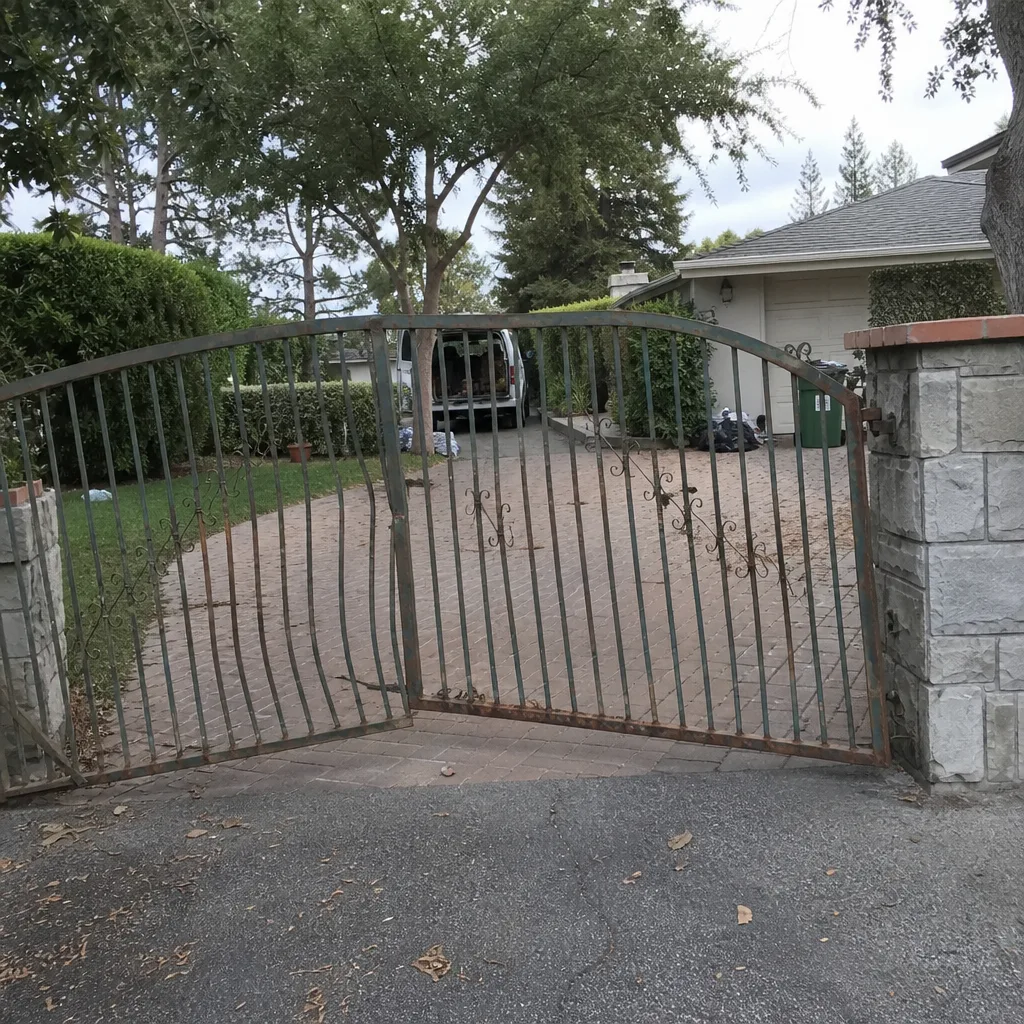 Before
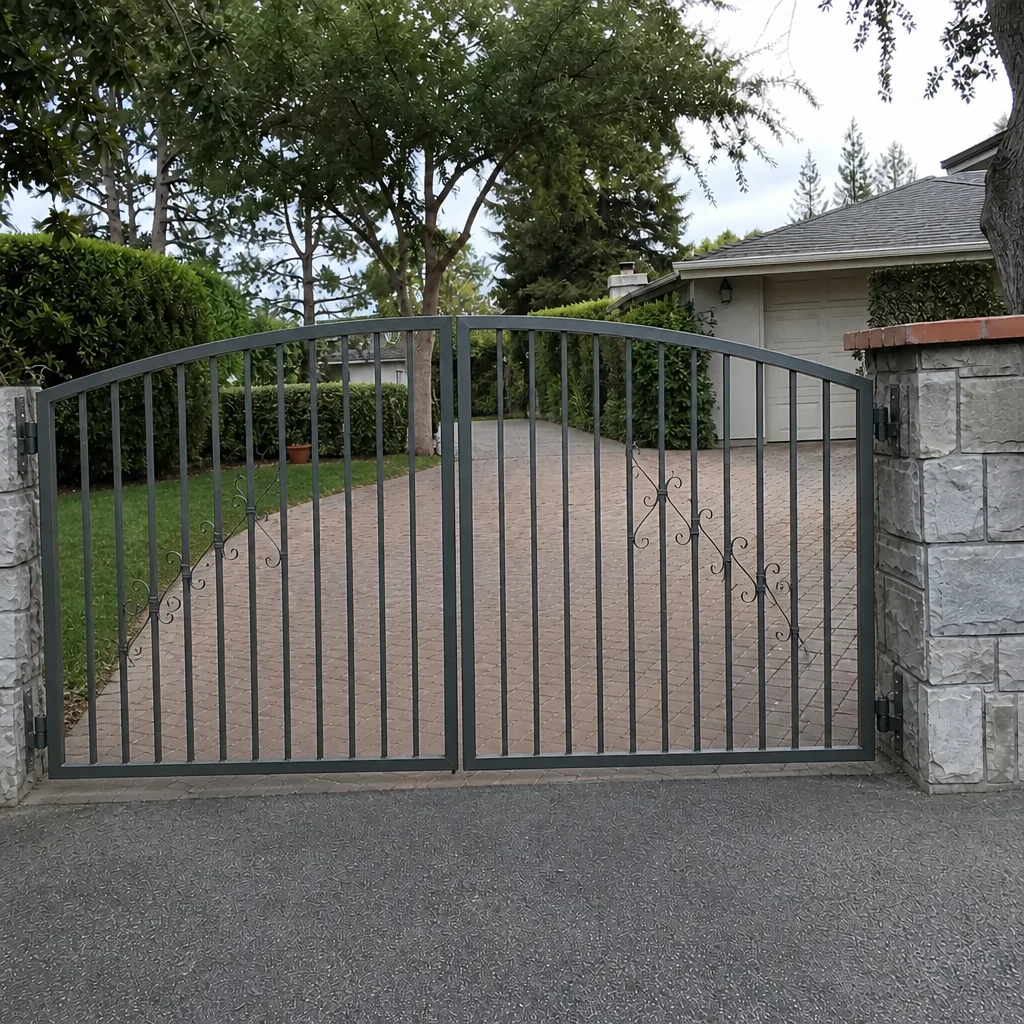 After
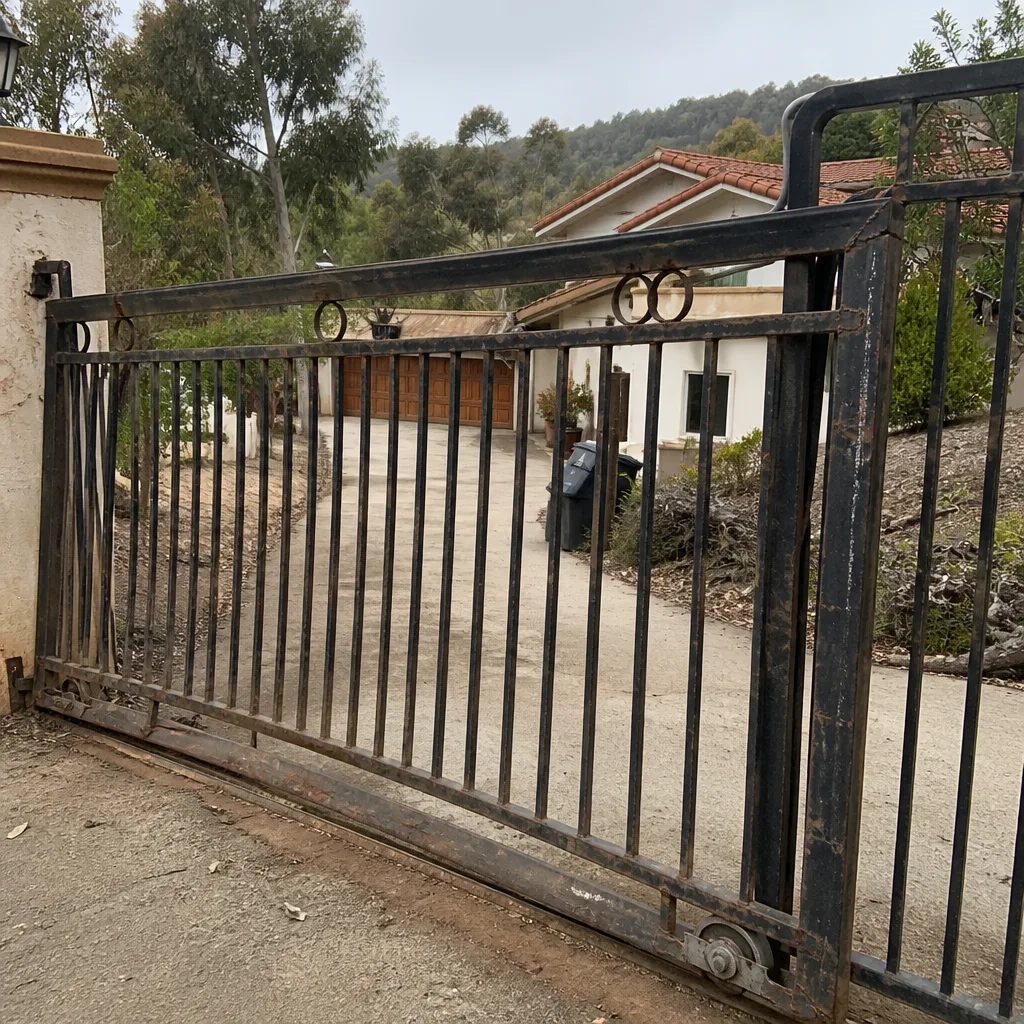 Before
 After
 Before
 After
When to Call a Professional
Some gate problems are obvious and urgent: the gate won’t open at all and you can’t get your car out. Others are subtler but no less important. Call a professional when the gate opens halfway and stops, when the operator makes grinding or clicking sounds it didn’t make before, when the safety sensors fail to reverse the gate on obstruction, or when the keypad or remote entry system stops triggering the operator reliably. These are diagnostic signals, not random noises. A gate specialist reads them and finds the root cause. Gate Repair Lake Forest offers free estimates in Lake Forest – call (866) 472-6659 to schedule one. We answer 24/7. Fast dispatch from 7am to 7pm, Sunday through Friday. Closed Saturday.
Frequently Asked Questions
Gate repair costs in Lake Forest vary widely depending on the brand, the component, and the failure type. Minor repairs like limit switch adjustments or hinge lubrication typically run $150 to $350. Control board replacements run $400 to $900 depending on the operator brand. Full operator replacements run $1,200 to $3,500 for new units with installation. Every job is priced by written estimate before work begins, so the price you see is the price you pay. Call (866) 472-6659 for an exact quote – estimates are free.
We work on nine major gate and operator brands: LiftMaster, FAAC, BFT, Linear, Viking, Ghost Controls, DoorKing, Elite, and Mighty Mule. Whether your system runs on a commercial-grade FAAC or a DIY-installed Mighty Mule, we know it cold. We specialize exclusively in gates – nothing else – so our technicians aren’t splitting attention across fencing, garage doors, or general contracting. Call (866) 472-6659 and tell us what brand you own; we’ll tell you what we’re likely to find.
We answer 24/7 and dispatch technicians from 7am to 7pm, Sunday through Friday. Closed Saturday. Same-day service is often available for gate repair calls in Lake Forest, depending on the day’s schedule and the nature of the repair. Call (866) 472-6659 to check today’s availability and get a free estimate.
A full gate installation includes removal of the old gate and operator (when applicable), setting posts to proper footing depth, installing the new gate panel and mounting it to the hinges or track, wiring the operator to a dedicated power source, installing and programming the control board, setting the limit switches and force sensitivity, and testing safety sensors and remote transmitters. Every installation is quoted by written estimate before work starts. Call (866) 472-6659 for a free on-site estimate in Lake Forest.
Yes. Gate installation and Gate Repair Lake Forest work involves both the mechanical and electrical sides of the system, including the power run to the operator and the installation of safety edges and photo sensors. Electric gate repair is a named core service, which means we work on control boards, wiring, loop detectors, and access systems – not just the hinges and track. Call (866) 472-6659 to discuss the full scope and get a written estimate.
The determining factors are the condition of the gate frame, the extent of track or hinge wear, and the age and brand of the operator. A bent or rusted gate frame is a replacement indicator. A worn track section or a failing operator part is typically repairable. We diagnose first and quote the repair. If replacement is the better long-term value, we’ll explain the math and give you a written estimate for both options. Call (866) 472-6659 for a diagnostic visit and a straight answer.
The Bottom Line
Hiring the right gate repair contractor in Lake Forest comes down to one filter: does this person specialize in gates, or do they list gate repair as a side service? The five interview questions answer it in minutes. Ask about brands, specific failure modes, programming after board replacement, and mechanical-plus-electrical capability. Verify licensing through the CSLB and brand experience through manufacturer dealer locators. Reject vague quotes, brand-free line items, and lowest-bid operators that turn out to be reconfigured used units. A written estimate with specifics is the standard. Most gate problems are diagnosed on the first visit. The right contractor arrives already knowing what to look for. Call (866) 472-6659. We answer 24/7. Fast dispatch from 7am to 7pm, Sunday through Friday.
Written by the team at Gate Repair Lake Forest, serving Lake Forest since 2017.