
Last updated November 4, 2026
 Wrought iron
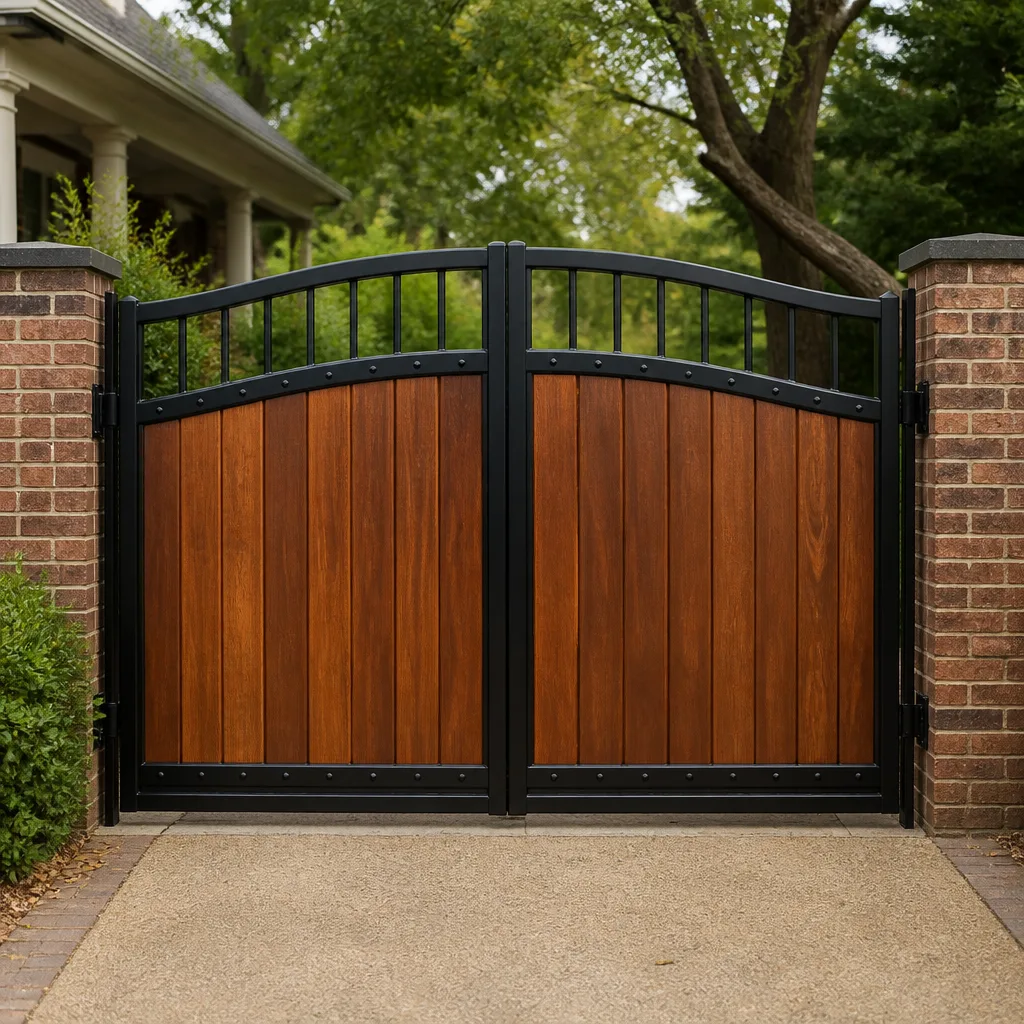 Wood & steel frame
 Farm & ranch
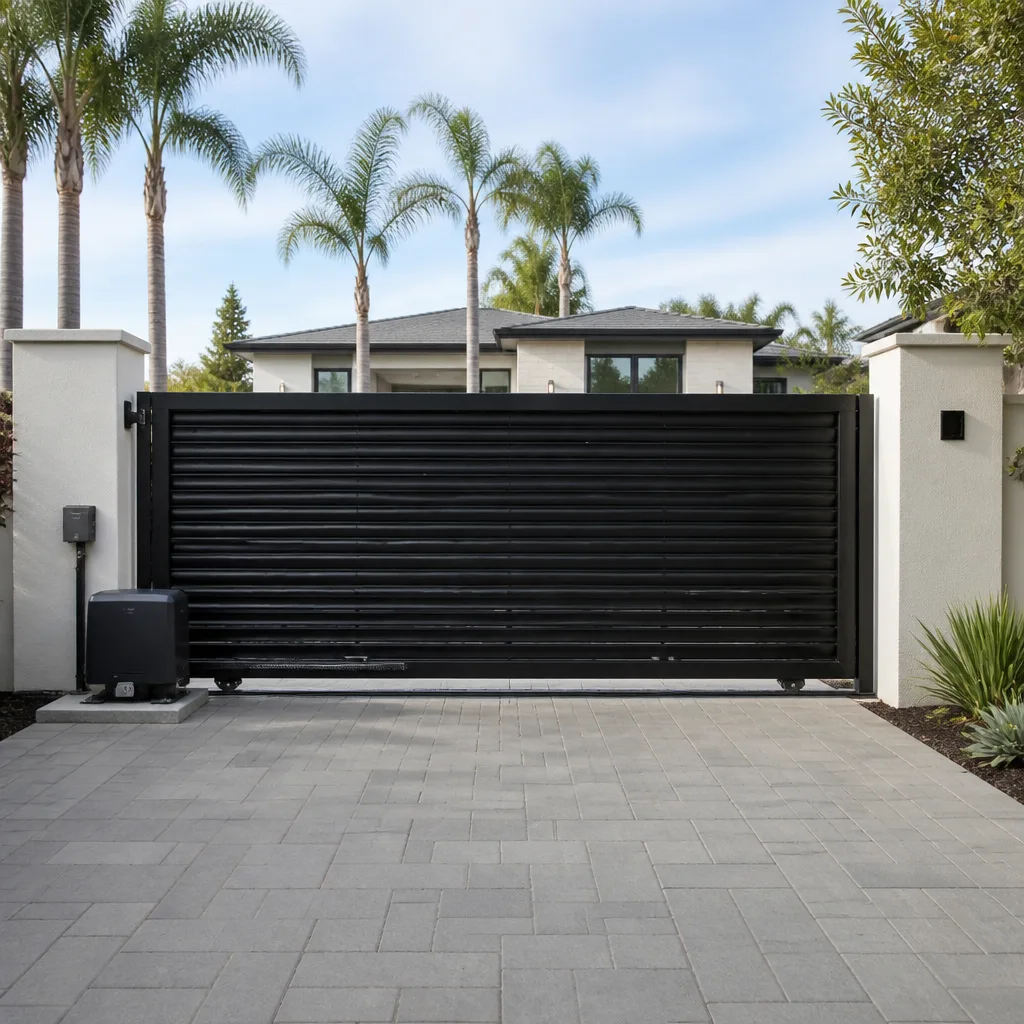 Sliding driveway gates
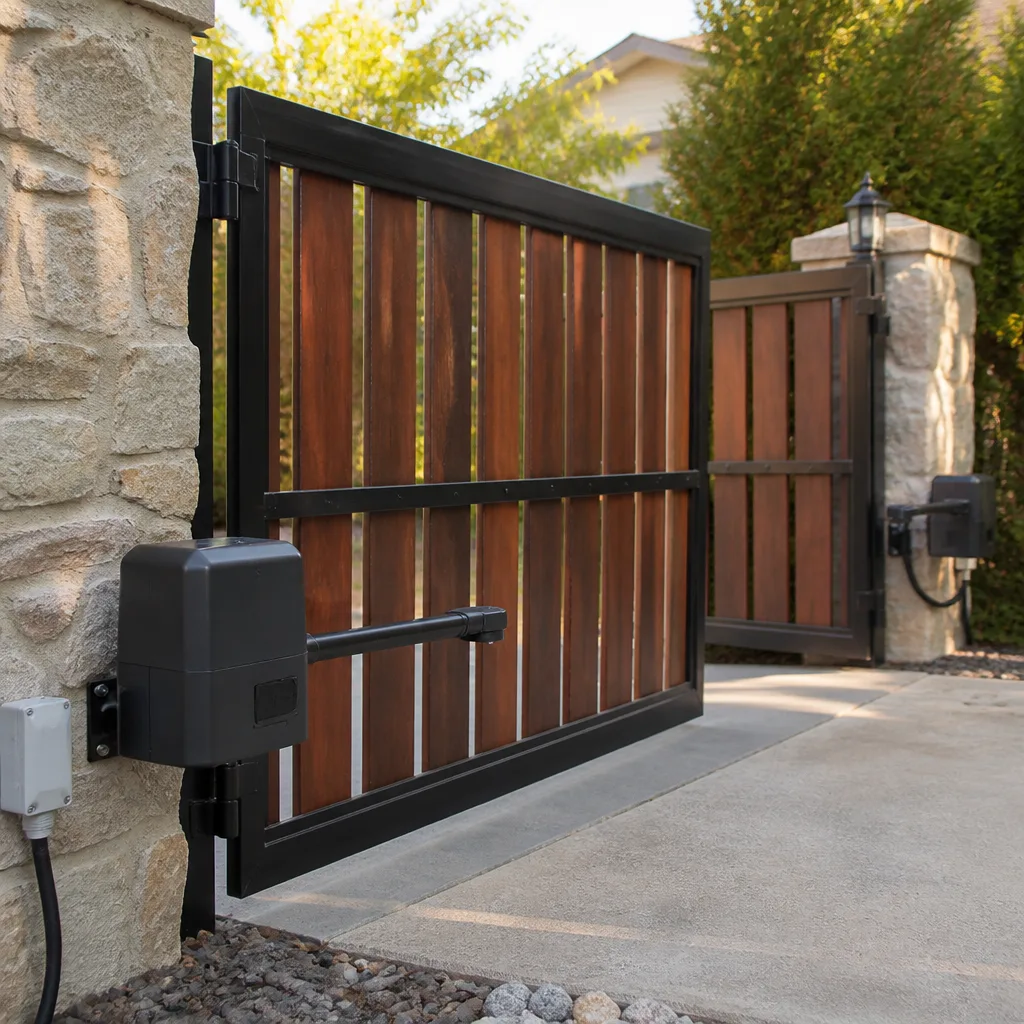 LiftMaster operators
Free on-site gate assessment - hinges, posts, and your LiftMaster or Nice gate operator checked before anything is quoted
The assessment is free and the quote is the invoice.
Get your free estimateGate Repair Warning Signs: A Lake Forest Homeowner’s Reference Guide
Most people think gate failure happens all at once. One day it opens, the next day it doesn’t. That’s almost never how it actually works. The truth is your gate has been talking to you for weeks, sometimes months, using a vocabulary of hesitations, odd noises, and small behavioral changes that are easy to dismiss as quirks. This guide will teach you to read those signals the way a technician does, so you can address a developing problem before it strands you outside your own driveway or leaves your property unsecured overnight here in Lake Forest.
Styles & brands we work with
- Wrought iron
- Wood & steel frame
- Farm & ranch
- Sliding driveway gates
- LiftMaster operators
Quick Answer
The most important gate repair warning signs are a pause or hesitation before movement, a grinding or humming sound without corresponding motion, uneven travel speed in a swing gate, stuttering in a slide gate, and repeated but intermittent failures more than twice in a month. Any of these means the system is working harder than it was designed to, and the longer it runs that way, the more expensive the eventual repair. In Lake Forest, where many homes rely on automated entry gates for both privacy and hillside property security, catching these signs early is the difference between a simple adjustment and a full operator replacement.
Table of Contents
- The Hesitation Signal: Your Operator’s First Cry for Help
- Audio Diagnostics: What Your Gate Is Trying to Tell You
- Swing Gate Behavior: Reading Asymmetry and Speed Changes
- Slide Gate Behavior: Stutter, Drift, and Track Resistance
- Electrical Warning Signs: LED Codes and Control Board Symptoms
- Structural Warning Signs That Mimic Electrical Failure
- The Three-Strike Rule for Intermittent Failures
- Common Mistakes to Avoid
- When to Call a Professional
- Frequently Asked Questions
- The Bottom Line
The Hesitation Signal: Your Operator’s First Cry for Help
If your gate hesitates for half a second before moving, that pause is not a personality trait. It’s your operator telling you the torque limit is set too close to the actual load. The motor is straining against resistance it can barely overcome, and that half-second is the control board deciding whether it has enough current to proceed. By the time the gate stops opening entirely, you’ve already subjected the motor, the capacitor, and the drive gears to months of overload stress. We’ve opened operators where the windings were scorched, not from a single event, but from dozens of small daily struggles the owner never noticed.
In Gate Repair Lake Forest service calls, this hesitation is one of the most common findings on gates that are five to ten years old. The cause is usually mechanical: a dry bearing, a hinge that’s begun to bind, a chain that’s stretched and needs tensioning, or a wheel that’s worn flat on one side. The motor compensates until it can’t. What you hear as a pause, we read as a diagnostic.
The fix, caught early, is often straightforward. Lubricating pivot points, adjusting the torque limit, replacing a worn wheel. The fix after months of neglect is a new operator. Listen to the pause.
Audio Diagnostics: What Your Gate Is Trying to Tell You
Sound is the richest diagnostic channel your gate offers, and each sound points to a different component. Grinding, clicking, and humming-without-movement are three completely different failures. Here’s how to read them.
Grinding: Metal on Metal
A grinding sound means two metal surfaces are moving against each other without proper lubrication, or with a foreign object caught between them. On a swing gate, this most often comes from the hinge posts. On a slide gate, it’s the wheels or the track. The sound won’t go away on its own, and the damage compounds: metal shavings from a grinding bearing contaminate nearby surfaces and accelerate wear. If the grind has a rhythmic quality, matching the gate’s movement speed, you’re listening to a specific point in the travel cycle, and that narrows down the location.
Clicking: Relay, Capacitor, or Limit Switch
A click that repeats rapidly without the gate moving usually means the control board is sending a start signal but the motor isn’t engaging. The clicking is a relay or a capacitor trying to fire. On operators from FAAC and BFT, which are common on Lake Forest hillside estates, this pattern often points to a failing capacitor or a start winding issue in the motor. A single click when the gate reaches its fully open or closed position is normal, that’s the limit switch. But repeated clicking with no motion is an electrical fault, not a mechanical one.
Humming Without Movement: Locked Rotor
A deep hum with no movement is the sound of a motor receiving power but unable to turn. That’s a locked rotor. The motor is drawing high current and generating heat while making zero progress, and if the breaker or thermal protection doesn’t trip, the windings burn. This is the one sound where we tell Lake Forest homeowners to kill power to the operator immediately and call for gate repair. The longer it hums, the more likely you’re replacing the entire operator instead of the seized component that caused the stall.
Swing Gate Behavior: Reading Asymmetry and Speed Changes
A swing gate opens in two directions: toward the driveway and away from it. A healthy gate moves at the same speed in both directions, through the full arc, without surging or sagging. When that symmetry breaks, the direction of the asymmetry tells you what’s wrong.
A gate that opens slower in one direction than the other is almost always pointing at gravity or obstruction. If the gate struggles when moving uphill (common in Lake Forest, where many driveways slope), the operator is being asked to lift more than its rated load. That’s a torque or gear-ratio problem. If it struggles in both directions but always at the same point in the arc, you’re likely dealing with a bent hinge pin or a post that has shifted out of plumb, creating a mechanical bind the operator has to fight through.
A gate that slows near the end of its travel and then thuds closed is telling you the operator’s soft-close feature isn’t working or isn’t configured. The gate is being stopped by the physical limit, not by the control board’s deceleration. That impact travels through the gate frame and into the hinges every single cycle, and over time it loosens welds and cracks metal.
Use this diagnostic sequence:
- Watch the gate open and close fully, three cycles, from a fixed position.
- Note the speed in each direction. Are they equal?
- Note the sound at the start, middle, and end of each cycle.
- Note whether the gate hesitates consistently at the same point in its travel.
- If any one of these is inconsistent, you have a developing mechanical problem, not a quirk.
Slide Gate Behavior: Stutter, Drift, and Track Resistance
A slide gate that stutters mid-travel, pausing for a fraction of a second and then continuing, is drawing a different diagnostic picture than a swing gate’s slow arc. Stutter points to track or wheel problems. The gate is encountering a rough spot on the track, a flat spot on a wheel, or a piece of debris that’s been compacted into the track channel. In Lake Forest, the dry inland air means dust and fine grit settle into track recesses and grind against wheels, and a stutter is often the first audible sign of that wear.
A slide gate that drifts after stopping, creeping a few inches after the operator shuts off, has a braking or limit-switch problem. The motor is stopping, but the gate’s momentum isn’t being arrested properly. This can be a worn brake, a misadjusted limit switch, or a chain with too much slack. Drift is dangerous: a gate that drifts past its closed position can shear off a safety sensor or, worse, catch a vehicle or person in the opening.
A slide gate that grinds loudly at the start of travel but quiets down after a few feet is usually fighting uphill from a dead stop. The static friction on the track is high, the motor overcomes it with a surge, and then the load normalizes. Operators from Linear and Viking, both widely installed in Lake Forest, have adjustable start-up torque parameters, and a technician can often smooth this out with a board-level setting change, but only after confirming the mechanical load is normal.
Electrical Warning Signs: LED Codes and Control Board Symptoms
Modern gate operators run diagnostics constantly, and they report their status through LEDs on the control board. If you’ve never opened your operator’s cover, you’re missing the most specific information your gate can give you. Each major brand has its own reporting language, and we’ve decoded enough of them in the field to know exactly what to look for.
Viking Status LED Blink Codes
Viking operators use a status LED on the control board that blinks in patterns to indicate specific faults. A steady blink usually means the board is powered and idle, but a rapid blinking pattern often indicates a reversing-edge or photo-eye obstruction, while a slow, deliberate blink can point to a limit-switch fault or a motor overcurrent condition. The exact code sequence matters, and it’s printed on a label inside the operator cover. If you see anything other than the normal idle pattern, take a photo of the LED and have it ready when you call for electric gate repair. It lets us arrive with the right parts.
LiftMaster Diagnostic Light Patterns
LiftMaster’s residential slide and swing operators use a diagnostic LED that blinks in numbered sequences. One blink means a wiring or sensor fault. Five blinks often indicates a motor overheat or overcurrent condition. The sequence is the key: counting the blinks before the pause is the first step in narrowing down whether you have a bad photo-eye, a misaligned limit switch, or a genuine motor failure. We read these codes as a matter of routine on every service call.
DoorKing Error Displays
DoorKing’s commercial-grade operators, found on many Lake Forest gated communities and light-commercial properties, go a step further with a numeric display that shows fault codes in plain view. These codes reference specific circuit inputs: loop detector faults, reversing-edge inputs, and motor direction errors. A DoorKing that shows a fault code is not broken, it’s telling you exactly what it thinks is wrong. Whether that diagnosis is accurate, or whether a failed component upstream is causing the code, is where a diagnostic visit pays for itself.
One electrical warning sign that crosses all brands: a breaker that trips intermittently but resets fine. That’s not the breaker being “sensitive.” It’s the operator drawing more current than its circuit is rated for, usually because of a failing capacitor, a wiring short, or a motor that’s beginning to seize. Each trip is a warning shot. Ignore them, and the next failure is likely to be permanent.
Structural Warning Signs That Mimic Electrical Failure
Here’s the part most homeowners never learn: a significant percentage of gate failures that look electrical are actually structural. The operator is doing its job, but the gate itself has changed shape, shifted weight, or developed resistance the motor can’t overcome. When we arrive at a call for a “dead gate” and find the operator is fine but the post is leaning, the real conversation changes quickly.
A sinking post is the most common culprit in Lake Forest, where hillside soil and drainage patterns shift over time. A swing gate hangs from its posts, so a post that sinks a quarter inch changes the entire geometry of the gate’s arc. The latch no longer aligns, the gate drags on the ground, and the operator suddenly works harder than it ever has. The homeowner hears the strain and assumes the motor is failing. The motor is fine, it’s the post.
A bent slide gate track creates an identical illusion. The gate moves fine until it hits the bent section, then it stutters, grinds, or stops entirely. A technician who doesn’t check the track will chase the control board, replace the motor, and leave the problem untouched. We always inspect the mechanical path before touching electronics on a slide gate stutter call.
A cracked hinge weld is invisible until you load the gate. The weld holds under light use but separates slightly when the gate reaches full extension, creating a pop or a drop at the far end of travel. The gate sags, the operator strains, and the failure looks like a bad motor. The fix is a weld repair, not a new operator.
What these all share: they get worse slowly, they change the gate’s sound and behavior before they stop it entirely, and they are cheap to address early and expensive to address late. The structural inspection should always come before the electrical diagnosis, not after.
The Three-Strike Rule for Intermittent Failures
An intermittent failure is a gate that malfunctions once, then works fine for a week, then fails again. The randomness feels like a fluke, and it’s tempting to do nothing. Here’s the rule we tell every Lake Forest homeowner: three strikes in a month, and it’s not a fluke. It’s a pattern, and you need a diagnostic visit.
Why three? Because a single failure can be caused by anything from a leaf across a photo-eye to a brief power flicker. Two failures might still be coincidence. But three failures in a thirty-day window means a component is degrading on a schedule. It’s a capacitor that only fails when it’s hot, or a relay that sticks only when it’s cold at night, or a limit switch that works until the temperature swings. The randomness is not random: it’s a component operating at the edge of its tolerance, and it will fail completely, usually at the worst possible time, like a holiday morning when you need to get out.
Document the failures. Note the time of day, the temperature, whether the gate failed opening or closing, and what you had to do to get it working again. That log is worth more than any verbal description you can give over the phone. When you call for a diagnostic, that information lets us target the failing component instead of playing hide-and-seek with an intermittent fault.
- Strike one: Note the date, time, weather, and what the gate did.
- Strike two: Look for a pattern. Same time of day? Same direction?
- Strike three: Call for a professional diagnostic. The pattern is established.
Common Mistakes to Avoid
- Lubricating the wrong parts. Spraying lubricant into the operator housing or on the control board does nothing but attract dust and create a short-circuit hazard. Lubricate hinges, wheels, and tracks only, and only with a dry or appropriate lubricant.
- Replacing the operator when the post is the problem. A failing post or a bent track will kill a brand-new operator just as surely as the old one. Save yourself the cost of a new motor by checking the structural components first.
- Ignoring a gate that’s slightly slower than it used to be. Speed changes never happen without a reason. Slow means resistance, and resistance means wear. The longer you wait, the more that wear spreads to connected parts.
- Using the manual release as a permanent fix. The release is for emergencies, not daily operation. A gate running in manual mode has no safety reversing edge, no auto-close, and no obstruction detection. In Lake Forest, where gates often secure pools and steep drop-offs, that’s a genuine hazard.
- Assuming code from one brand means the same on another. A Viking blink is not a LiftMaster blink is not a DoorKing error code. Wait for a technician who knows the brand, or at minimum, keep a clear photo of the code sequence.
- Waiting until the gate stops completely before calling. A gate operating at the edge of failure is already damaging itself. The repair window closes while you wait, and the cost climbs from a couple hundred dollars to a full operator replacement.
- Attempting electrical diagnosis without disconnecting power. Gate operators carry line voltage, and the capacitor inside can hold a charge even after the breaker is off. If you’re not trained on control boards and wiring, don’t open the cover. This is one area where the danger is real, not hypothetical.
When to Call a Professional
Some problems are visible, audible, and simple enough to observe. But the moment you’ve identified a warning sign that involves line voltage, control board diagnostics, or structural movement, it’s time to bring in someone who works on gates every day. If your gate is grumbling through its travel, hesitating before starting, or showing LED fault codes, we can diagnose it on the first visit and give you a written price before any work starts. Gate Repair Lake Forest offers free estimates in Lake Forest. Call (866) 472-6659. We answer 24/7. Fast dispatch from 7am to 7pm, Sunday through Friday. A call outside dispatch hours is booked into the next opening.
Frequently Asked Questions
The most common warning signs are a hesitation before movement, a grinding or humming sound without corresponding motion, uneven travel speed, stuttering in slide gates, and intermittent failures that occur three or more times in a month. These point to developing mechanical or electrical problems that worsen if left unaddressed.
Gate repair costs depend entirely on what is found during the diagnostic. A hinge adjustment or wheel replacement is a smaller job than a full operator replacement, and a written estimate sets the final price before any work begins. Estimates are free, so call (866) 472-6659 to get a specific number for your gate.
Yes. We ask homeowners to log the date, time, temperature, and failure details for intermittent issues, and that pattern is often enough to identify the failing component. Three failures in a month is the threshold for a diagnostic visit, because a pattern that repeats is never random.
A humming with no movement means the motor is receiving power but cannot turn, a condition called locked rotor. This causes rapid heat buildup and can destroy the motor windings. Kill power to the operator immediately and call for professional repair.
Yes. We work across nine major gate and operator brands, including Viking, FAAC, BFT, and Linear. Whether your system is a residential DIY brand or a commercial-grade operator, we diagnose and repair the brand you already own rather than pushing a replacement product.
Yes, and it’s more common than most homeowners realize. A gate that drags, stutters, or struggles against structural resistance forces the operator to work harder, which produces symptoms that look and sound electrical. We always inspect the mechanical path before assuming the problem is on the control board.
The Bottom Line
Your gate telegraphs its problems long before it fails. The pause, the grind, the stutter, the slow drift to a stop, they all mean something specific, and reading them early saves you from the cost and headache of a full replacement. We specialize exclusively in gates: nothing else. From a jammed hinge to a full automated-entry installation, we handle the complete job. Whether your system runs on Viking, FAAC, BFT, or Linear, we know it cold. Most gate problems are diagnosed on the first visit. If your gate is showing any of the signs in this guide, call (866) 472-6659 for a free estimate. We answer 24/7. Fast dispatch from 7am to 7pm, Sunday through Friday.
Written by the team at Gate Repair Lake Forest, serving Lake Forest since 2017.
See the difference
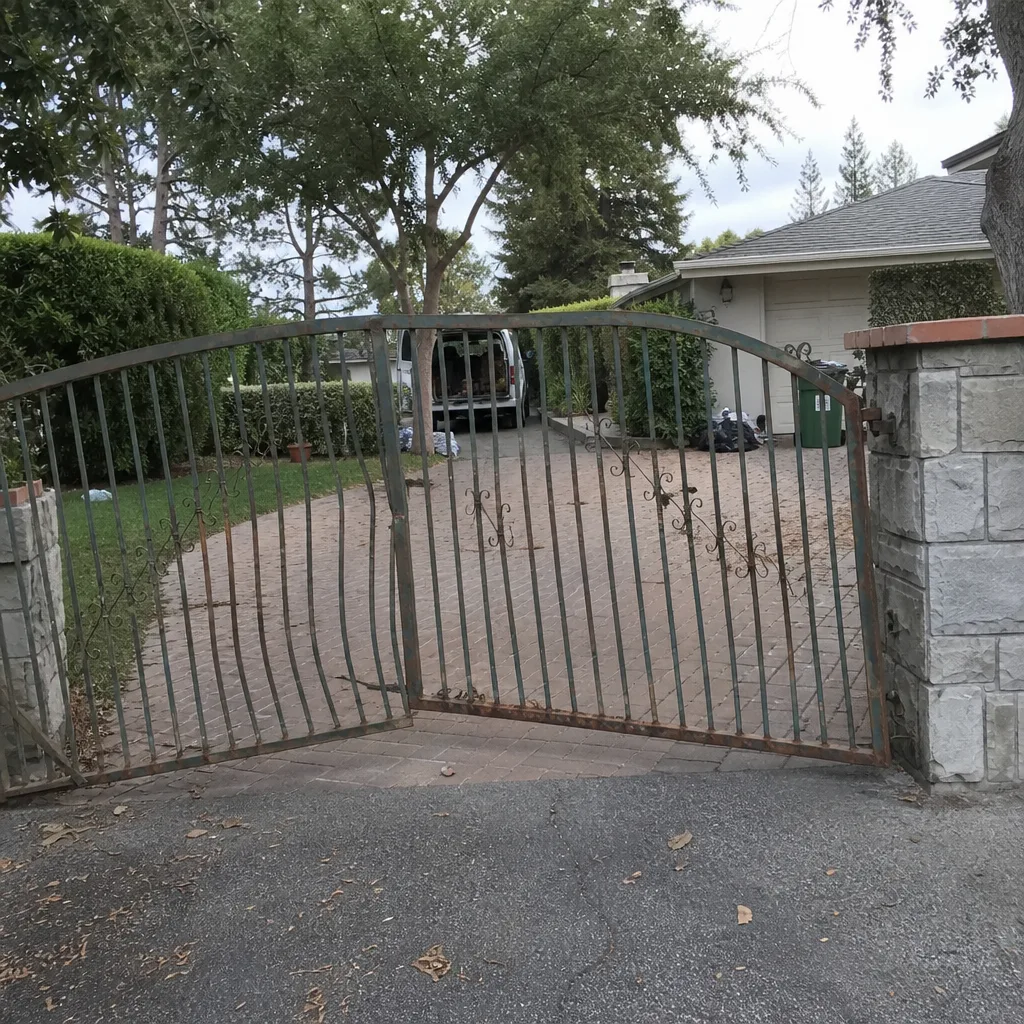 Before
 After
 Before
 After
 Before
 After