
Last updated November 4, 2026
 Wrought iron
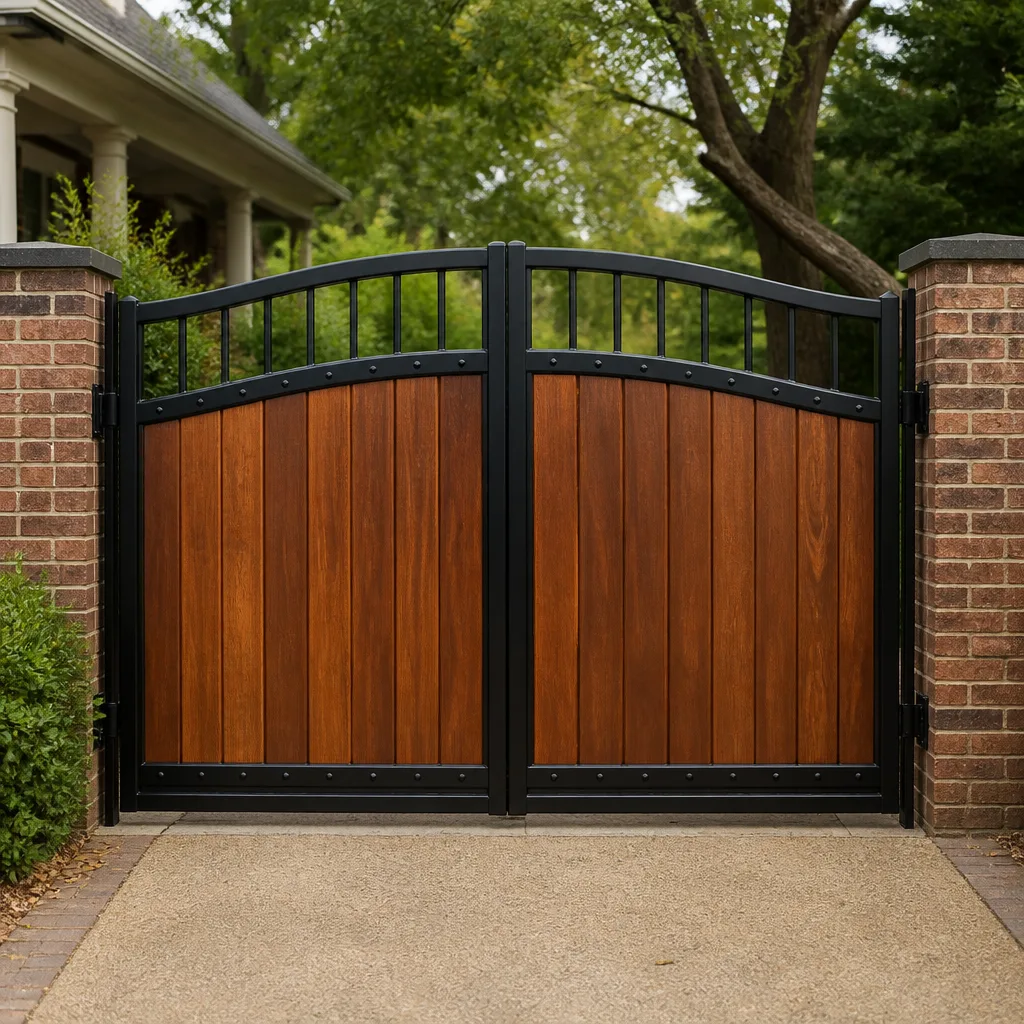 Wood & steel frame
 Farm & ranch
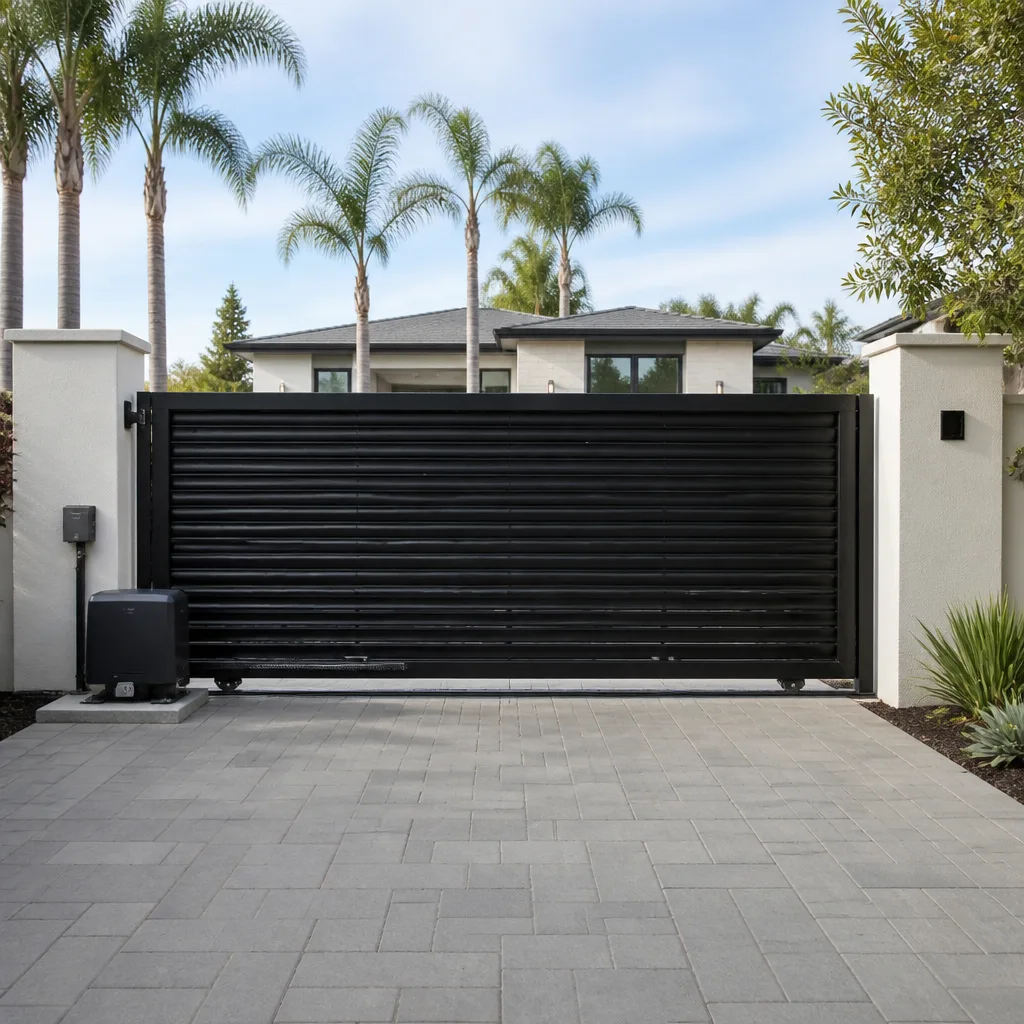 Sliding driveway gates
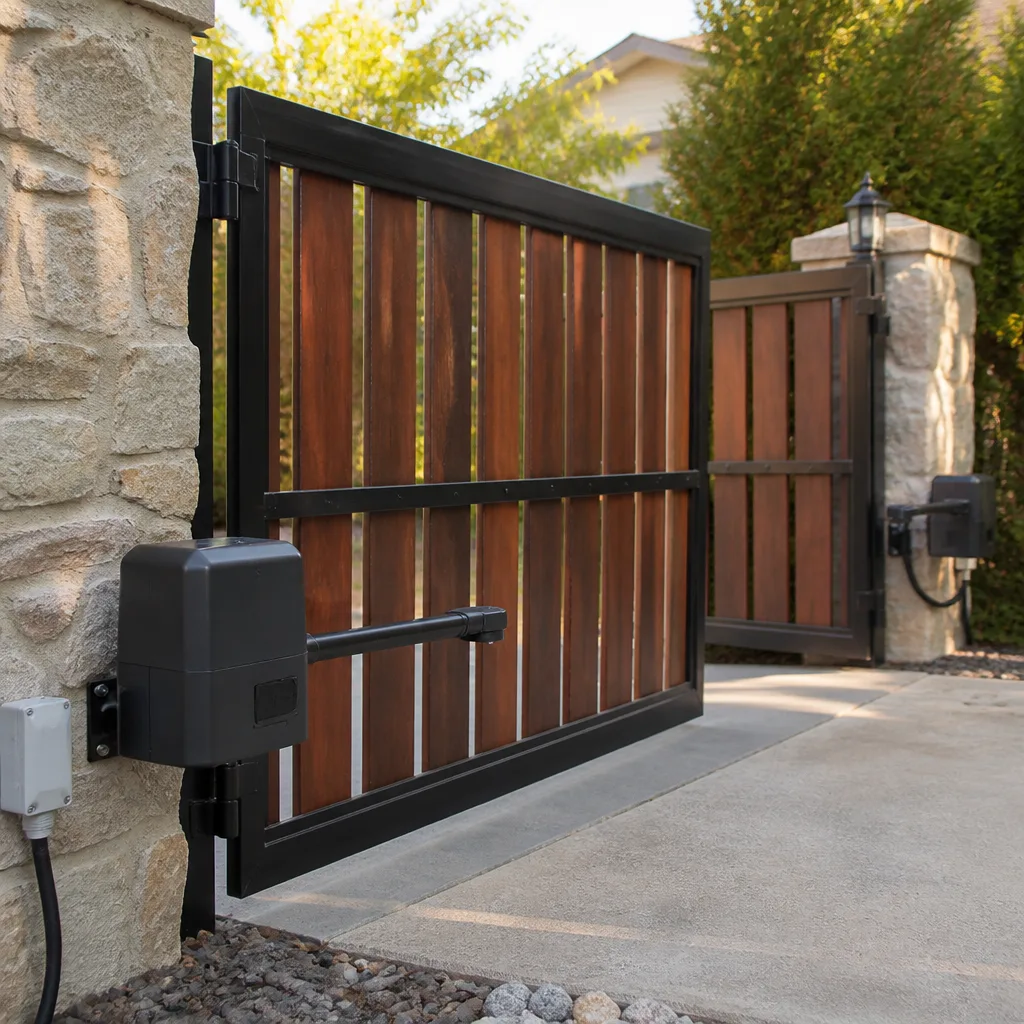 LiftMaster operators
Free on-site gate assessment - hinges, posts, and your LiftMaster or Nice gate operator checked before anything is quoted
The assessment is free and the quote is the invoice.
Get your free estimateGate Repair Maintenance Schedule: What to Do and When
Walk into most gate repair conversations and someone will tell you to service your gate every six months. That advice was written for an average gate that doesn’t exist. A driveway gate in Lake Forest that cycles eight times a day has nothing in common with an HOA entry gate running 40 cycles before noon. If your gate is average, the six-month rule works. If it’s not, you’re either spending money on service you don’t need or waiting for a failure you could have prevented. This guide gives you a schedule built around how your gate actually gets used: cycle counts, component timelines, and the specific ways Southern California’s dry heat wears out gate hardware.
Quick Answer
A gate maintenance schedule should be built on cycle count first, calendar second. For a typical residential driveway gate in Lake Forest used 4 to 8 times daily, inspect monthly and perform a full service annually. For high-traffic HOA or commercial gates cycling 30+ times per day, inspect weekly and schedule professional service every 3 to 4 months.
Styles & brands we work with
- Wrought iron
- Wood & steel frame
- Farm & ranch
- Sliding driveway gates
- LiftMaster operators
Table of Contents
- Why Cycle Count Matters More Than Calendar Months
- Monthly Checks: The Five-Minute Walkaround
- Quarterly Maintenance: What to Lubricate, Tighten, and Test
- Annual Service: The Full Professional Inspection
- How Lake Forest’s Dry Heat Wears Out Gate Components
- A Printable Maintenance Log for Property Managers
- What You Can Do Yourself vs. What Needs a Gate Technician
Why Cycle Count Matters More Than Calendar Months
A gate cycle is one full open-and-close operation. Every cycle puts stress on the hinges, the operator’s gearbox, the chain or belt, the limit switches, and the control board. A calendar doesn’t know whether your gate cycles four times a day or forty. The math is straightforward.
To calculate your gate’s actual duty cycle, track how many times the gate opens and closes in a single day. Count manually for a week, or check the operator’s built-in cycle counter if it has one. Many modern operators from Linear, DoorKing, and Viking log cycle counts in the control board. Once you have a daily average, multiply it.
A residential driveway gate used by one household typically runs 4 to 10 cycles a day. That’s roughly 1,500 to 3,600 cycles a year. An HOA community gate in Lake Forest with 80 homes might run 30 to 60 cycles a day, which is 11,000 to 22,000 cycles a year. The second gate needs service five to seven times more often than the first, even though they’re both “just gates.”
Here’s the practical breakdown:
- Under 10 cycles per day: monthly visual checks, annual professional service
- 10 to 20 cycles per day: monthly visual checks and lubrication, professional service every 6 months
- 20 to 40 cycles per day: biweekly checks, professional service quarterly
- 40+ cycles per day: weekly checks, professional service every 2 to 3 months, and a conversation about whether the operator is sized correctly for the duty load
Most residential operators are rated for intermittent duty, not continuous duty. A Mighty Mule unit installed on a shared HOA driveway will fail early because it was never designed for that cycle load. If you’re running a residential-grade operator at commercial-grade traffic levels, the maintenance schedule matters less than the hardware selection. We see this constantly in Lake Forest communities where a single driveway gate serves two or three homes.
Monthly Checks: The Five-Minute Walkaround
Most gate problems announce themselves weeks before they become failures. A monthly walkaround catches those warnings early. This should take five minutes and requires no special tools.
What to Check Every Month
- Listen during operation. A gate that was quiet and now grinds, squeaks, or hesitates mid-travel is telling you something. New noises mean wear is progressing somewhere specific: a hinge, a roller, a chain, or the operator’s internal gearbox.
- Watch the gate travel. Does it stop where it should? Does it slow down near the end of travel, or slam into the stops? Jerky or uneven movement points to chain tension issues, worn wheels, or a track problem.
- Clean the photo eyes. The safety sensors near the bottom of the gate track get dusty fast in Lake Forest’s dry air. A quick wipe with a dry cloth keeps them from sending false obstruction signals that make the gate reverse or refuse to close.
- Clear debris from the track and rollers. Leaves, dirt, and small rocks collect in the bottom track of slide gates. Sweep it out. A pebble wedged in the track is enough to trip a safety reversal or bend a roller bracket.
- Check for loose bolts and fasteners. Gates vibrate constantly. Bolts work loose over time. Give the hinge bolts, post brackets, and operator mounts a visual check. If anything looks shifted or you see rust staining around a bolt head, it needs attention.
- Look at the wiring and conduit near the operator. Exposed wires, cracked conduit, or signs of chewing from rodents are problems that get worse fast. Call us before wiring damage becomes an electric gate repair.
This monthly routine isn’t the full service. It’s the early-warning system that tells you when the full service needs to happen sooner than scheduled. In our experience, gates that get a consistent monthly walkaround fail less catastrophically. Problems get caught at the “annoying” stage instead of the “gate won’t open” stage.
Quarterly Maintenance: What to Lubricate, Tighten, and Test
Every three months, or every 1,000 to 1,500 cycles for high-use gates, the maintenance moves beyond looking into doing. This is the level a motivated homeowner or a property manager’s maintenance staff can handle with basic tools.
The Quarterly Checklist
- Lubricate hinges and pivot points. Use a dry silicone or lithium spray lubricant, not WD-40 and not heavy grease. Heavy grease attracts dust and creates a grinding paste in dry climates. A light coat on each hinge pin and pivot keeps metal from wearing metal.
- Check and adjust chain tension. On slide gates with chain drive, the chain should have slight deflection but not sag. Too loose and it can jump the sprocket. Too tight and it wears out bearings and the operator gearbox prematurely.
- Test the safety reversal. Place a small object in the gate’s path and activate the close cycle. The gate should detect it and reverse or stop. If it doesn’t, disconnect the operator from power and call a professional. A gate that fails its safety reversal is a liability.
- Test the manual release. Every automated gate has a manual release mechanism, usually a keyed bypass or a pull handle on the operator. Test it quarterly to make sure the gate can be opened by hand during a power outage. A release that’s seized or never tested is exactly what fails when you need it.
- Inspect the battery backup. If your gate has a battery backup, check the indicator lights. Most batteries last 2 to 4 years in Southern California heat. If the gate struggles to open on battery power, or the battery warning light is on, replacement is due.
- Check wheels and rollers for wobble. Slide gate wheels wear unevenly. A wobbly wheel puts side load on the track and the operator. Lift the gate slightly and check for play at each wheel mounting point.
- Control board diagnostics. The technician reads fault codes, checks voltage at the board, and verifies that limit settings are correct. Ghost Controls and Viking operators store error history that tells a story about problems that happened and self-cleared.
- Full electrical inspection. Every connection gets checked for tightness, corrosion, and heat damage. Loose connections cause voltage drops that make operators work harder and fail earlier.
- Loop detector testing. If your gate uses a vehicle detection loop in the pavement, the annual service verifies it’s triggering reliably. Loop failures are intermittent and frustrating, and they’re easier to catch with diagnostic equipment than by waiting for the gate to misbehave.
- Mechanical wear assessment. Hinges, wheels, track alignment, chain stretch, and the operator’s internal gears all get measured against expected wear. Parts that are at 70% wear get documented so the owner can plan replacement before failure.
- Lubrication with the right products. Different components need different lubricants. The chain takes one product, the hinges another, the operator’s internal gears something else entirely. A professional service applies the correct product to each point.
- Safety compliance verification. Photo eyes, safety edges, warning signs, and the auto-reverse function all get tested and documented. In a commercial or HOA setting in Lake Forest, this documentation matters for liability.
- Gate ID and location: Assign each gate a name or number tied to its address or community entrance
- Operator brand and model: Record the operator brand, whether it’s a DoorKing, Linear, Viking, or another unit
- Date of installation or last major repair: This anchors the wear timeline
- Cycle count or daily use estimate: Updated quarterly based on counter readings or observation
- Date and nature of each maintenance task: Lubrication, chain adjustment, battery replacement, board service
- Parts replaced with date and cost: Creates a running history that shows when a gate is becoming a money pit versus a stable asset
- Next scheduled service date: Based on the cycle-count threshold, not a generic six-month reminder
- Technician notes and recommendations: What the technician found, what’s wearing, what’s likely to fail next year
- Cleaning photo eyes and reflectors
- Sweeping debris from the track
- Visual inspection of bolts, hinges, and rollers
- Lubricating accessible hinge points with the correct spray lubricant
- Testing the safety reversal with a non-damaging object
- Changing batteries in wireless keypads and remotes
- Tracking cycle counts and maintaining the maintenance log
- Any work on the operator’s internal wiring or control board. Gates run on line voltage and low voltage, and a wrong connection can damage the board or create a shock hazard.
- Chain replacement or significant tension adjustment on slide gates
- Loop detector installation or repair, which requires cutting pavement and working with underground wiring
- Track realignment, which needs precision measurement to avoid premature wheel and track wear
- Diagnosing intermittent electrical faults, which requires multimeters and board-level testing
- Replacing safety edges or photo eyes, where incorrect installation defeats the safety function
If the quarterly check reveals a chain that keeps loosening, a hinge that keeps squeaking after lubrication, or a safety sensor that trips intermittently, those are patterns that point to a deeper problem. Stop tightening and start diagnosing. A gate repair that replaces a worn part once is cheaper than adjusting the same part every three months for a year.
Annual Service: The Full Professional Inspection
Once a year, the gate needs a trained technician looking at it end to end. This is not the same as the monthly walkaround. A professional annual service gets into the components a homeowner doesn’t touch: the control board, the operator’s internal drive, the loop detectors, and the electrical connections.
What a Professional Annual Service Includes
For a typical residential gate, one annual professional service handles the full-depth work while the quarterly and monthly routines handle the surface-level maintenance between visits. For high-traffic gates, the annual service becomes a quarterly service, and the quarterly checklist folds into the monthly walkaround.
How Lake Forest’s Dry Heat Wears Out Gate Components
Lake Forest sits inland enough that gates here face a specific enemy: prolonged dry heat and intense UV exposure. This isn’t a general “weather is hard on things” point. It affects specific components in predictable ways.
Wiring insulation gets brittle. The low-voltage wires running from the operator to the photo eyes, keypads, and loop detectors sit in full sun year-round. Southern California UV exposure strips plasticizers out of insulation over 5 to 8 years. The outer jacket cracks. Moisture gets in during the occasional rain, and the resulting corrosion causes intermittent faults that are difficult to diagnose. If your gate’s wiring is more than five years old and you’re seeing random “phantom” obstructions or keypad glitches, the wiring is the first suspect.
Plastic components fade and embrittle. Operator covers, photo eye housings, and keypad faces all suffer under constant UV. Faded color is cosmetic. Cracking is functional. A cracked operator cover lets dust and the occasional rain reach the control board. A cracked photo eye housing lets light leak in, which confuses the sensor.
Battery backup life shortens. Heat is the enemy of lead-acid and sealed AGM batteries. In Lake Forest’s summer heat, a gate battery backup that would last 4 years in a coastal climate might need replacement at 2 to 3 years. Annual testing of battery capacity is not optional here.
This is also why Lake Forest gates owned by HOAs tend to age on a compressed timeline even without high cycle counts. A gate in a shaded canyon area will show different aging patterns than one in full sun on a hillside. The maintenance schedule matters, but so does paying attention to what the sun is doing to the exposed components.
A Printable Maintenance Log for Property Managers
Property managers responsible for multiple gates across an HOA or commercial site can’t rely on memory. A maintenance log creates a record that shows patterns, justifies budget, and protects against liability claims. Here’s a format that works with either paper or a shared spreadsheet.
Fields to Track for Each Gate
The value of this log appears fast. A gate that got three chain adjustments in six months tells a story of a sprocket problem or a track alignment issue. A gate that’s needed two control boards in a year points to a power quality problem at that location. The log turns reactive repairs into predictive maintenance.
What You Can Do Yourself vs. What Needs a Gate Technician
There’s an honest line between what a homeowner should handle and what needs professional help. Crossing it in the wrong direction either wastes money on unnecessary service calls or creates dangerous situations.
Tasks a Homeowner Can Handle
Tasks That Need a Professional
The principle is simple: if the task involves electricity, significant tension, or precise alignment, it’s a professional job. We specialize exclusively in gates, nothing else. Our technicians see Gate Repair Lake Forest service calls across every brand common in the area, from Ghost Controls and Viking residential units to DoorKing and Linear commercial operators. Whatever system you own, we know it cold.
Common Mistakes to Avoid
- Following a calendar schedule without knowing your cycle count. A gate that runs 50 cycles a day but gets serviced on a residential schedule will fail between service visits. Calculate your actual usage first, then set the schedule.
- Using the wrong lubricant. Heavy grease on hinges and chains collects dust and forms an abrasive paste in Lake Forest’s dry conditions. Use the correct dry lubricant for each component, or let a professional apply the right products.
- Ignoring a slow or hesitant gate because it still opens. Hesitation at the start of travel, slowing mid-travel, or a gate that needs a second try to close are early failure warnings. Fixing the cause early is always cheaper than replacing a burned-out operator.
- Never testing the manual release. The one time you need it is during a power outage. A manual release that hasn’t been tested in years will be seized exactly when you’re stuck outside the gate.
- Fixing the same problem repeatedly without addressing the cause. If the chain needs tensioning every quarter, tightening it again doesn’t solve anything. Something is wearing out. Replacing the worn part stops the cycle.
- Deferring battery backup replacement until it fails. In Lake Forest’s heat, battery backups degrade predictably. Replacing them on a schedule is cheaper than discovering the battery is dead during an outage.
- Assuming a residential operator can handle HOA traffic loads. A shared driveway gate running 40 cycles a day on a residential-grade operator will fail early no matter how well it’s maintained. The right fix is a commercial-rated operator.
See the difference
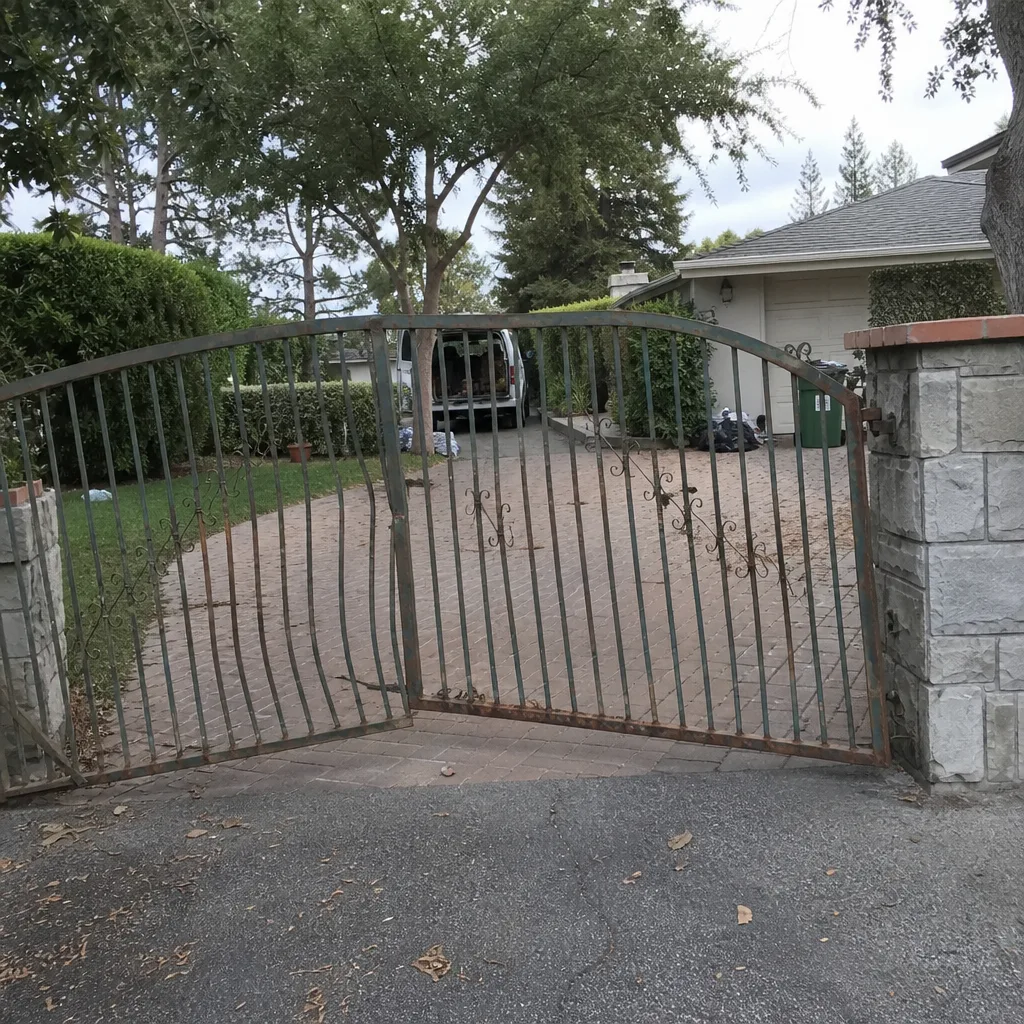 Before
 After
 Before
 After
 Before
 After
When to Call a Professional
Call a gate technician when the monthly checks reveal problems you can’t fix safely: any electrical symptom, a safety sensor that fails its reversal test, structural looseness at the posts or hinges, or a noise that’s new and getting worse. Call immediately if the gate has hit a vehicle, a person, or a pet. Call when your log shows repeated repairs of the same component within a short window. Call when you know the maintenance has been neglected and you want a full baseline inspection before problems compound. Gate Repair Lake Forest offers free estimates in Lake Forest. Call (866) 472-6659. We answer 24/7. Fast dispatch from 7am to 7pm, Sunday through Friday.
Frequently Asked Questions
Base the schedule on cycle count. For a typical residential gate cycling 4 to 10 times daily, a professional service once a year with monthly visual checks is the right cadence. For HOA or commercial gates cycling 30 or more times daily, service every 3 to 4 months. Call (866) 472-6659 for a free estimate on your first service.
Skipped maintenance doesn’t cause immediate failure. It causes accelerated wear that shows up as a sudden, expensive repair later. Hinges wear, chains stretch, boards overheat, and safety sensors drift out of alignment. The gate keeps working until one component crosses the failure threshold, and then you’re paying for replacement parts instead of maintenance.
Yes. Hinge lubrication is a straightforward homeowner task. Use a dry silicone or lithium spray lubricant and apply a light coat to each hinge pin and pivot point quarterly. Avoid heavy grease, which collects dust and creates a grinding paste in dry climates. If the squeak returns within days of lubricating, the hinge itself is worn and needs replacement.
The clearest signals are the operator’s age, the frequency of recent repairs, and whether the unit was sized correctly for the traffic load. An operator that’s needed two board replacements in two years, or that struggles to move the gate smoothly on a moderate incline, is likely near the end of its service life. A diagnostic visit gives you the specific answer for your system. We can evaluate operators across all major brands.
Yes. Slide gates concentrate wear on wheels, track, and chain tension. Swing gates concentrate wear on hinges, post stability, and the operator’s pivot arm. The maintenance principles are the same, but the specific components that need attention differ. A professional service checks the right components for your gate type.
We service gates and operators from nine major brands: LiftMaster, FAAC, BFT, Linear, Viking, Ghost Controls, DoorKing, Elite, and Mighty Mule. That spans entry-level DIY systems through commercial-grade operators. If you already own a system, we service it; we don’t push a replacement from a single brand. Call (866) 472-6659 for a free estimate.
The Bottom Line
A gate maintenance schedule that ignores how the gate is actually used will fail you either by over-servicing or under-servicing. Figure out your cycle count. Set the calendar accordingly. Do the monthly walkaround yourself. Lubricate and test quarterly. Bring in a professional annually, or more often if the traffic demands it. Pay attention to what the Southern California sun does to wiring, plastic, and batteries. Keep a log if you manage multiple gates. And when something’s beyond your tools or your confidence, call a specialist who works on gates and nothing else.
Written by the team at Gate Repair Lake Forest, serving Lake Forest since 2017.