
Last updated November 4, 2026
 Wrought iron
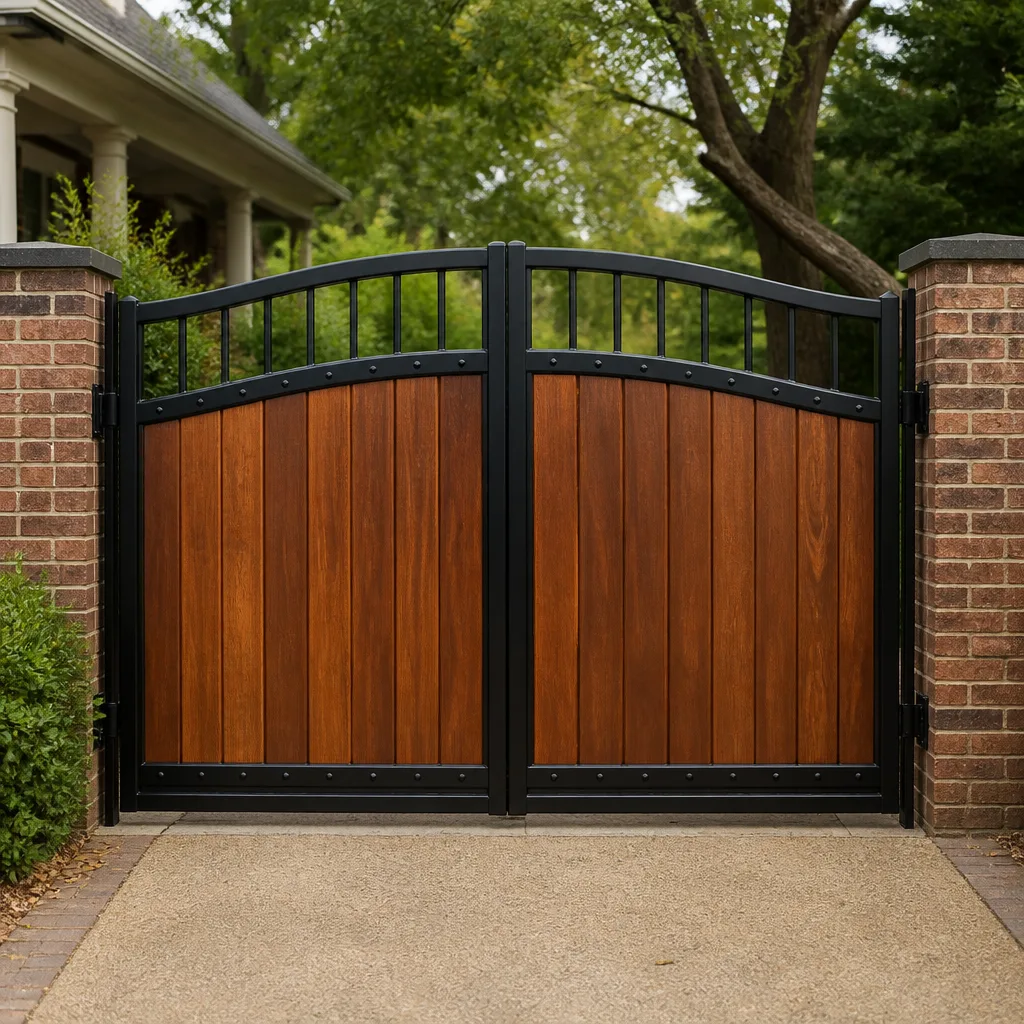 Wood & steel frame
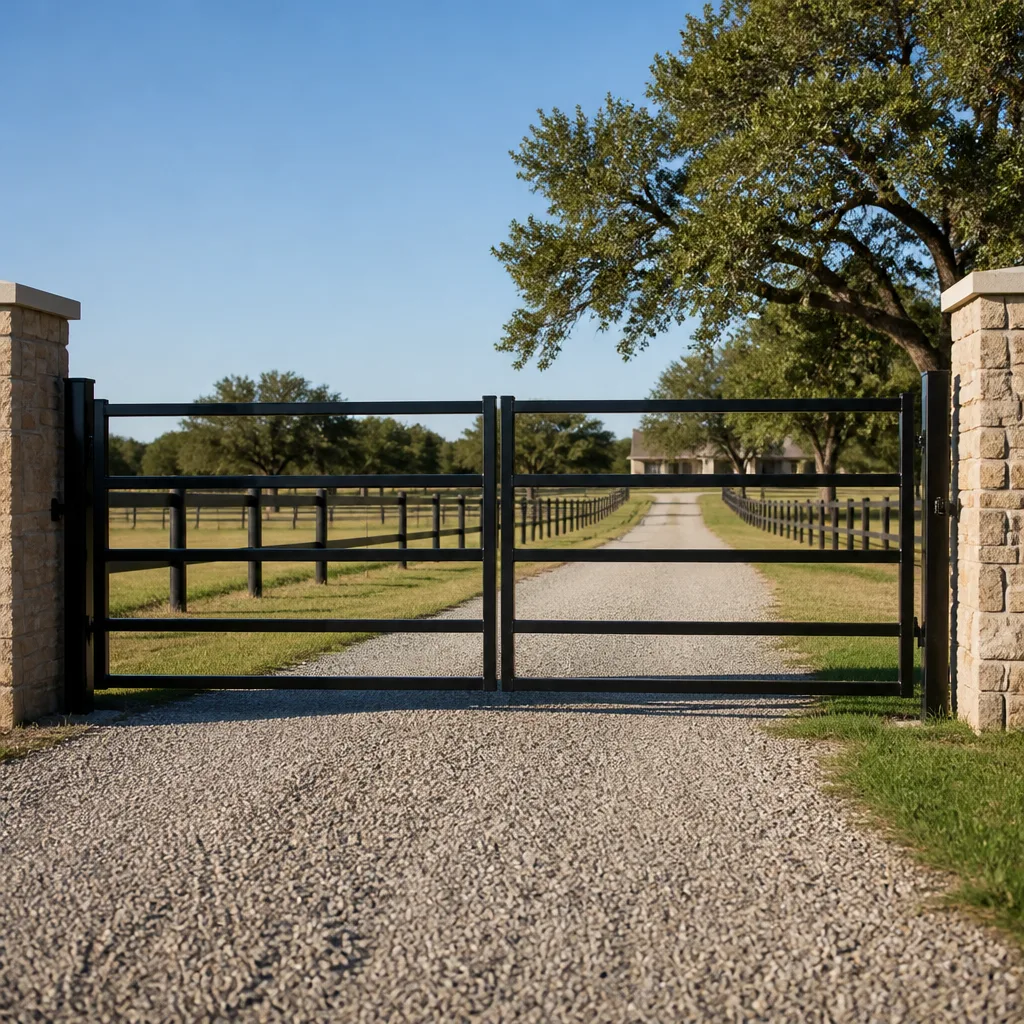 Farm & ranch
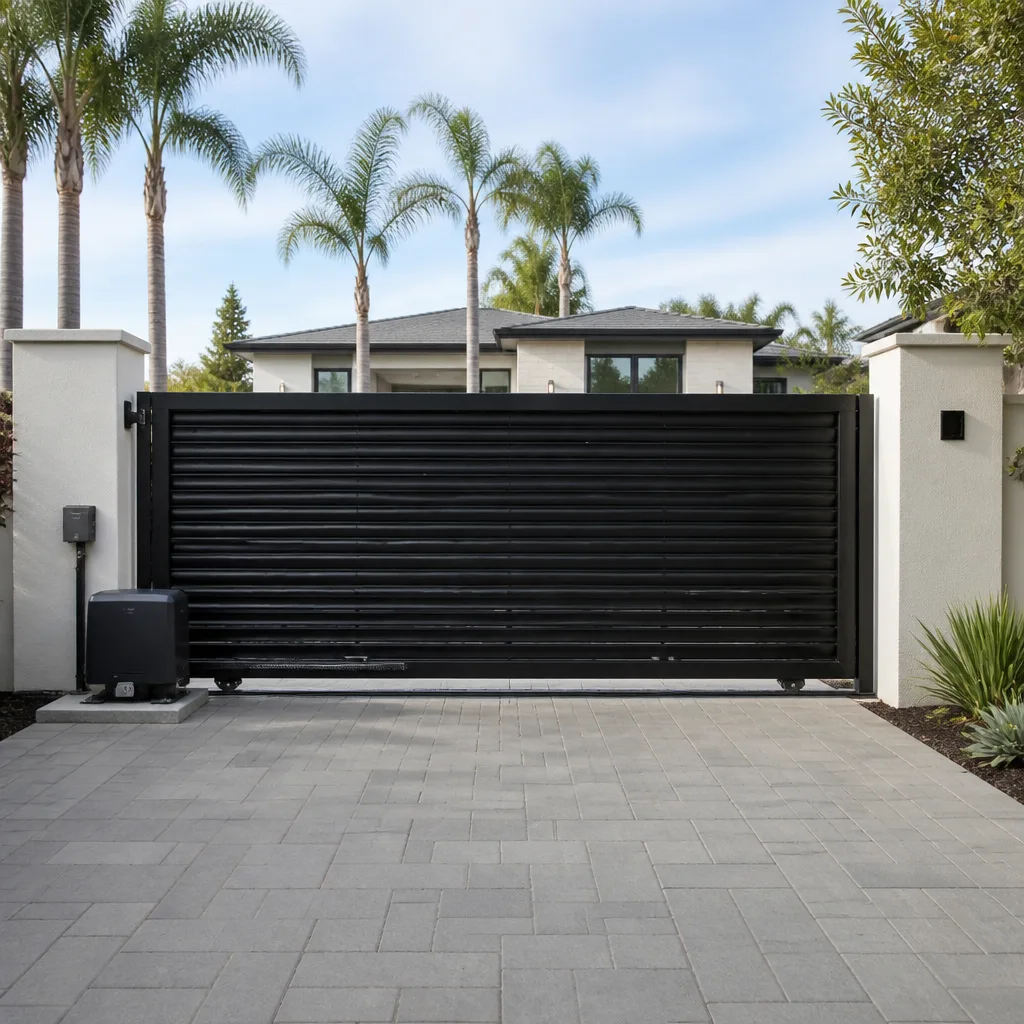 Sliding driveway gates
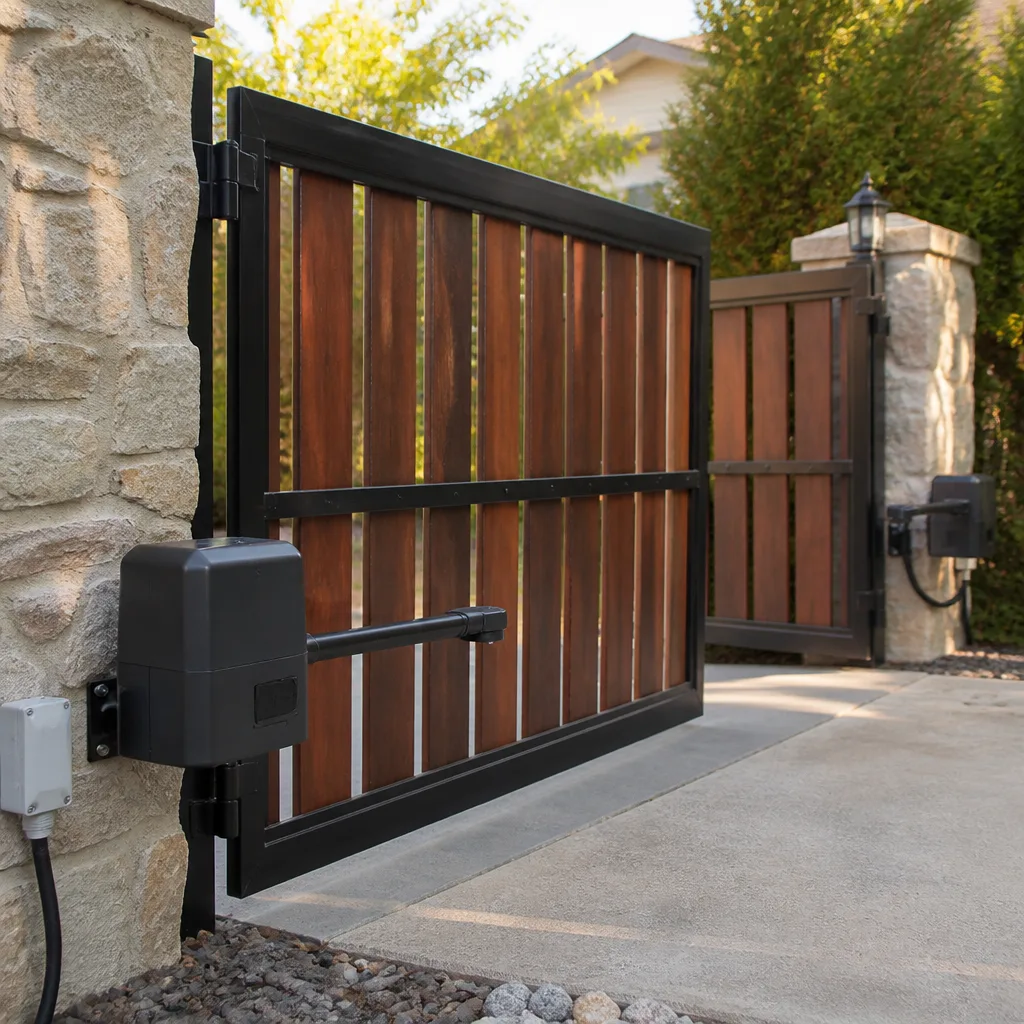 LiftMaster operators
Free on-site gate assessment - hinges, posts, and your LiftMaster or Nice gate operator checked before anything is quoted
The assessment is free and the quote is the invoice.
Get your free estimateGate Repair Permits, Codes & Inspections in Lake Forest, CA: What You Need to Know
Most homeowners assume a gate repair never needs a permit. That assumption is correct for like-for-like component replacement, but it’s dangerously wrong the moment a repair changes gate dimensions, adds automation to a manual gate, or touches electrical wiring. The line between a simple repair and a permitted alteration trips up even experienced property managers in Lake Forest. This guide explains exactly where that line sits, what the City of Lake Forest and Orange County actually enforce, and how to avoid a stop-work order or failed inspection. It covers residential and light-commercial gate systems, from manual swing gates to fully automated slide operators.
Quick Answer
Like-for-like gate repairs in Lake Forest, CA, such as replacing a failed Ghost Controls operator with an identical model, do not require a permit. However, installing a new operator on a gate that was previously manual, altering gate dimensions, relocating posts, or running new electrical wiring almost always requires a city permit and an electrical inspection. If you’re unsure, call the Lake Forest Building Division before the first wrench turns.
Styles & brands we work with
- Wrought iron
- Wood & steel frame
- Farm & ranch
- Sliding driveway gates
- LiftMaster operators
Table of Contents
- The Repair vs. Alteration Line in Lake Forest
- UL 325 Compliance and Why It Matters Here
- HOA Approval in Lake Forest Planned Communities
- Electrical Permits for Gate Operators in Lake Forest
- ADA Compliance for Commercial Gate Repair in Lake Forest
- Who Pulls the Permit: Homeowner vs. Contractor
- The Inspection Process, Step by Step
- Common Mistakes to Avoid
The Repair vs. Alteration Line in Lake Forest
Lake Forest follows the California Building Code, which distinguishes between repair and alteration based on what changes on site. A repair restores something to its original condition. An alteration changes the structure, the dimensions, or the way the system works. For gates, that distinction determines whether you need a permit before the work starts.
Replacing a failed control board inside the same operator housing is a repair. Swapping a worn hinge for a matching hinge is a repair. Replacing an existing DoorKing operator with the same model is a repair. None of these require a city permit, and none trigger an inspection. You can have that work done today and the gate runs tomorrow.
The permit threshold is crossed when the work changes what is physically there. Widening a gate opening, moving a post, converting a single swing gate to a double swing, or changing a slide gate’s track location are all alterations. So is adding an operator to a gate that was never automated. If a manual gate gets a Mighty Mule operator for the first time, that is an alteration, not a repair, and Lake Forest treats it accordingly.
We see this confusion constantly. A homeowner buys a DIY operator online, installs it on a previously manual gate, and only discovers the permit requirement when a neighbor calls the city or the HOA flags the work. By then, the install is complete, and the homeowner is dealing with a retroactive permit process that costs far more than pulling the permit upfront would have.
The same threshold applies to the gate’s structural supports. If a post is rotting at the base and we pull it to set a new one in a fresh footing, that is an alteration because the footing itself changes. If we reinforce the existing post without moving it, that usually stays within the repair category. The distinction matters because the Building Division reviews the footing depth and post embedment on any new footing work.
Lake Forest’s climate works in your favor here. The mild winters mean you don’t deal with freeze-driven post heaving that complicates gates in colder regions. Posts that are properly set at footing depth in this area tend to stay plumb for years, which reduces the chance you’ll ever need an extensive structural alteration in the first place.
UL 325 Compliance and Why It Matters Here
UL 325 is the national safety standard for automated gate operators, and Lake Forest enforcement relies on it when any operator work is done. The standard governs entrapment protection on automated gates, and it applies whether you’re installing a brand-new operator or replacing an existing one. The moment an operator is touched, the system must comply with the current standard, not the one in force when the gate was originally installed.
Here’s what UL 325 mandates for automated gates:
- Entrapment protection devices. Every automated gate must have some combination of contact sensors (sensing edges that reverse the gate when they hit something) and non-contact sensors (photo eyes that reverse the gate before contact). A gate without functional entrapment protection fails inspection.
- Force settings that reverse. The operator must be set to reverse direction when it encounters resistance below a threshold that would injure a person. A gate that pushes through an obstruction without reversing is non-compliant.
- Warning signage. Automated gates require specific warning placards installed at the gate. The placards vary by gate type and operator model, but they must be present and legible.
- Hard-wired safety inputs. The photo eyes and sensing edges must be wired into the operator’s safety circuit, not bypassed. We still find older installs where someone bypassed the safety inputs because the photo eyes kept faulting.
- Pedestrian separation where required. If the gate doesn’t have a separate pedestrian gate, UL 325 may require additional protection so the automated gate doesn’t trap a person between the gate and the post.
The practical upshot in Lake Forest is this: if you’re replacing a failed Elite operator with a newer model and the existing photo eyes are shot, you can’t just run the new operator without entrapment protection. The inspector will fail the install, and the work won’t be signed off until the safety circuit is complete. That’s a good thing. A gate that closes on a child or a pet is the reason UL 325 exists in the first place.
For light-commercial properties, the standard is enforced more rigorously. A retail center gate on a Lake Forest business corridor that fails an entrapment test is a liability exposure, not just an inconvenience. Building officials in Orange County know what a compliant install looks like, and they test the reversal function on the final inspection rather than taking the installer’s word for it.
Older installs are the real problem area. A gate that went in twenty years ago with a single physical stop and no photo eyes is non-compliant today. When we replace the operator on that gate, the entire safety package has to come up to current code. The good news is the parts are not exotic; the work is simply more involved than swapping the operator and walking away.
HOA Approval in Lake Forest Planned Communities
Lake Forest has a high concentration of planned communities with active homeowners associations. Foothill Ranch, Baker Ranch, Portola Hills, and the communities around El Toro Road all have architectural review committees that scrutinize gate work. Their process runs parallel to the city’s permit process, and it operates on a timeline that catches people off guard.
The sequence usually goes like this: you submit an architectural change request to the HOA, the committee reviews it at its next meeting (which may be two to four weeks out), and only after approval do you proceed with the city permit. If you reverse that order and start work before the HOA signs off, you can be ordered to stop and restore the gate to its previous condition, even if the city would have approved the work.
What HOAs care about:
- Gate appearance and height. The material, color, and height of a replacement gate must match what is already there or what the HOA’s design guidelines permit.
- Operator placement. Some communities restrict the visible installation of operator arms or require them to be concealed within a post or behind landscaping.
- Slide gate track look. Communities with common-area aesthetics sometimes push back on surface-mounted slide tracks and prefer cantilever or below-grade tracks, which change the scope of the work.
- Timing of work. HOAs often limit construction hours, which affects scheduling for a gate replacement that runs long.
The conflict happens when HOA rules are stricter than city code. An HOA may require a gate style or operator placement that the city is indifferent to, or the HOA may ban a component the city accepts. In that situation, the HOA rule wins because the architectural review is a condition of ownership, not a building code question. We’ve had jobs where the city permit was ready in a week but the HOA review took two months because the committee only met monthly.
If you live in a community without an HOA, a single-family home on a non-HOA street in Lake Forest, you skip this entire step. Your only rule is the municipal code. That’s one reason the same gate job can have very different paperwork requirements depending on which side of El Toro Road you live on.
Electrical Permits for Gate Operators in Lake Forest
Electrical work is where most unpermitted gate projects get caught. Adding an operator to a manual gate means running power to the gate location, and in Lake Forest that electrical run needs its own permit and its own inspection. The gate structure may not need a permit if the dimensions stay the same, but the new electrical circuit almost always does.
The typical electrical scope on a new automated gate:
- Dedicated circuit. A gate operator should run on a dedicated circuit, which means pulling a homerun from the panel to the gate location. In Lake Forest, that circuit must be GFCI-protected where the code requires it for exterior receptacles, and it must be run in a method listed for burial or exterior exposure.
- Conduit or direct-burial wire to the posts. The run from the building to the gate is usually in rigid nonmetallic conduit or using UF cable at depth. The trenching alone is often the most disruptive part of the job.
- Low-voltage runs for safety devices. Photo eyes, keypads, loop detectors, and intercom wiring run in separate conduit from line-voltage wire. The low-voltage work doesn’t need its own permit, but it is inspected as part of the overall installation.
- GFCI-protected disconnect. The operator needs a disconnect means within sight of the gate that lets you kill power before anyone works on the operator. The inspector checks for this.
- Grounding and bonding. Metal gate frames and posts must be bonded to the equipment grounding conductor to prevent a shock hazard if a wire chafes against the frame.
For a replacement operator where the circuit already exists and is adequate, none of this applies. You swap the operator, land the existing wiring, and test. If the old circuit has no ground or the wiring is deteriorated, though, the city can require you to bring the electrical up to current code before signing off the permit. That catches people off guard, but it is the correct call: a gate operator on a degraded circuit is a shock and fire risk.
Lake Forest’s mild climate means exterior wiring lasts longer than it does in places with extreme temperature swings, but conduit that has been in the ground for two decades is still subject to damaged insulation at fittings and below-grade joints. When we open an old box at a gate post, the condition of the wiring usually tells us quickly whether a simple operator swap will stay simple or turn into a rewire.
ADA Compliance for Commercial Gate Repair in Lake Forest
Commercial properties in Lake Forest’s business corridors, along Lake Forest Drive, around the Spectrum-adjacent areas, and near the industrial parks off Bake Parkway, carry an extra layer: ADA compliance. When a gate repair on a commercial property alters an accessible route or changes the operator on a pedestrian gate, the Americans with Disabilities Act requirements come into play.
The ADA is federal law, not local code, but Lake Forest’s building department surfaces ADA compliance during plan review and final inspection on commercial gate work. The key requirements for gates on accessible routes:
- Opening force. Exterior gates on accessible routes must open with no more than 8.5 pounds of force for interior gates and 5 pounds for exterior gates, though the exact threshold depends on the gate type and hardware. A heavy swing gate that requires body weight to open fails.
- Clear opening width. Accessible gates must provide at least 32 inches of clear opening when the gate is in the open position.
- Accessible hardware. Latches, pulls, and keypads must be operable with one hand without tight grasping, pinching, or twisting of the wrist.
- Closing speed. Automatic gates on accessible routes must close slowly enough to allow passage without rushing. A gate that slams shut on a 10-second cycle is a compliance problem.
- Controls reachable from a wheelchair. Any access control devices, including keypads and card readers, must be mounted within reach range from a seated position.
Here’s the reality in the field: most existing commercial gate installs in Lake Forest were never ADA-compliant to begin with. The gate was built to secure the property, not to meet an accessible-design standard. When a repair is limited to replacing the operator and nothing else, the city’s hands-off approach usually holds. But the moment a commercial property owner changes the gate itself, widens the opening, or moves the pedestrian gate, ADA review kicks in and the old non-compliant elements can become binding.
Commercial property managers should assume any gate alteration that touches a path of travel will trigger an ADA review. That review is not part of the building permit, but Lake Forest’s building division will flag the project for it, and the inspector has the authority to require compliance on the altered portion of the gate system.
Who Pulls the Permit: Homeowner vs. Contractor
In Lake Forest, a homeowner can pull a permit for their own residential gate work as an owner-builder. That is true of most single-family residential construction in California. The catch is that owner-builder status comes with legal liability: the person who pulls the permit is the one who signs the permit applications, is named on the inspection record, and carries responsibility if the work is non-compliant.
For gated work, the realistic breakdown works like this:
- Simple repairs. No permit at all. A gate repair that swaps a failed part for a matching part happens without any city paperwork.
- Residential operator replacement on an existing automated gate. If the system is already automated and the work is a same-model swap, this stays a repair. If the operator model changes but the circuit and gate remain unchanged, the permit question is an edge case; some inspectors treat any operator change as an alteration, others don’t. The conservative approach is to check with the Building Division before the work starts.
- Adding automation to a manual gate. Permit required. The electrical run needs its own permit, and the gate structure often needs a review. A licensed electrical contractor can pull the electrical permit, or a general contractor can pull the combined permit.
- Structural changes. Widening the gate, moving posts, or changing from a swing to a slide configuration. Permit required with structural review.
The contractor license question matters in California because gate work can fall under multiple classifications. The contractor who pulls the permit must hold a license classification that covers the scope of work. If the job includes only the gate and operator, the classification is one thing. If the job also includes a new electrical circuit, the electrical portion may need the work done by a contractor with an electrical classification, or the general contractor must hold the classification that permits electrical subwork. The city’s Building Division will tell you exactly what they require when you file.
For commercial properties, the owner-builder route is largely off the table. Commercial work requires a licensed contractor of record, and the permit application lists the contractor’s license number. Lake Forest is not unique in that; it is standard California commercial permitting.
Our position is simple: if the work needs a permit, let the contractor pull it. The permit names the contractor of record, which means the contractor is on the hook for code compliance, not you. When a homeowner pulls their own permit and then hires a crew to do the work, the homeowner becomes the de facto contractor and carries the liability.
The Inspection Process, Step by Step
For gate work that requires a permit in Lake Forest, here’s how the inspection process typically runs, from filing to final signature:
- Permit application. You or your contractor files the application with the Lake Forest Building Division. For a simple operator install on an existing automated gate, this is usually a straightforward review. For a new automated gate or structural alteration, plan review takes longer because the details matter: post footing depth, operator type, safety device locations, and the electrical plan all get looked at.
- Plan approval. The city issues the permit with the approved plans. The plans show what will be built and where the safety devices will sit. The inspector uses the plans as the reference during the inspection.
- First inspection: footing and underground. If new posts are involved, the inspector checks the footing excavation and embedded post depth before the concrete is poured. This is a one-time thing; once concrete covers the footing, an unapproved depth is a red flag. For electrical work, the inspector checks the conduit trench before it is covered.
- Second inspection: electrical rough-in. The wiring is run, but devices are not yet energized. The inspector checks the circuit, the disconnect, the grounding, and the low-voltage runs.
- Final inspection. The gate is operational, the operator is set, the entrapment protection devices are active and tested, the warning placards are installed. The inspector tests the gate’s reversal function and photographs the installed system. This is the pass-or-fail moment.
Do not schedule the final until everything is truly finished. A missing warning placard fails the final. A photo eye that is mounted but not wired fails the final. A gate that doesn’t reverse on obstruction fails the final. Some inspections in Orange County are strict about the safety devices because the liability exposure on a non-compliant automated gate is high.
After the final pass, the permit is signed off and the job is closed. If the gate later fails, the repair work on that existing permitted system generally falls back under the repair category, which means future service visits happen without a new permit.
Common Mistakes to Avoid
- Adding an operator to a manual gate without pulling a permit. This is the most common permit violation we see in Lake Forest. The homeowner buys a DIY operator, hooks it up, and only later finds out the city requires a permit for the electrical work and for the alteration. The fix is a retroactive permit plus a failed-inspection headache.
- Starting HOA-gated work before architectural approval. In Lake Forest planned communities, this leads to stop-work orders from the HOA, not the city. The HOA timeline is the one that bites because committees meet monthly, not daily.
- Replacing an operator without checking entrapment protection. An operator swap on an existing gate is a repair, but the safety circuit still has to work. Swapping an Elite operator without replacing the broken photo eyes means the gate fails inspection and, more importantly, remains a hazard.
- Running line voltage and low voltage in the same conduit. That’s a code violation, and it causes signal noise that makes photo eyes fault and keypads intermittently fail. The low-voltage runs need their own conduit.
- Burying the electrical trench before the conduit inspection. Once the trench is covered, the inspector can’t verify the depth and the conduit condition. The city may require re-excavation, which means doing the trenching twice.
- Ignoring ADA requirements on a commercial gate repair. On Lake Forest commercial properties, a gate alteration that changes an accessible route can trigger ADA review. Fixing a sagging gate with a new post while ignoring the opening force and hardware compliance creates a liability you carry forever.
- Pressing a gate that’s off its track into service. A slide gate that has jumped its track can bind and throw itself off further, turning a $300 repair into a full track replacement. If the gate moves against resistance, stop running it until a technician looks at it.
If you’re uncertain whether your project crosses the permit line, the Building Division at City Hall on Civic Center Drive will answer the question over the phone. Five minutes on the phone beats a retroactive permit process that can run weeks.
See the difference
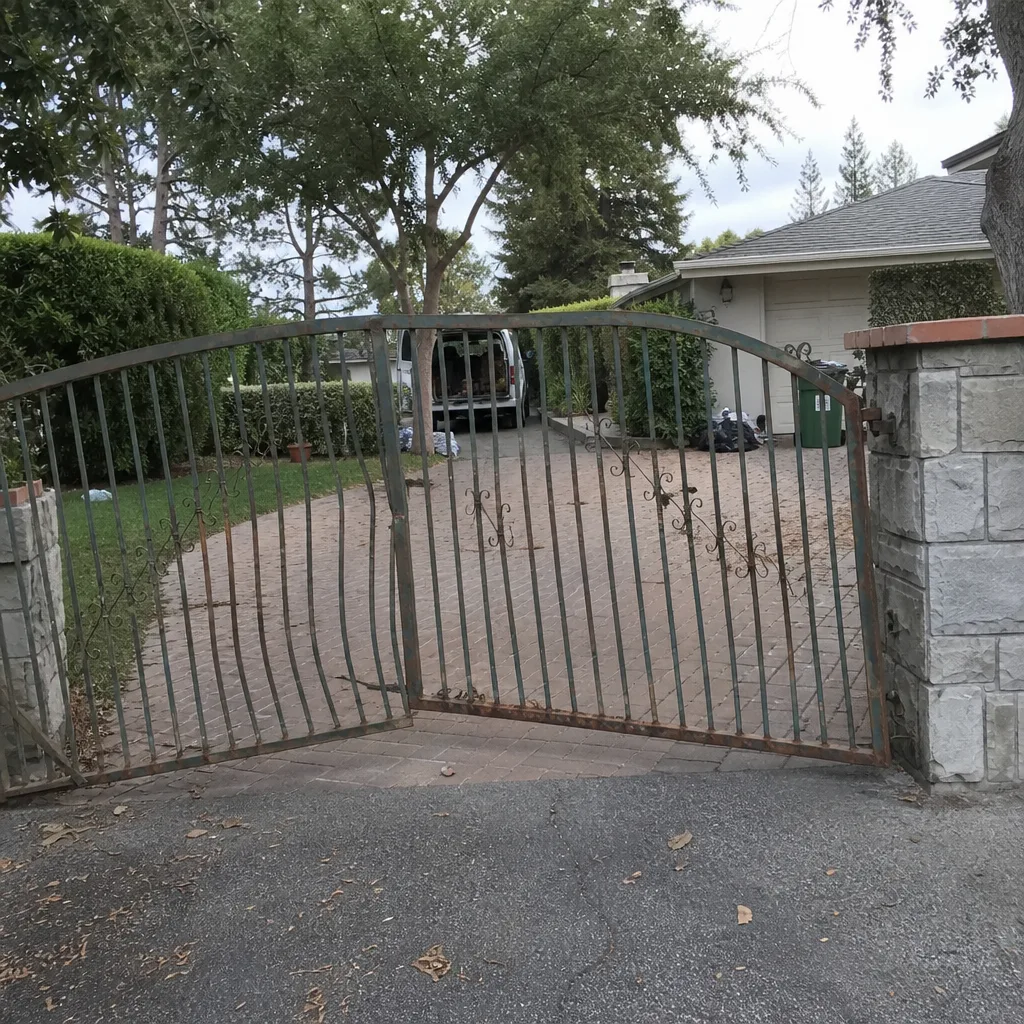 Before
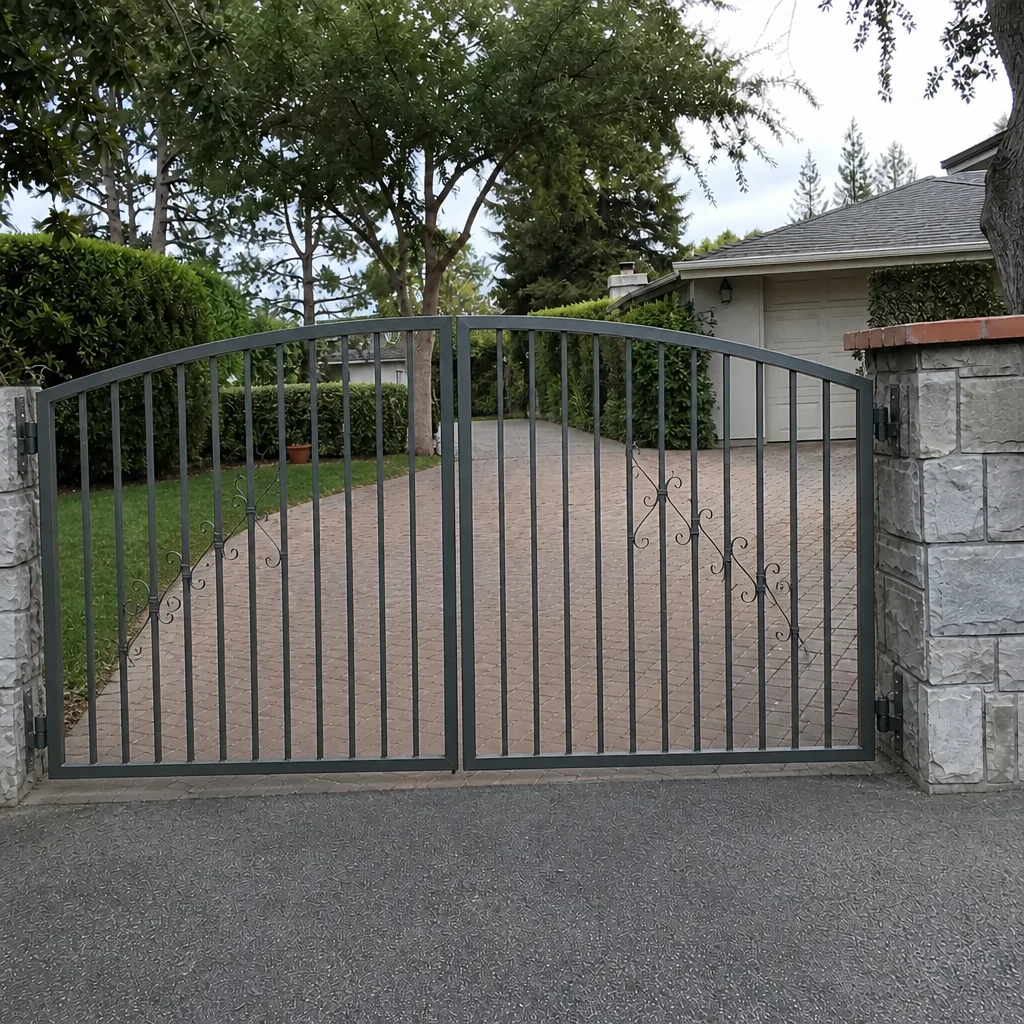 After
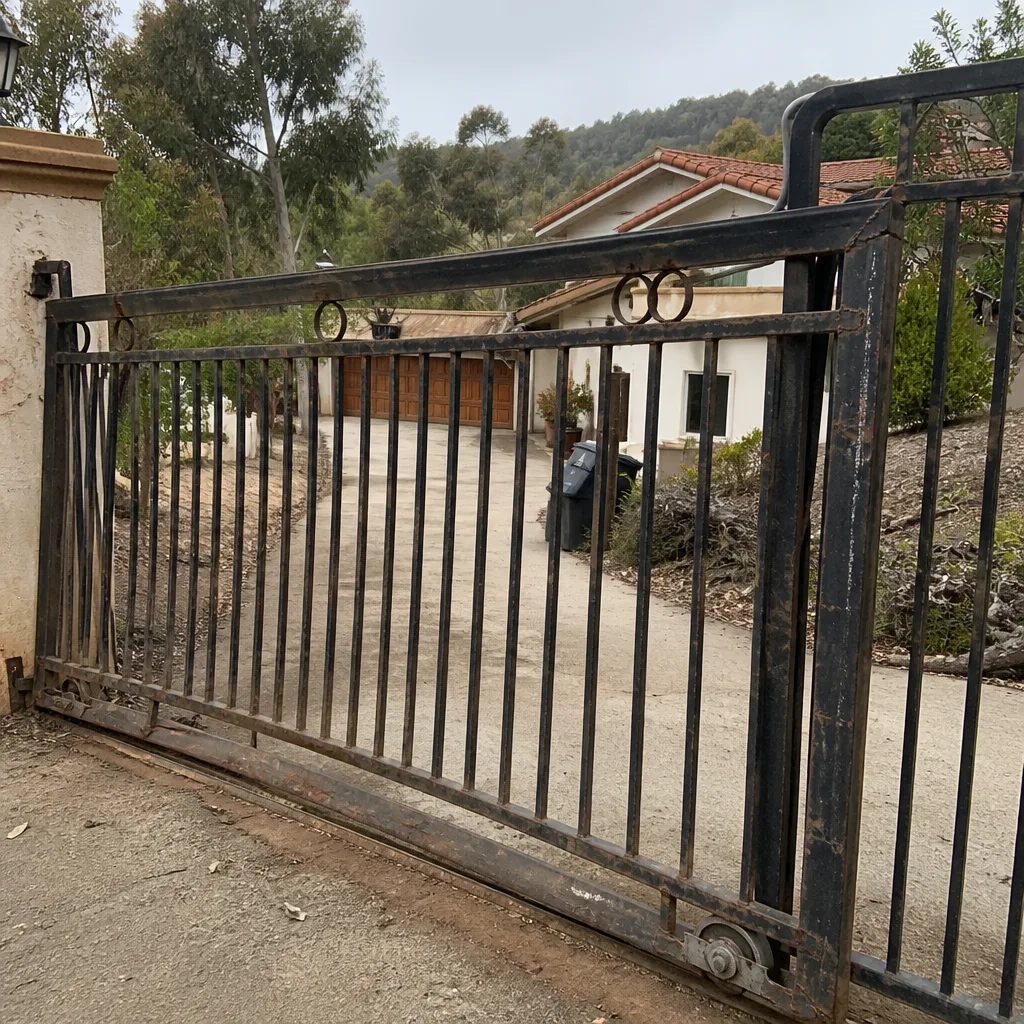 Before
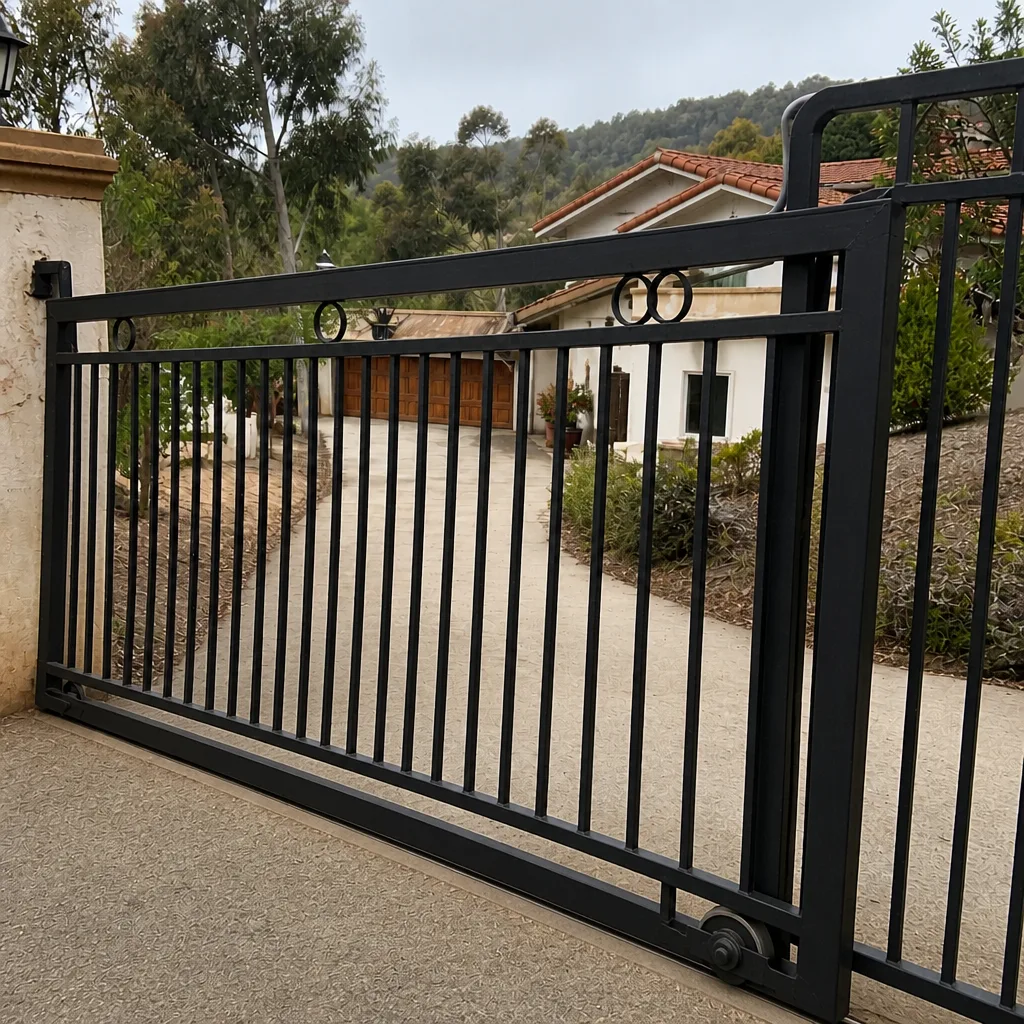 After
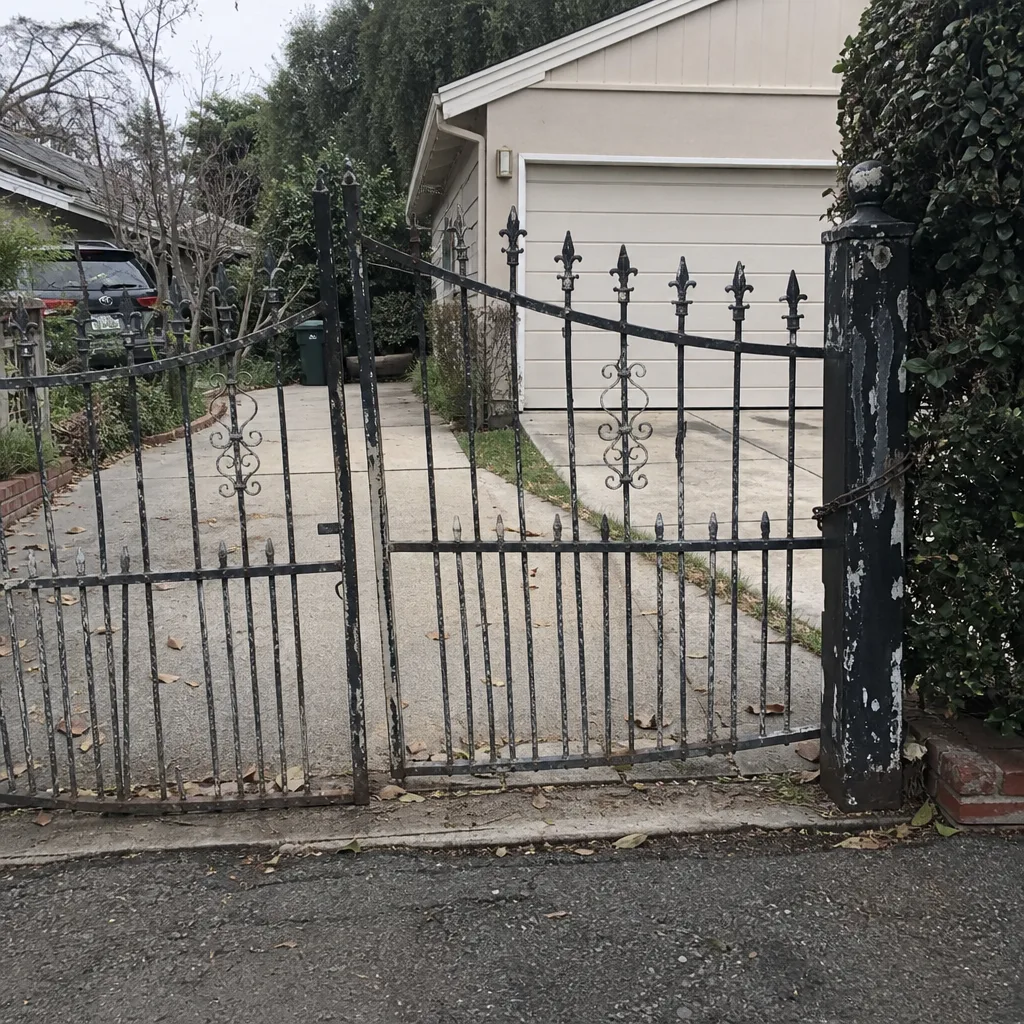 Before
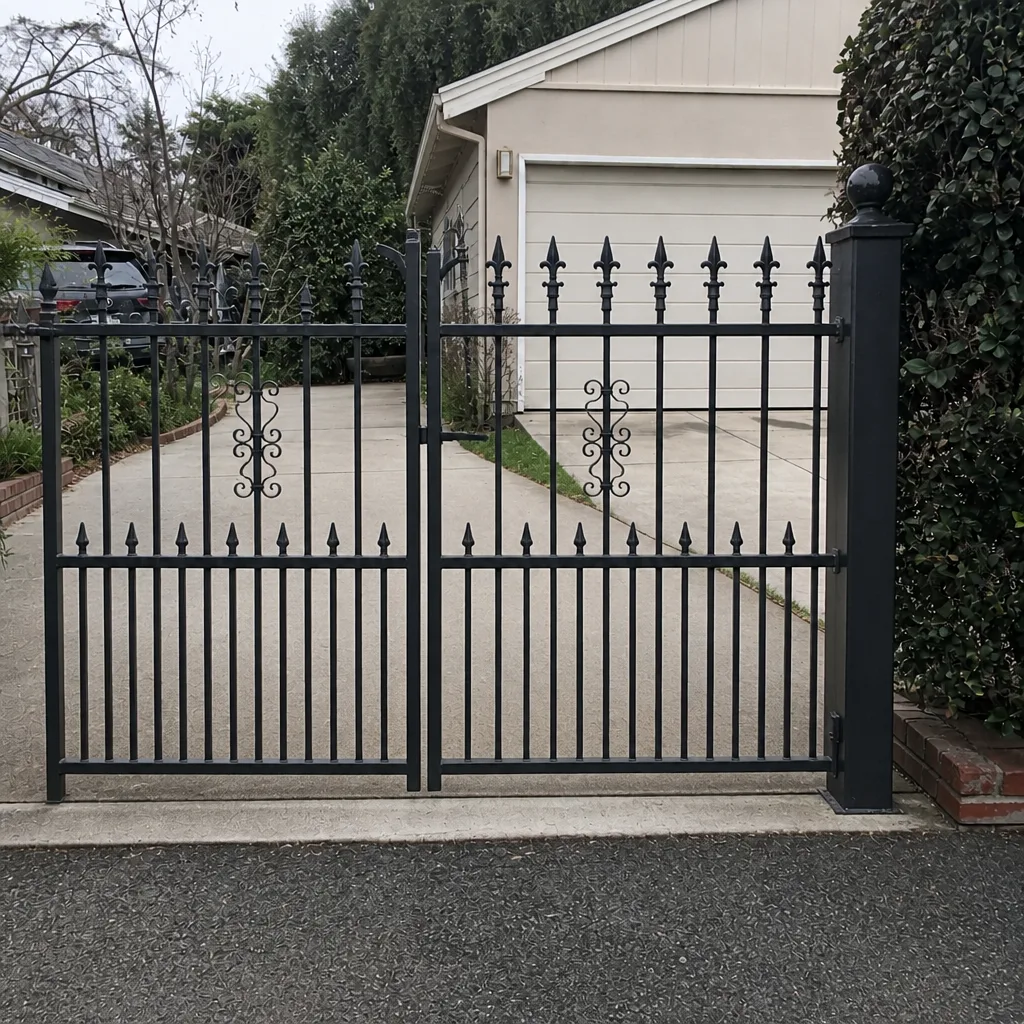 After
When to Call a Professional
Call a professional when the gate repair involves anything beyond a same-part swap. That threshold is worth being strict about: an automated gate is a heavy moving object under motor power, and a misdiagnosed control board, a bypassed safety input, or an improperly set force limit creates a real injury risk. Call when the operator is electrically dead, when the gate reverses unexpectedly, when a slide gate rides up off its track, or when an HOA flags the gate for a compliance review. Call when you are not certain whether the fix you plan crosses the line into alteration territory. Gate Repair Lake Forest handles repair, electric gate repair, and installation, including the permit paperwork. If you are in Lake Forest, the estimate is free and the price is set by written estimate before any work starts. Call (866) 472-6659. We answer 24/7. Fast dispatch from 7am to 7pm, Sunday through Friday.
Frequently Asked Questions
No, not for like-for-like component replacement. Swapping a failed operator for an identical model, replacing a hinge, or fixing a sagging panel are all repairs that don’t require a city permit in Lake Forest. A permit is required when the work changes the gate’s dimensions, adds automation to a previously manual gate, relocates posts, or runs new electrical wiring.
Yes. Adding an operator to a manual gate is an alteration, not a repair, and it requires a permit in Lake Forest for both the gate structure and the electrical run. The electrical work needs its own permit and its own inspection, and the gate must be brought up to UL 325 entrapment protection standards before the final inspection passes.
If you live in one of Lake Forest’s planned communities, such as Foothill Ranch, Baker Ranch, or Portola Hills, the answer is almost always yes. HOA architectural committees review gate appearance, height, operator placement, and sometimes the slide track configuration. Start the HOA approval first because its timeline is usually longer than the city’s.
You can install it, but skipping the permit creates a bigger problem than the install solves. In Lake Forest, a manual gate converted to automation without a permit is a code violation that gets caught during a future sale inspection, an HOA review, or a neighbor complaint. The fix is a retroactive permit process that costs more than pulling the permit upfront.
UL 325 is the national safety standard for automated gate operators that sets requirements for entrapment protection, force reversal settings, warning placards, and hard-wired safety inputs. It applies to any automated gate in Lake Forest when operator work is done, including same-model replacements. A gate with bypassed or missing photo eyes fails inspection and remains a safety hazard.
Hire an electric gate repair specialist. Gate work spans mechanical hardware, electrical wiring, control boards, and access systems, and a specialist who works on Ghost Controls, Mighty Mule, DoorKing, and similar brands will diagnose the problem correctly on the first visit. A generalist may be able to swap a hinge but won’t trace a control-board fault, a bad loop detector, or a failing safety input with the same confidence.
The Bottom Line
Most gate repair in Lake Forest needs no permit, and you should not let the permitting question scare you away from fixing a gate. The rule is straightforward: replace like for like, no permit needed. Change the gate, automate a manual gate, move posts, or touch electrical wiring, and the permit enters the picture. Lake Forest is in Orange County, not on the coast, and the climate is mile enough that weather-driven gate failures are rare, but code enforcement doesn’t relax just because the sun is out. Pull the permit when the scope crosses the line, run HOA approval in parallel, and make sure the entrapment protection works. The written estimate sets the price and the inspection pass closes the job. If you live in Lake Forest and the gate is acting up, call (866) 472-6659. We answer 24/7. Fast dispatch from 7am to 7pm, Sunday through Friday.
Written by the team at Gate Repair Lake Forest, serving Lake Forest since 2017.