
Last updated November 4, 2026
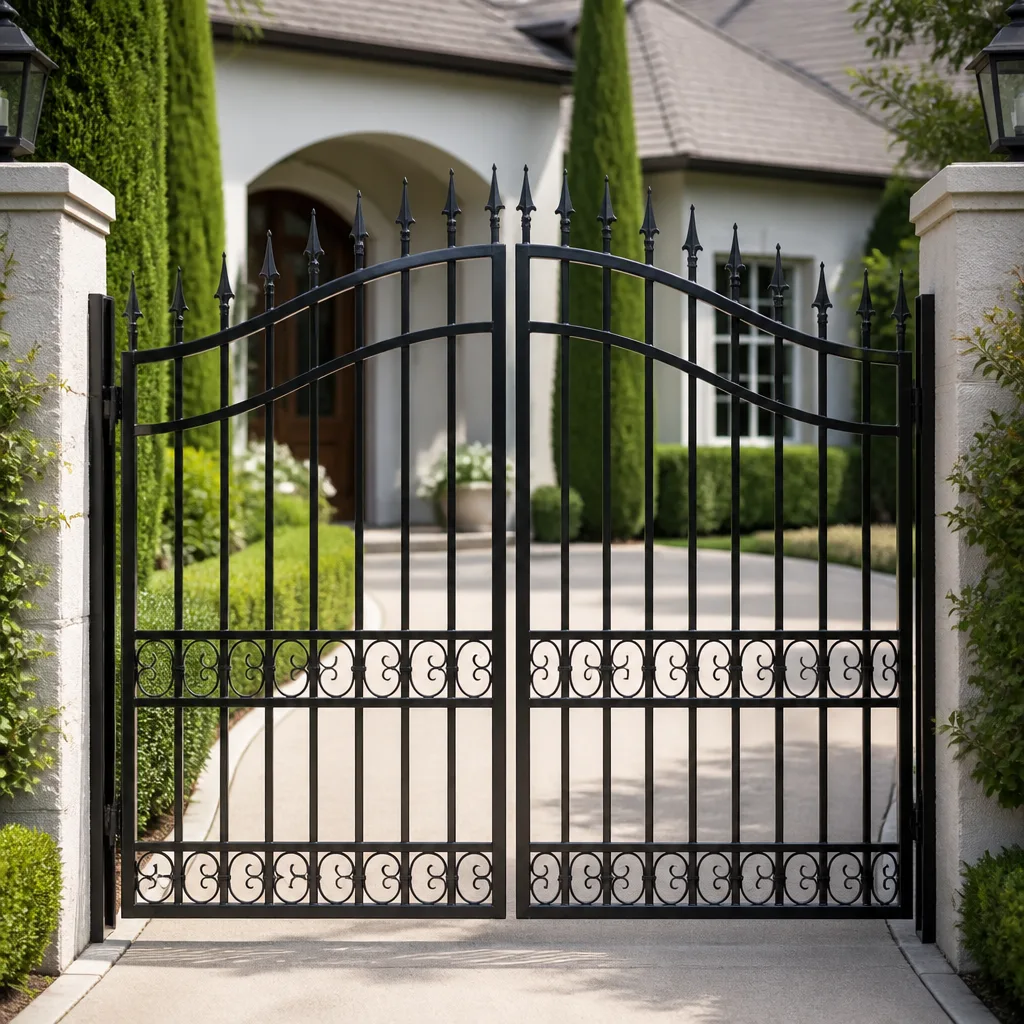 Wrought iron
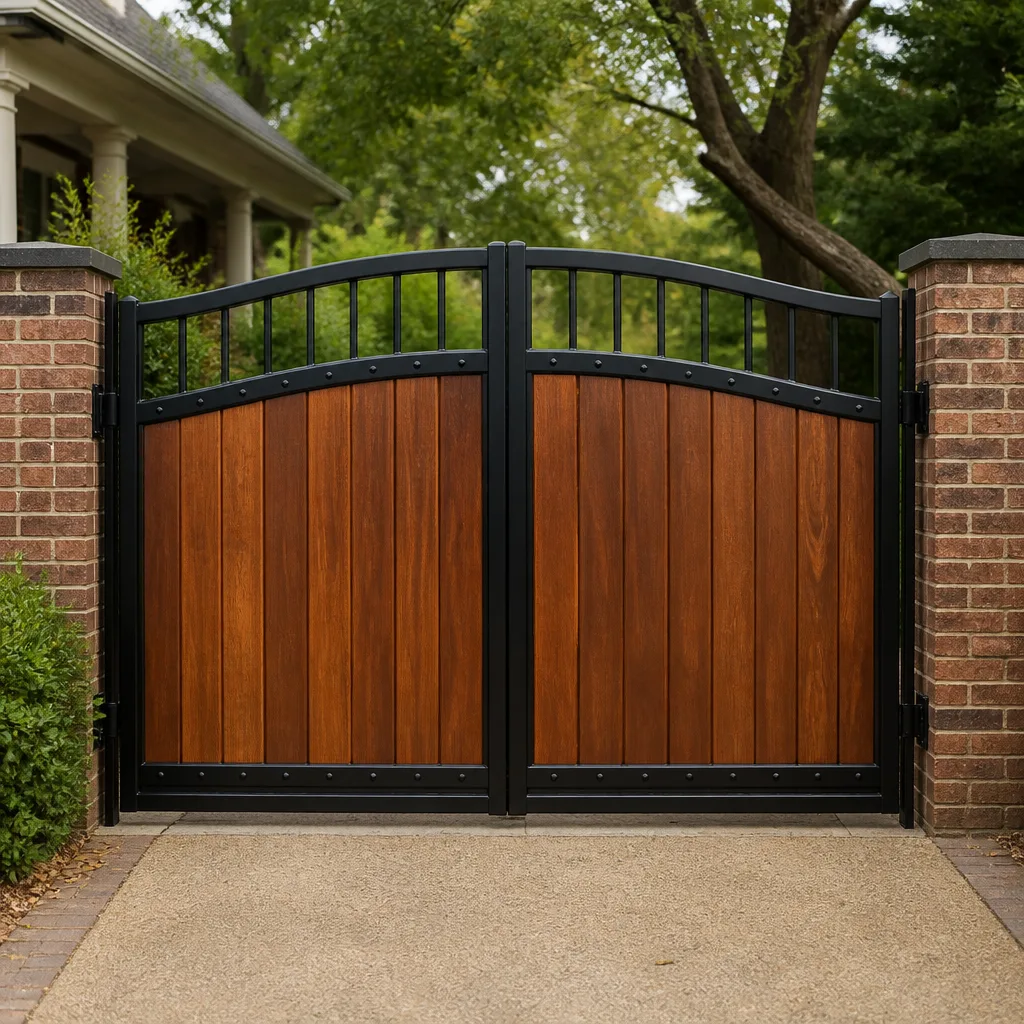 Wood & steel frame
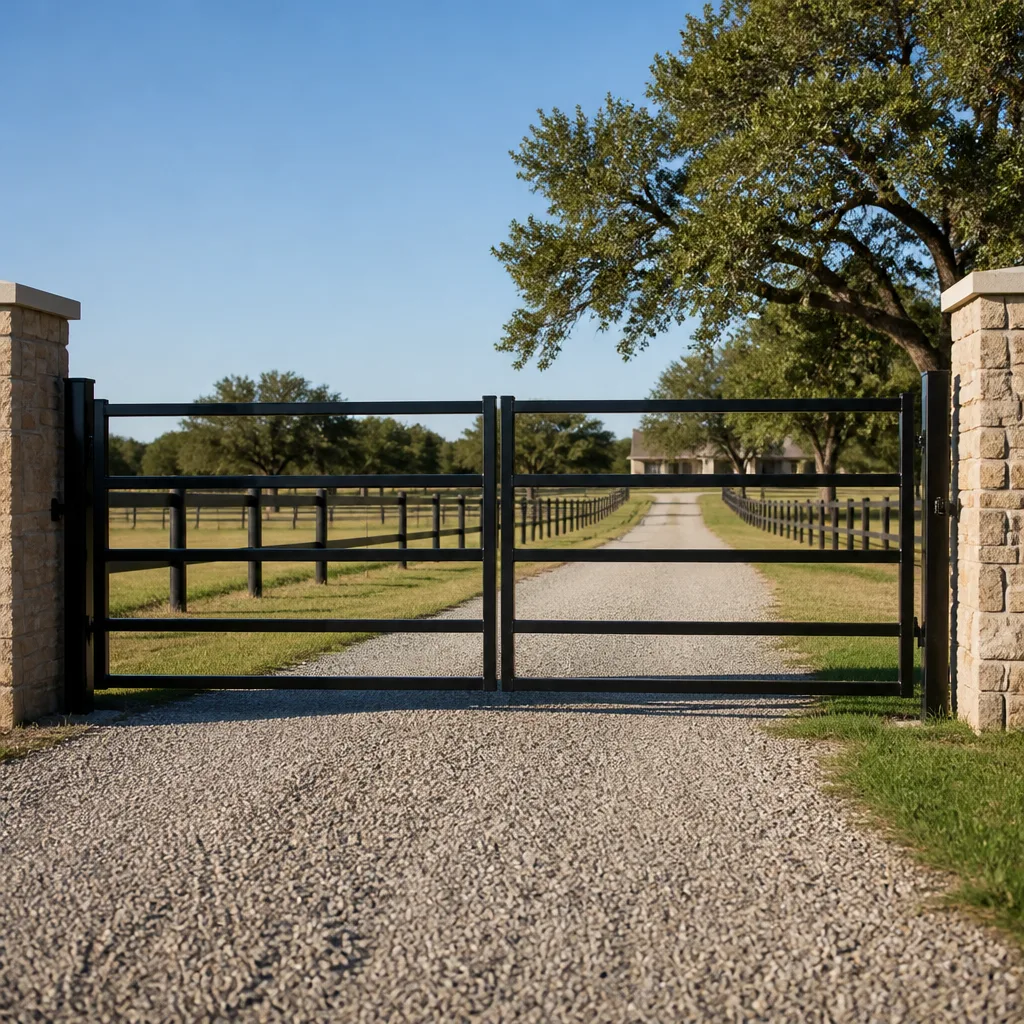 Farm & ranch
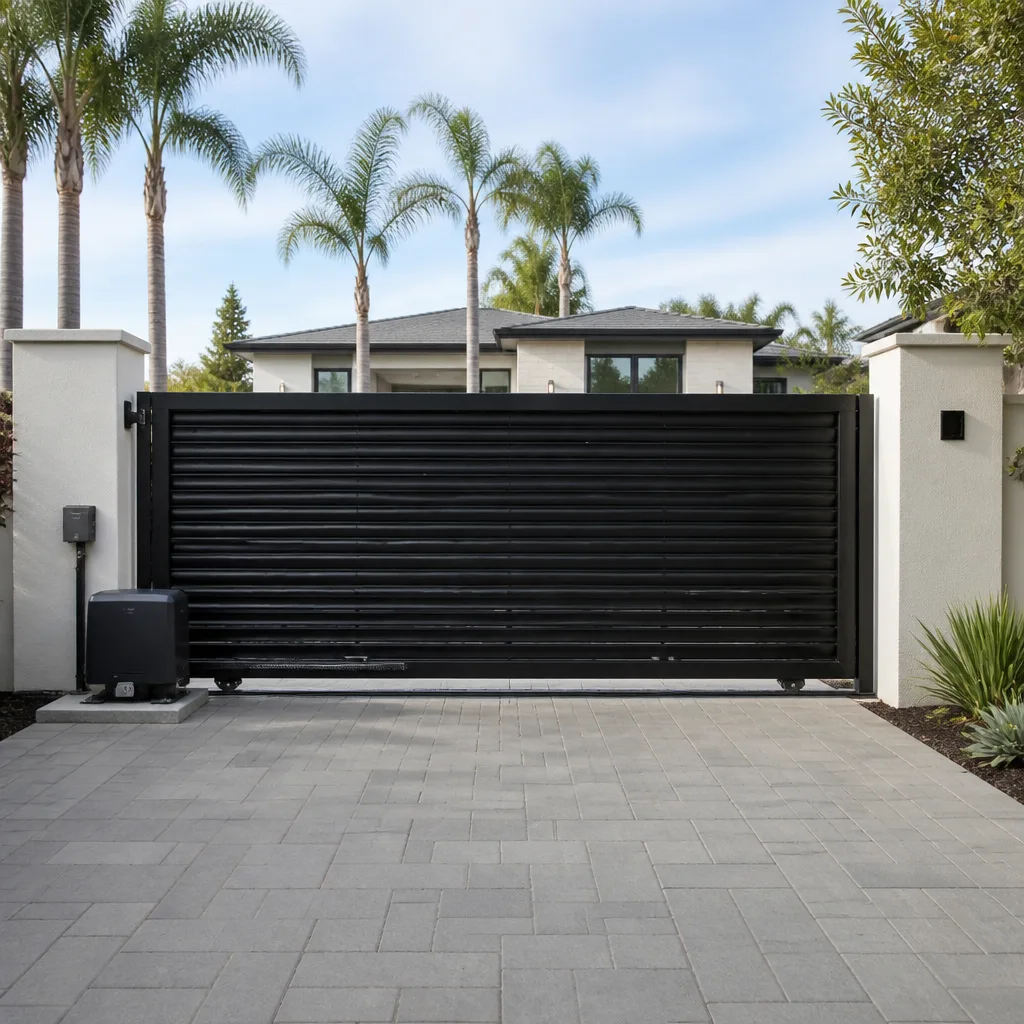 Sliding driveway gates
 LiftMaster operators
Free on-site gate assessment - hinges, posts, and your LiftMaster or Nice gate operator checked before anything is quoted
The assessment is free and the quote is the invoice.
Get your free estimateGate Repair Cost Breakdown: The Lake Forest Homeowner’s Reference for 2026
A $150 gate repair quote and a $1,400 quote can both be completely legitimate, or both be rip-offs. The number alone tells you nothing. What tells you something is whether the quote line items match the failure category your gate is actually in. Most online cost guides blur every gate type into one vague range, which is why two Lake Forest homeowners with identical-looking gates can get wildly different repair bills. This guide breaks down 2026 repair costs by gate type, operator technology, and failure category so you can evaluate a quote in sixty seconds instead of guessing.
Quick Answer
Gate repair in Lake Forest, CA typically runs between $180 and $1,600 in 2026, depending on what failed. A control board replacement averages $350 to $850, a motor or operator replacement runs $600 to $1,600, and structural work like hinge or track repair lands between $225 and $700. The single biggest cost variable is whether you have a surface-mounted swing operator or a buried hydraulic system, and most homeowners never ask which one they own before calling for quotes.
Styles & brands we work with
- Wrought iron
- Wood & steel frame
- Farm & ranch
- Sliding driveway gates
- LiftMaster operators
Table of Contents
- The Five Failure Categories That Set Your Price
- Parts vs. Labor: Where Your Money Actually Goes
- Gate Type Cost Differences: Swing, Slide, Dual, and Barrier Arm
- Control Board Replacement: The Most Misquoted Repair
- Motor and Operator Replacement: When It’s Worth It
- Structural Repair: Hinges, Tracks, and Posts
- When Repair Costs More Than Replacement
- How Urgent Repairs Are Priced in Lake Forest
The Five Failure Categories That Set Your Price
Every gate repair falls into one of five buckets, and each bucket has a different typical price range and a different parts-to-labor ratio. If a contractor quotes you a number without first telling you which category your gate is in, that is the first red flag. A Gate Repair Lake Forest technician starts every diagnostic by identifying the failure category, because the category dictates the parts list, the time, and the tools required. Here is how the five break down in the Lake Forest market for 2026.
- Control board replacement: $350 to $850 typical, parts-heavy. The board itself is often $200 to $500 depending on brand, and labor is unplug, replug, configure limits, test. Two hours or less in most cases.
- Motor or operator replacement: $600 to $1,600 typical, balanced parts and labor. The operator or motor assembly is the bulk of it, but removal, mounting, alignment, and testing take real time.
- Structural repair (hinge, track, post): $225 to $700 typical, labor-heavy. Materials are comparatively cheap. The cost is in the welding, shimming, cutting, and alignment work.
- Access control system repair: $150 to $450 typical, parts-heavy for keypads and readers, labor-heavy for wiring faults. A bad keypad is a quick swap. A corroded junction box daisy-chained through four sensors is an afternoon of tracing.
- Wiring and loop detector issues: $180 to $500 typical, labor-heavy. The wire itself is inexpensive. Finding the break, pulling new conductor, and re-toning the loop are what you are paying for.
The spread within each category is wide because gate operators do not fail uniformly. A fifty-dollar capacitor on an older Linear board is a different job than a fried DoorKing board that needs a full replacement. Knowing your category gets you within a reasonable band, and that band is what lets you spot a padded quote.
Parts vs. Labor: Where Your Money Actually Goes
The ratio of parts cost to labor cost is the detail most Lake Forest homeowners skip, and it is the detail that exposes a bad quote fastest. Every repair has a characteristic ratio, and when a quote violates it, something is wrong. Here is the step-by-step way we think about it on each job.
- Identify the failure category. A clicking noise with no movement is usually electrical, not mechanical. A screeching sound with movement is usually mechanical. The category sets the ratio.
- Look up the part cost range. A Ghost Controls control board has a different street price than a FAAC commercial board. If the contractor quotes $900 for a board with a $250 market price, ask why.
- Estimate the labor hours. A hinge replacement might take two hours. A buried loop detector replacement in a concrete driveway can take four. Multiply rough local labor rates and see if the quote makes sense.
- Check the ratio. Control board jobs should skew 60 to 70 percent parts. Structural jobs should skew 70 to 80 percent labor. If a quote flips the expected ratio, it is padded on one side.
Some repairs are almost entirely labor. A swing gate that drags on the ground because the post settled is a materials-light job: some shims, maybe a new hinge barrel, and two hours of lifting and aligning. Quoted at $600, it tells you the contractor is charging for expertise, not parts, which is fair if the expertise is real. Quoted at $1,200, it tells you the contractor is charging for the homeowner’s lack of information.
Other repairs are almost entirely parts. A fried Ghost Controls opener where the board survived is mostly the cost of the new operator assembly. Labor might be ninety minutes. If that quote is $1,900, and the operator retails for $900, you are being charged a thousand dollars for ninety minutes.
Lake Forest’s housing stock includes a lot of gated entries on larger lots and HOA common areas, which means we regularly see both DIY-grade and commercial-grade systems in the same neighborhoods. The parts market here is competitive and accessible. A five-minute search on what your operator costs gives you a baseline before you ever pick up the phone.
Gate Type Cost Differences: Swing, Slide, Dual, and Barrier Arm
The gate type you have changes the repair bill more than most people expect, because the gate type determines the operator architecture, and the operator architecture determines the failure modes. Here is what that means in Lake Forest, where the mix of hillside properties, flat lot-line gates, and HOA entries means we see every configuration in a week of work.
- Residential slide gate: Repairs typically run $200 to $600. Slide gates fail at the track, the rollers, and the operator chain or belt. Most issues are mechanical and labor-heavy. A badly worn roller that has ground down over years is a straightforward replacement, but if the track has shifted out of level, the repair gets more involved because realigning a track under a heavy gate panel takes time.
- Residential swing gate (single): Repairs typically run $300 to $1,000. A single swing gate on an articulating arm operator is what we see most in Lake Forest. The common failure points are the operator arm itself, the hinge bearings, and the control board. A hinge that has slowly sagged over years of sun and use can seize the gate, and freeing it often reveals a bent operator arm that needs replacement too.
- Dual swing gate: Repairs typically run $500 to $1,800. Two operators, two sets of hinges, twice the wiring, and a master-slave control relationship between the boards. When one leaf fails, the other follows if the system is not serviced. The boards talk to each other, so a fault on one side can disable both, and diagnostics take longer because the tech has to isolate which leaf is the source.
- Commercial barrier arm: Repairs typically run $400 to $1,200. Barrier arms fail at the gearbox, the spring, or the loop detector. These are spring-and-gear mechanisms under constant tension and impact. A barrier arm in a Lake Forest HOA entry gets hundreds of cycles a day, and the wear pattern is different from a residential gate that cycles twenty times a day.
The buried hydraulic system is the wild card. An underground swing operator with hydraulic rams and buried lines is a completely different animal from a surface-mount articulating arm. When a hydraulic line leaks, the repair involves excavation, line replacement, and refilling the system, which is why buried hydraulic repairs frequently exceed $1,500. Surface-mounted systems rarely cross $1,200 for any single-operator repair.
The takeaway for a Lake Forest homeowner: before you call for quotes, figure out whether your operator sits above ground on a post or arm, or below ground in a vault. That one detail shifts your expected cost band more than any other single fact about your gate.
Control Board Replacement: The Most Misquoted Repair
Control board replacement is the repair where Lake Forest homeowners get overcharged most often, because it is the repair where the failure is easiest to misstate. A board costs between $200 and $500 for most residential brands, and replacing it usually takes less than two hours including programming the limits and re-testing the safety edges. So a quote of $800 to $1,200 for a board swap on a single-family gate is padded unless the board is from a commercial operator.
The honest variable is the board brand. A Mighty Mule board retails on the lower end. A DoorKing board for a commercial operator is substantially more, and if the operator is older, the board may be discontinued, forcing an adapter board or a retrofit. That is a real complication that raises the price, and a good tech will explain it clearly before quoting.
Here is the replacement sequence a proper control board job follows, whether we are doing it or another qualified shop is:
- Confirm the board is actually dead. We check incoming power, the transformer, fuses, and the safety sensor loop before condemning a board. A surprising number of “dead board” calls are a tripped GFCI or a failed wall transformer.
- Identify the exact board revision. Some operators have four board revisions across ten years. The right revision matters for compatibility with existing remotes, keypads, and sensors.
- Pull the old board and note every connection. This is where experience shows. Terminals labeled differently on the new board require re-routing of inputs, and getting this wrong blows the new board on first power-up.
- Mount, wire, and power test. A bench-style staged power-up before full reconnection avoids frying a $400 board.
- Program limits, safety edges, and accessory inputs. This is the part the DIY parts-swapper skips, and why a gate that “works” after a board swap can still close on a car the next week.
The difference between a $350 board job and a $1,100 board job in Lake Forest is usually one of three things: a genuinely expensive commercial board, a discontinued board requiring retrofit, or a contractor padding the invoice. Knowing the brand and age of your operator before calling lets you sort which one you are being offered.
Motor and Operator Replacement: When It’s Worth It
A motor or operator replacement is the second most common major repair on Lake Forest gates, and the decision point is usually straightforward: if the gate is otherwise solid, the operator is worth replacing. If the gate leaf itself is sagging, rusting, or has multiple structural issues alongside the failed operator, replacement of the entire system starts to make economic sense.
A typical residential operator replacement runs $600 to $1,600 installed in Lake Forest. The range splits on three factors: operator brand, operator type, and access. A basic articulating arm operator is on the lower end. A heavier operator for a large solid-wood gate panel costs more, and if the post needs reinforcement or the operator mounting plate needs welding, labor climbs.
We regularly replace operators from a broad range of brands, and the choice between repairing and replacing an operator usually comes down to age and availability of parts. An older operator that has been discontinued can still run, but replacement parts become scarce, and at some point the cost of keeping it alive exceeds the cost of a new unit. The brands you have likely seen around Lake Forest include Ghost Controls, Mighty Mule, Elite, and DoorKing, each with distinct price points and availability. A good independent tech will recommend based on what you already own and what your gate actually needs, not on pushing a single product line.
Structural Repair: Hinges, Tracks, and Posts
Structural repair is the labor-heavy category. The materials are cheap. The knowledge is not. Here is what structural repair actually involves on different gate types.
Swing gate hinges: A swing gate with sagging hinges is the classic “it scrapes the ground” complaint. The repair means lifting the leaf, removing the old hinge barrels, possibly welding new plates, and re-hanging the gate level. Typical cost: $225 to $450 for a single hinge pair on a residential gate. If the post itself has shifted, figure more, because resetting a post in concrete means digging, bracing, and re-pouring, which brings the job into the $500 to $700 range.
Slide gate track and rollers: A slide gate off its track is a safety issue and a mechanical one. Rollers wear out over time, and a seized roller can cause the gate to bind and throw the operator out of alignment. Replacing a set of rollers and re-seating the gate on the track runs $200 to $400. If the track itself has been displaced by a vehicle strike or root movement, add $200 to $300 for re-leveling and anchoring.
Post resetting: A leaning post is the most involved structural job. The old post has to be cut free or dug out, the hole re-excavated to proper footing depth, a new post set and plumbed, and the gate re-hung. On a hillside Lake Forest lot where access is tight and retaining walls are involved, this is a half-day job or longer. Typical cost: $500 to $1,000.
The important thing about structural work is that it compounds. A sagging hinge ignored for a year wears out the operator because the operator is fighting an out-of-balance load every cycle. A dragging slide gate destroys rollers and eventually stresses the operator chain. Structural repairs look like they can wait, and they are usually the cheapest to fix early.
When Repair Costs More Than Replacement
There is a point where spending more on repairs is worse than replacing the gate system entirely. The math is not complicated, but it requires honesty about the condition of the whole assembly, not just the failed part. Here is the framework we use when a Lake Forest homeowner asks whether to keep fixing a gate or start over.
- Total the repair history. If the gate has had two control board replacements, a hinge repair, and now needs a motor, you have already spent real money. At some point in the next eighteen months, another component will fail, because the system is aging as a unit.
- Look at the gate panel itself. A steel gate panel that is rusting through at the bottom rail is not going to improve. Engineered wood panels that are delaminating will only get worse. If the panel is compromised, repairing the operator is spending money on a gate that will need to be replaced anyway.
- Compare against replacement cost. A full single swing gate with a new operator, new hinges, and new access hardware typically runs $2,000 to $4,500 in Lake Forest depending on size, material, and access. If your repair estimate is $1,600 on a fifteen-year-old system with other issues visible, the gap between repair and replace is small enough that replacement becomes the smarter call.
The same logic applies to HOA and light-commercial entries. An automated barrier arm that has blown a gearbox twice in three years is telling you something about the operator model’s fit for the traffic it handles. Replacing the operator with a heavier-duty unit may cost more upfront but eliminates the recurring repair cycle.
What does a full replacement look like in Lake Forest? For a typical residential swing gate on an existing post, a new steel gate leaf, hinges, a modern operator, a keypad, and a loop detector run between $2,500 and $4,000 installed. A dual swing gate on two posts with operators on both leaves runs $4,000 to $7,000. A commercial barrier arm with a heavy-duty operator and vehicle loop runs $2,500 to $5,500 depending on arm length and access control integration. These are installed ranges. The written estimate sets the final number.
How Urgent Repairs Are Priced in Lake Forest
Emergency gate repair is priced per job by the written estimate, and knowing how urgent your situation is comes down to one question: is the gate stuck open or stuck closed? A gate stuck open is an annoyance and a security concern. A gate stuck closed is a functional emergency, especially on a property where the gate is the only vehicle access.
Shops in the Lake Forest market handle urgent calls differently, so ask any company whether the price changes by the time of day, and get the answer in writing. These are the situations where it makes sense to call right away:
- The gate is stuck closed and blocks vehicle access. You cannot get cars in or out. This is a true emergency.
- The gate failed during an active security concern. An HOA entry that is stuck open at night creates a real problem, and calling right away is rational.
- The gate is mid-travel and cannot be secured. A stalled gate leaves a gap. If you need it resolved before you leave, call right away.
Most other failures can wait for the next dispatch window. A noisy operator, a keypad that works intermittently, a loop detector that is slow to trigger: these are next-day or two-day fixes. Rushing a sticky keypad fix to tomorrow instead of Thursday is not necessary.
One Lake Forest-specific note: the mix of hillside homes and flat HOA communities means some gates are more access-constrained than others. A gate on a slope with poor access may take longer to work on, which affects the labor portion of any repair estimate, emergency or not. A good contractor will mention that before quoting.
Our recommendation: if the gate is stuck closed, call. If it is stuck open, call. The estimate is free and sets a firm number. Then decide whether to take the first opening. Electric gate repair is one of the areas where having a specialist who can handle both the mechanical and electrical sides saves the most time on an emergency call, because there is no hand-off between trades.
Common Mistakes to Avoid
- Getting one quote and accepting it. The same failure on the same gate can be quoted $400 apart legitimately based on parts quality and warranty. Get at least two, and make sure each quote lists the failure category and the part brand.
- Not knowing your operator brand before calling. The brand and model are printed on the operator housing. That one piece of information lets a good tech pre-order parts and lets you check if a quote is inflated.
- Confusing a cheap part with a cheap repair. A $30 hinge is a cheap part. The labor to remove the gate leaf, weld the new hinge properly, and re-hang it level is not cheap. Judging a quote by the part price alone will lead you to undervalue the work.
- Ignoring a structural problem until the operator fails. A sagging hinge or a stiff roller costs less to fix than a burned-out operator that was fighting the resistance. The structural fix early is usually the smaller bill.
- Accepting a quote without a written estimate. The price is set by the written estimate, quoted and agreed before work starts. If a contractor will not commit to a number in writing, walk.
- Treating a non-emergency failure as an emergency. A stuck keypad on a gate that is safely secured can wait for regular dispatch. Call right away when the gate is blocking access, not when it is merely inconvenient.
See the difference
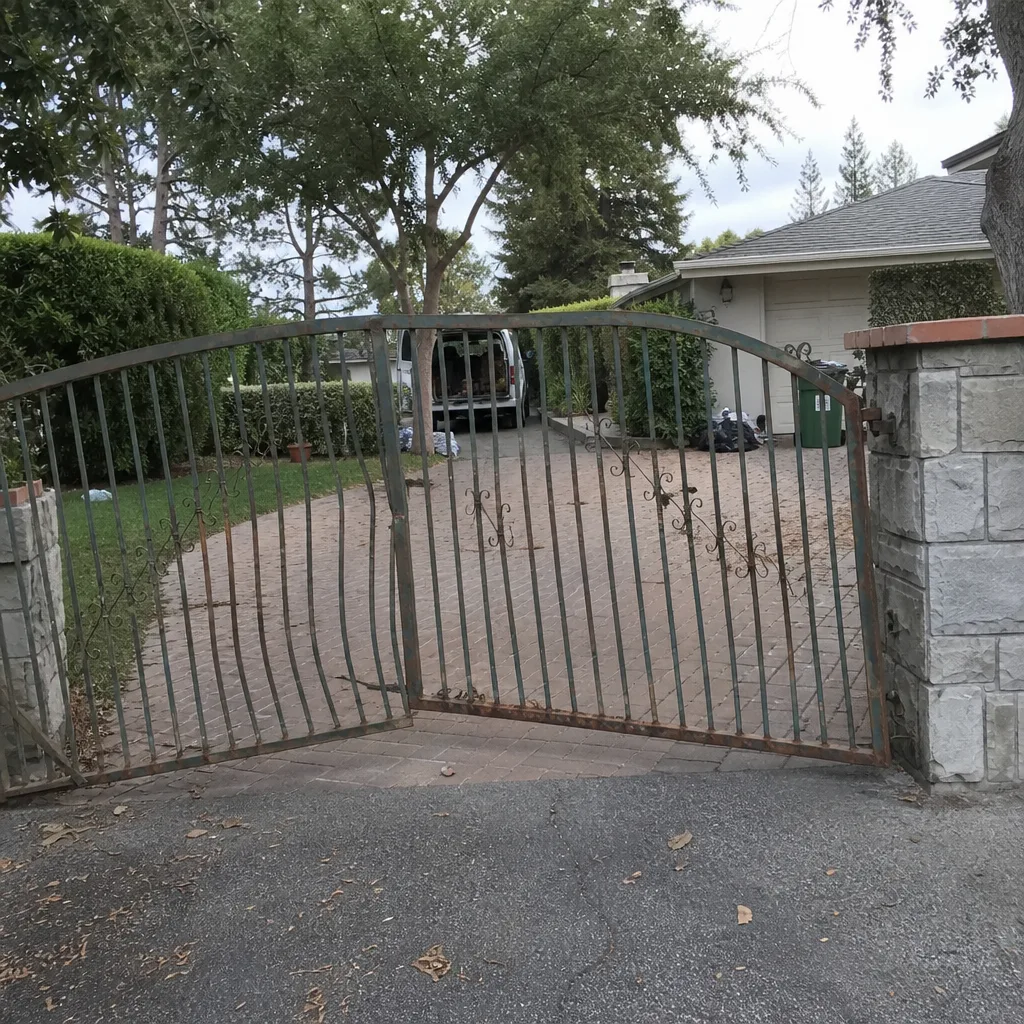 Before
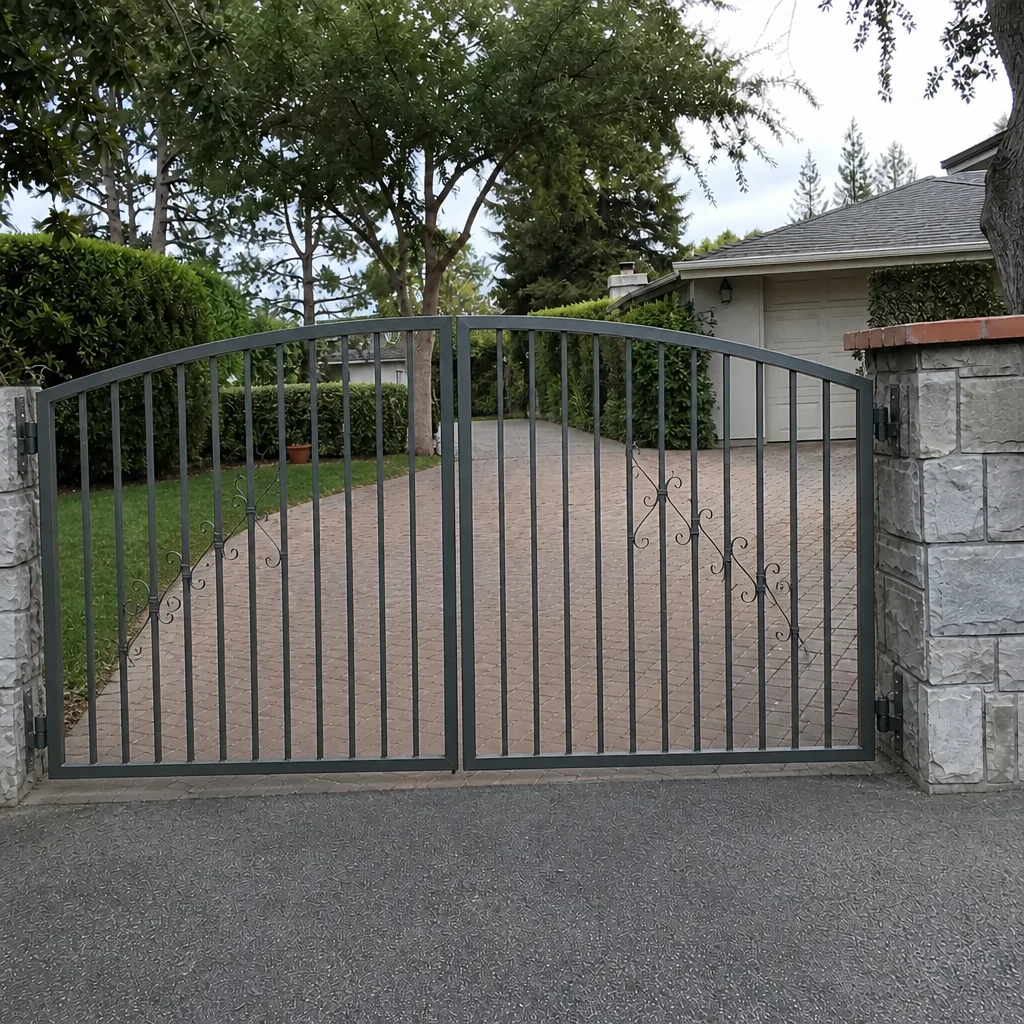 After
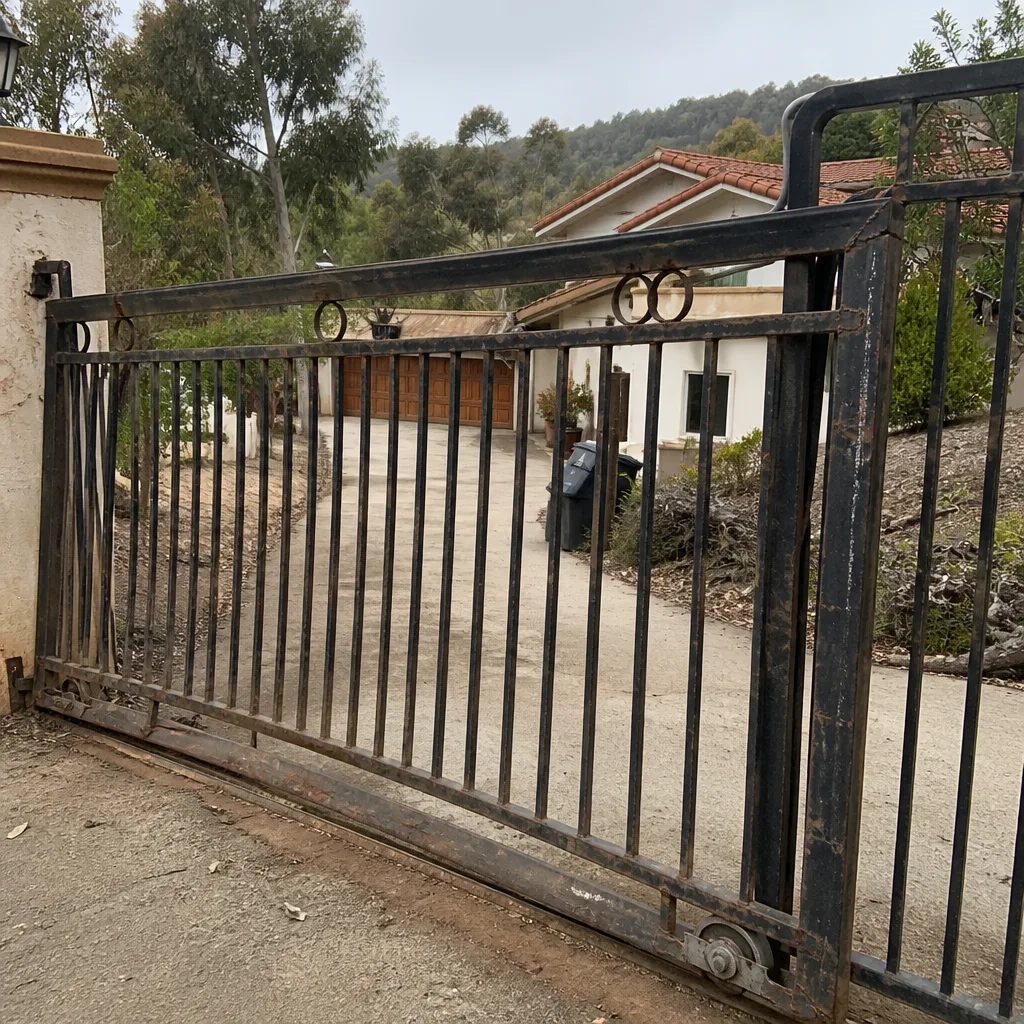 Before
 After
 Before
 After
When to Call a Professional
Call a gate specialist when the gate stops moving, moves only partway, makes new noises, sags visibly, or when any electrical component shows signs of heat or arcing. These systems combine heavy moving panels, high current wiring, and safety sensors, and a mistake on the wiring side can create a hazard beyond the gate itself. If the gate is stuck in a position that blocks access or leaves the property unsecured, call sooner rather than later. A trained technician can diagnose most gate failures on the first visit, and often with the part on the truck. Gate repair done by someone who works on gates exclusively tends to be faster and more accurate than a generalist handyman, because the failure modes follow known patterns per brand and gate type. Gate Repair Lake Forest offers free estimates in Lake Forest. Call (866) 472-6659. We answer 24/7. Fast dispatch from 7am to 7pm, Sunday through Friday.
Frequently Asked Questions
Gate repair in Lake Forest typically costs between $180 and $1,600 in 2026, with most residential jobs landing between $250 and $800 depending on the failure category, gate type, and operator brand. The written estimate you receive before work starts sets the final price. Call (866) 472-6659 for a free estimate.
The most expensive common gate repair is a buried hydraulic operator failure, which can exceed $1,500 because it involves excavation, line replacement, and system refill. Motor or operator replacement on surface-mounted systems is the next highest, running $600 to $1,600, followed by commercial barrier arm failures on high-cycle HOA entries.
Yes, a stuck-open gate is usually a failed operator, a control board fault, or a mechanical bind in the hinge or track, and most of these are repairable the same day. If the gate is stuck open and you need it secured, call (866) 472-6659. We answer 24/7. Fast dispatch from 7am to 7pm, Sunday through Friday.
It depends on the age and condition of the whole system. If the gate panel is rusting through or the operator has failed twice in three years, replacement often wins on total cost. A full single swing gate replacement runs $2,500 to $4,500 in Lake Forest, while repeated repairs can approach that number over time without fixing the underlying issues.
Yes, we work on Mighty Mule and Ghost Controls systems along with other residential and commercial brands. These DIY-friendly operators have their own common failure modes, and we see them regularly on Lake Forest homes. A Lake Forest homeowner with a Mighty Mule or Ghost Controls opener gets the same diagnostic process as one with a commercial DoorKing system.
Our technicians dispatch from 7am to 7pm, Sunday through Friday. Most Lake Forest gate failures are diagnosed on the first visit, and many repairs are completed the same day when parts are on the truck. Call (866) 472-6659 for same-day scheduling. We answer 24/7.
The Bottom Line
Gate repair costs in Lake Forest are driven by failure category, gate type, and operator technology more than any single number. A control board replacement is a different economic animal from a structural hinge repair, and a buried hydraulic system plays by different rules than a surface-mounted swing operator. The homeowner who knows their gate type and operator brand can evaluate a quote in minutes instead of guessing. Get the failure category from the tech, check the parts-to-labor ratio, and insist on a written estimate before work starts. When the gate is down and access is blocked, speed matters more than price negotiation, and that is when a specialist who works on gates exclusively earns the call.
Written by the team at Gate Repair Lake Forest, serving Lake Forest since 2017.